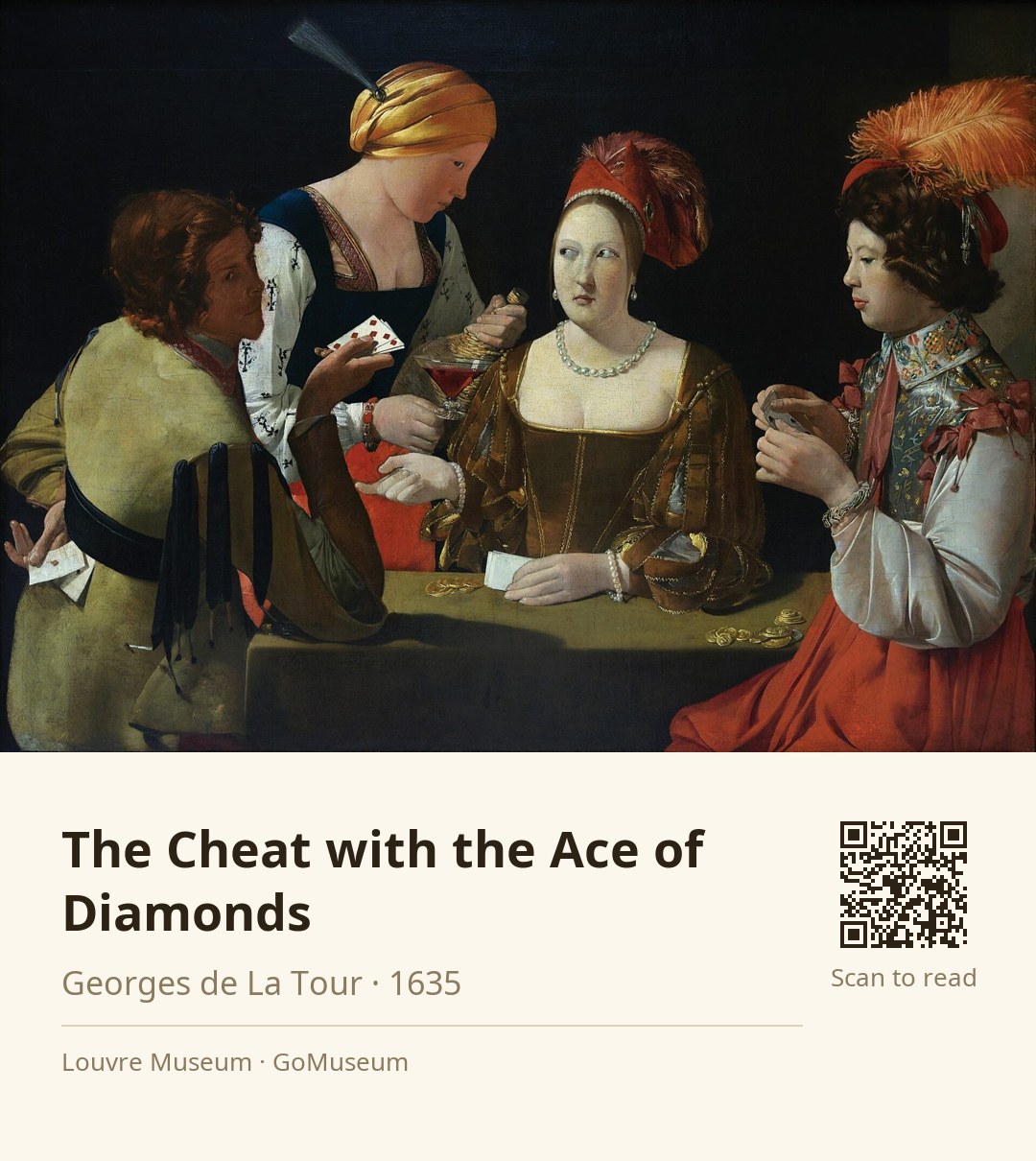
The Cheat with the Ace of Diamonds
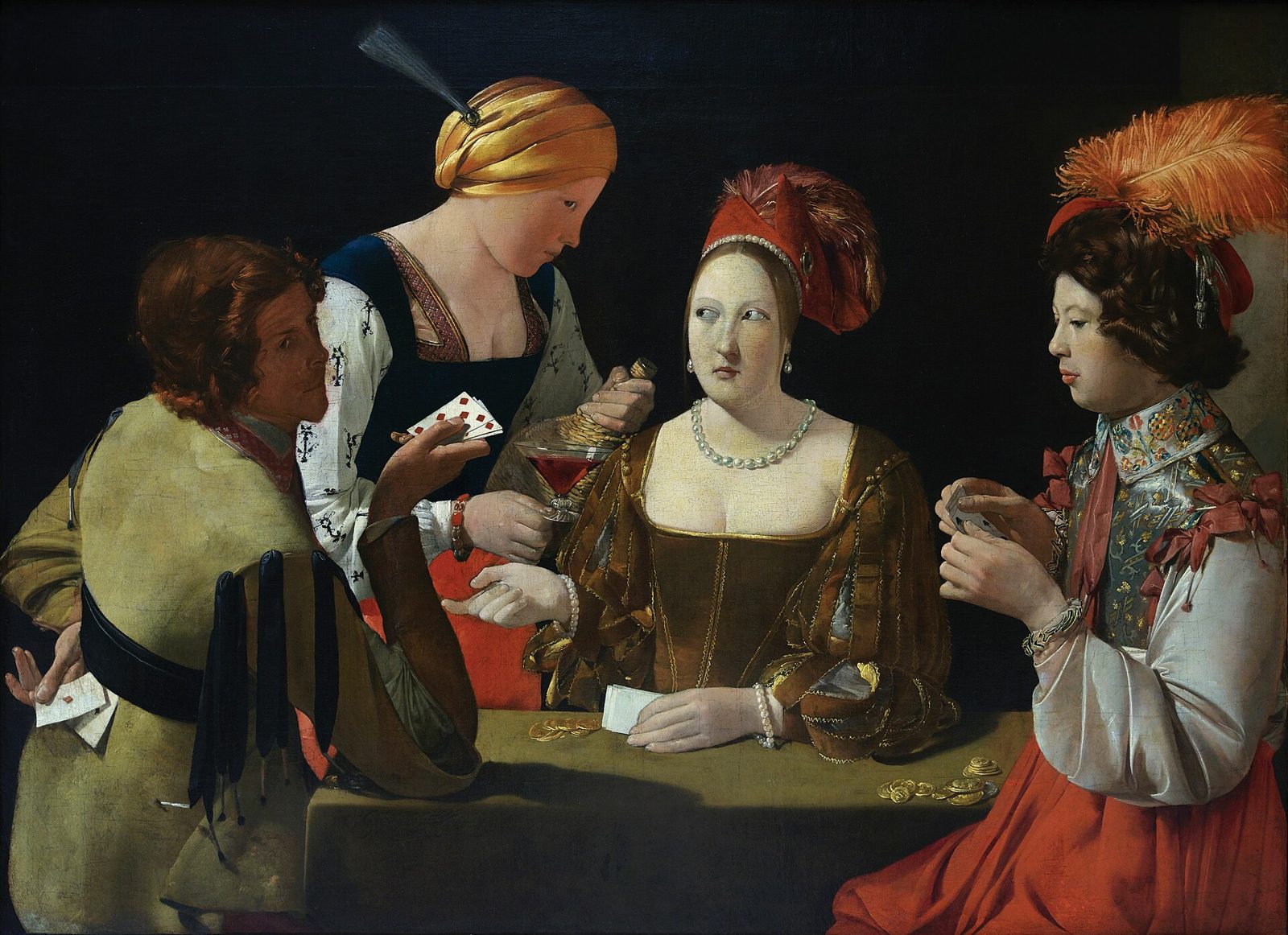
🎧 This work has audio narration — listen in the appTake a moment to really look at "The Cheat with the Ace of Diamonds." Notice how the card sharp on the left is slyly retrieving the ace of diamonds from behind his back, while the unsuspecting young man on the right leans in, completely oblivious to the deception unfolding before him. The tension in this scene is palpable, isn’t it?
This moment captures not just a game of cards, but a deeper commentary on trust and betrayal. The way La Tour plays with light and shadow draws your eye to the sharp's hand, emphasizing the deceit. It’s a masterclass in chiaroscuro, a technique that La Tour perfected, allowing him to create drama and intrigue in everyday situations.
La Tour’s ability to portray the complexities of human interaction makes this piece not just a visual feast but a narrative one as well.
As you stand here, think about the last time you felt deceived or caught off guard. What emotions did that stir in you? How does this painting resonate with your own experiences of trust?
Georges de La Tour was a French Baroque painter born on March 13, 1593, in Vic-sur-Seille. He spent most of his life in the Duchy of Lorraine, where he became known for his religious paintings characterized by dramatic chiaroscuro and candlelit scenes. Influenced by Caravaggio and the Dutch Caravaggisti, La Tour's work reflects a unique blend of Nordic, Italian, and French artistic traditions. His keen observation of everyday life and mastery of light and shadow set him apart as an original successor to Caravaggio.
Married to Diane Le Nerf in 1617, La Tour established a successful studio in Lunéville, gaining recognition as "Painter to the King" in 1638. Despite his acclaim during his lifetime, he fell into obscurity after his death in 1652, largely forgotten until his rediscovery in the early 20th century by art historian Hermann Voss. La Tour's influence extended beyond painting, inspiring writers such as André Malraux and René Char. His legacy endures as a pivotal figure in art history, celebrated for his innovative approach to light and composition in religious art.
Georges de La Tour's painting, 'The Cheat with the Ace of Diamonds,' was created around 1635 and is now housed in the Louvre, which acquired it in 1972. The exact circumstances of its commission remain a mystery, as does the identity of its original patron. The painting is signed 'Georgius De La Tour fecit' beneath the elbow of the card sharp, cleverly hidden in the shadow of the tablecloth. This piece is one of two known versions by La Tour, the other being 'The Cheat with the Ace of Clubs,' which showcases variations in color and detail. The painting first captured public attention during a retrospective at the Royal Academy of Art in London from 1931 to 1932 and gained further acclaim in the 1934-1935 exhibition 'Peintres de la réalité en France au XVIIe siècle.' It was during this exhibition that La Tour was recognized as a significant figure in French art, alongside the Le Nain brothers. The painting's fame continued to grow, culminating in its inclusion in major exhibitions across the United States, which sparked American museums' interest in La Tour's work. Its journey to the Louvre marked a significant moment in the artist's rediscovery, solidifying its place in art history.
As you gaze at 'The Cheat with the Ace of Diamonds,' take a moment to appreciate La Tour's masterful use of chiaroscuro, the dramatic interplay of light and shadow that brings this scene to life. Notice how the light illuminates the card sharp's hand, drawing your eye to the ace of diamonds he is slyly retrieving. The brushwork here feels deliberate yet fluid, capturing the tension of the moment with a sense of urgency. La Tour's choice of a dark background enhances the figures' luminosity, creating a stark contrast that heightens the drama. The composition is carefully structured, with the figures arranged in a triangular formation that guides your gaze through the narrative. The scale of the painting, intimate yet impactful, invites you to step closer and engage with the unfolding deception. This meticulous attention to detail and the emotional weight of the scene reflect La Tour's deep understanding of human nature and social dynamics.
By capturing the tension and deceit of a card game, La Tour not only showcased his mastery of chiaroscuro but also influenced a generation of artists who sought to explore the complexities of human behavior in everyday settings. His unique approach to light and shadow, reminiscent of Caravaggio, allowed viewers to peer into the intimate moments of life, making the mundane feel profound. This painting, alongside its counterpart, 'The Cheat with the Ace of Clubs,' sparked a renewed interest in genre scenes, paving the way for future artists to delve into the narratives hidden within everyday life. Remember, La Tour's work isn't just about the game; it's a mirror reflecting the human condition, a blend of light and darkness that resonates through art history.
Interestingly, the painting was rediscovered in the early 20th century by Hermann Voss, a German art historian who played a crucial role in reviving interest in La Tour's work. Voss's efforts not only brought La Tour back into the spotlight but also sparked debates among art historians regarding the authenticity and attribution of several of La Tour's pieces, including this one.
The painting's inclusion in major exhibitions across the United States, particularly a traveling exhibition comparing La Tour to the Le Nain brothers, ignited a significant interest among American museums in acquiring works by La Tour.
The signature 'Georgius De La Tour fecit' is cleverly hidden beneath the elbow of the card sharp, concealed in the shadow of the tablecloth, showcasing La Tour's playful approach to his own identity within the artwork.