 Image: Shonagon · Gary Todd from Xinzheng, China
Relief of Seti I and Hathor
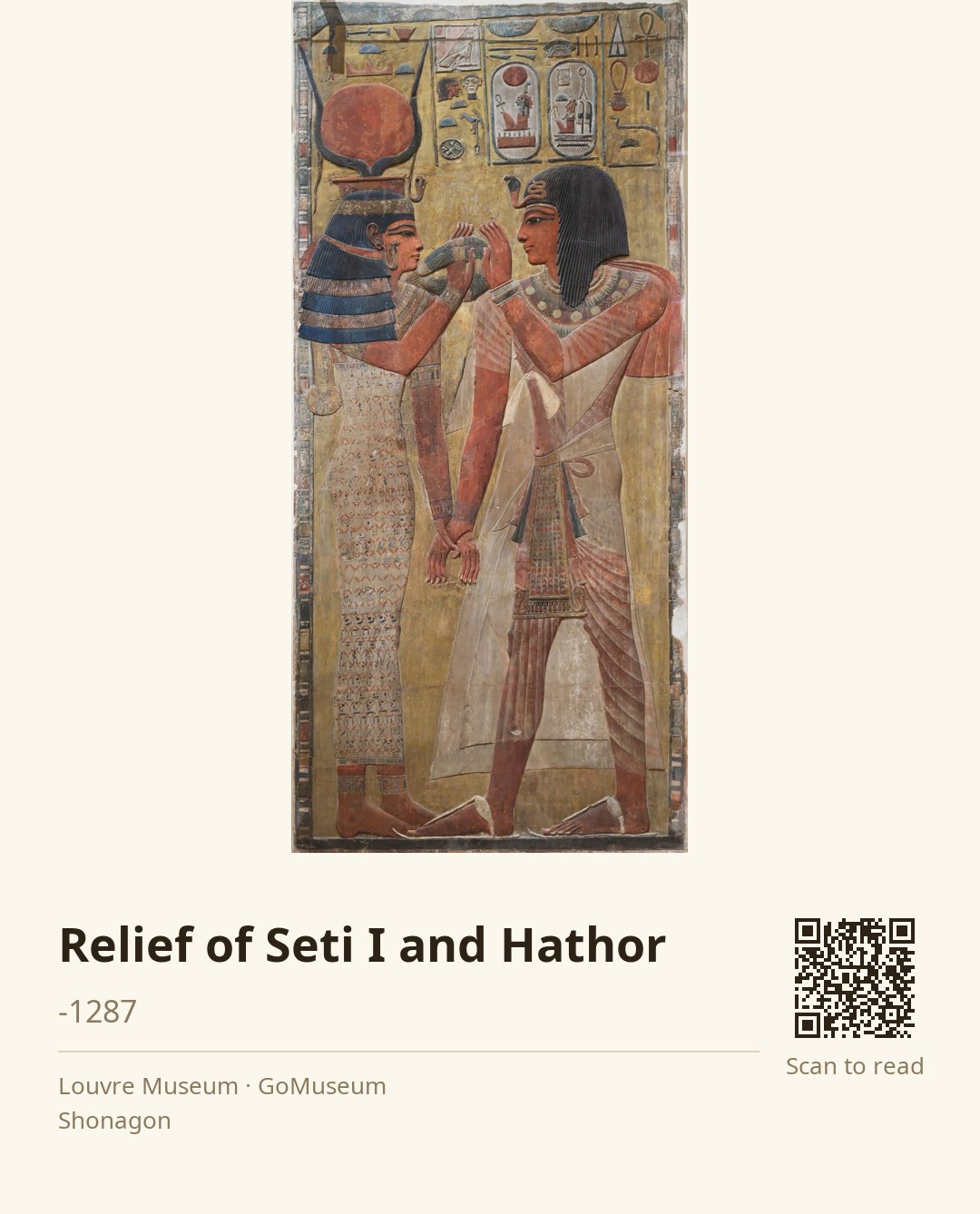
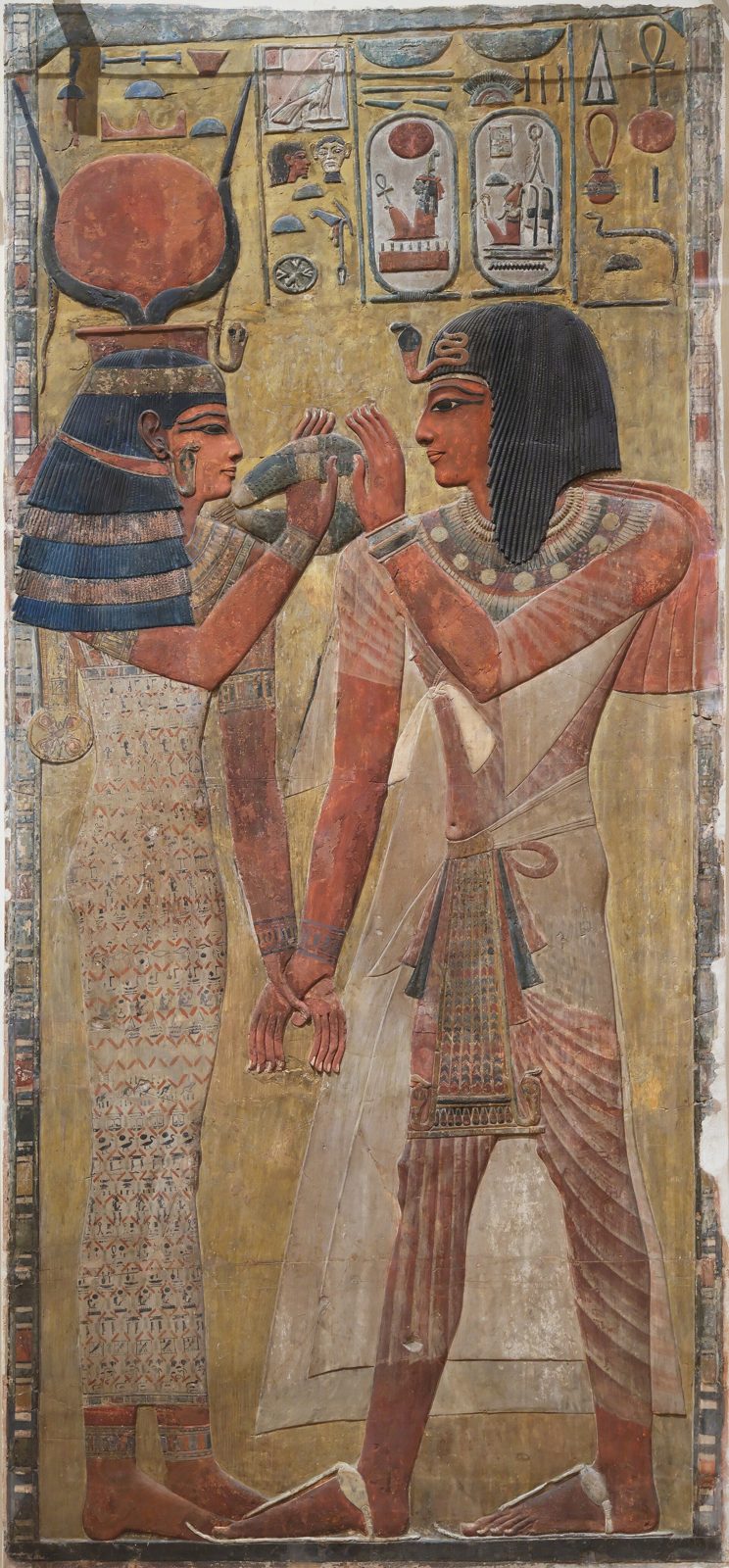
🎧 This work has audio narration — listen in the appHathor and Seti I stand face to face in this limestone sculpture from 1287 BCE, their striking garments and headdresses rich with symbolism. The left figure, representing Hathor, is adorned with a patterned garment and a headdress featuring horns and a sun disk, while Seti I on the right wears a cobra headdress and a kilt, both intricately detailed. Their raised hands suggest a moment of interaction, with Hathor presenting an object toward Seti I, emphasizing their divine connection.
The hieroglyphs and symbols in the background add layers of meaning, depicting a seated figure alongside various objects that hint at the spiritual and ceremonial significance of this scene. The earthy palette of reds, blues, and golds enhances the sense of reverence, drawing the viewer into the sacred narrative unfolding between these two powerful figures.
This sculpture is carved from limestone, a material favored by ancient Egyptian artisans for its durability and ease of manipulation. Notice the intricate details in the garments of Hathor and Seti I; the patterns are not just decorative but also convey meaning. The craftsmanship is evident in the smooth finish of the figures, contrasting with the rougher texture of the background. The way the headdresses are shaped shows a mastery of form, capturing the essence of these powerful deities.
The earthy palette of reds, blues, and golds is often associated with the divine and the sacred in ancient Egyptian art, enhancing the reverence of the depicted scene.