 Image: Tangopaso
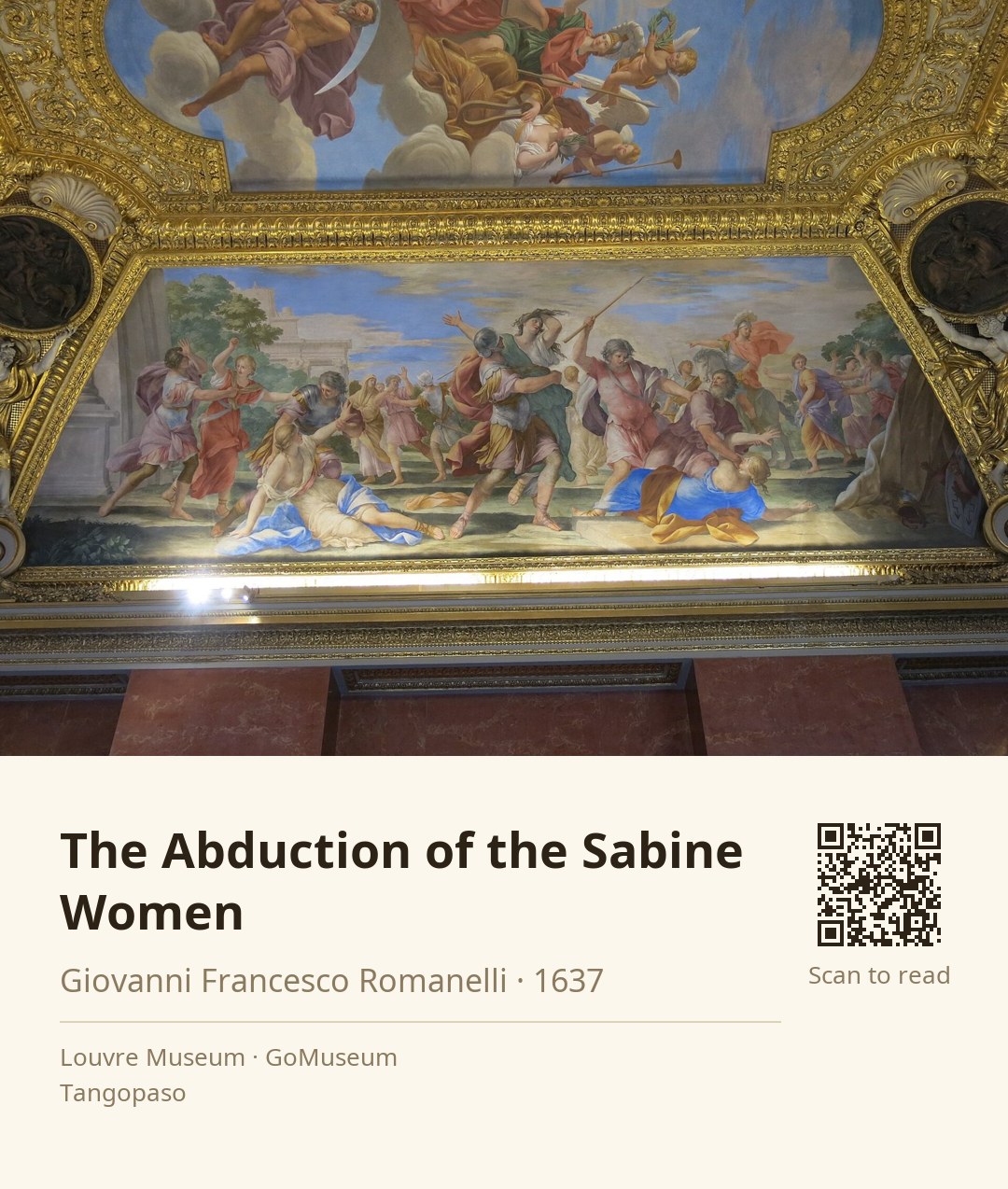
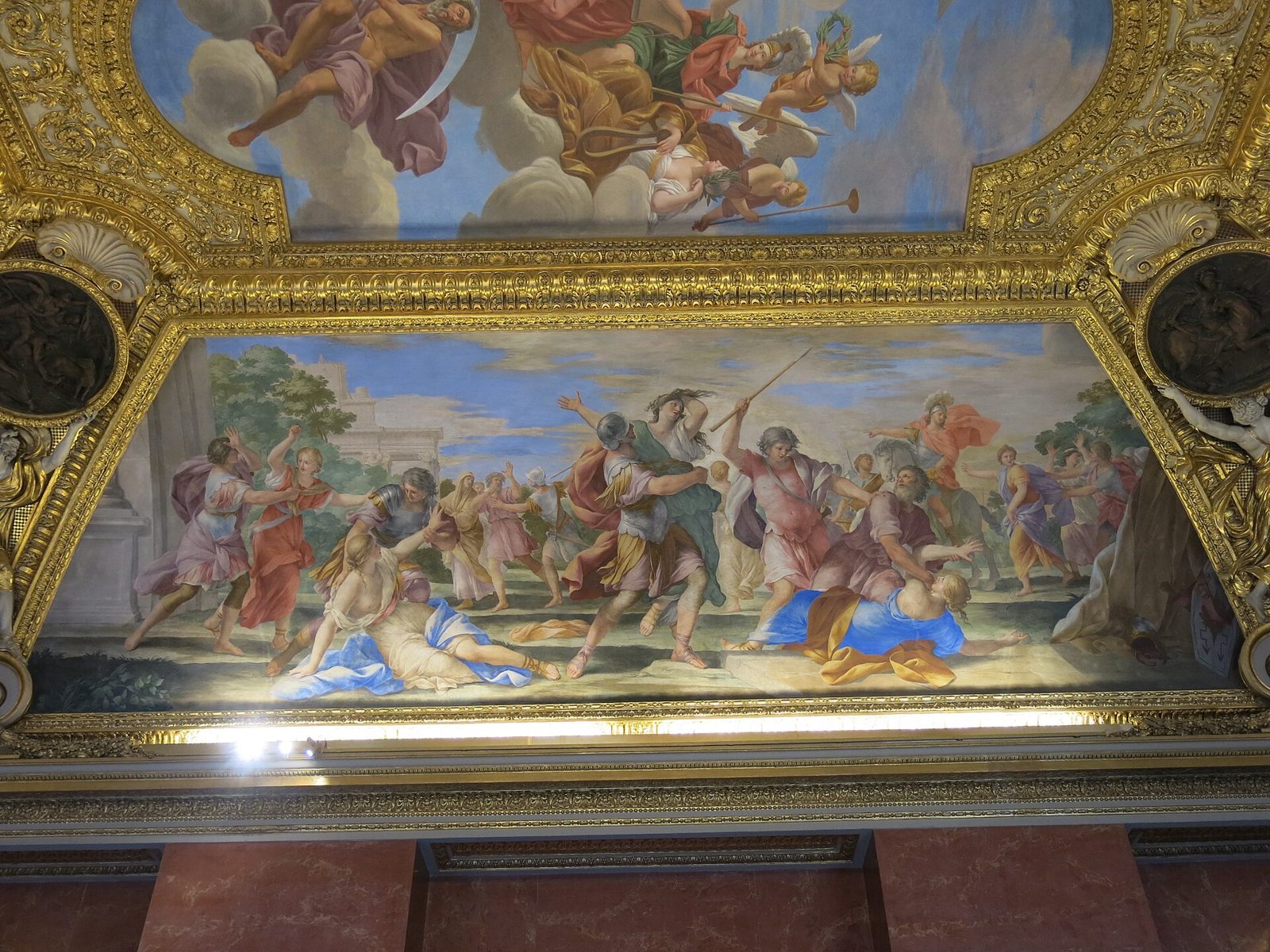
The Abduction of the Sabine Women
🎧 This work has audio narration — listen in the appThe chaotic struggle depicted in this fresco draws you into a moment of intense conflict. In the foreground, a man in a striking green garment raises a weapon, surrounded by figures caught in a flurry of motion, while a woman in a blue and gold dress reaches out from the ground, embodying both vulnerability and desperation. The dynamic composition creates a palpable tension, inviting you to feel the urgency of the scene.
Romanelli's choice of vivid colors and intricate detailing enhances the drama, making each figure's expression and posture resonate with the viewer. The architectural elements and trees in the background, set against a blue sky, frame this tumultuous moment, grounding it in a recognizable world while elevating its emotional stakes. This lively arrangement reflects the Baroque style's emphasis on movement and emotion, showcasing Romanelli's mastery in capturing the human experience.
His works are characterized by their clarity and vibrancy, which would later earn him recognition in both Italy and France.
Giovanni Francesco Romanelli was an influential Italian Baroque painter born in Viterbo in 1610. He moved to Rome at 14, where he studied under Pietro da Cortona, contributing to significant projects like the Palazzo Barberini's frescoes. Romanelli's early works showcased his mastery of color and detail, leading to commissions from the Barberini family, including a notable fresco in St. Peter's Basilica. His style evolved from Cortona's Venetian influences to a more refined classicism, evident in pieces like his altarpiece for Santa Maria degli Angeli.
In 1646, Romanelli relocated to Paris, invited by Cardinal Mazarin, where he adapted his style to French tastes, creating grand ceiling decorations that influenced future artists like Charles Le Brun. He returned to Rome in 1648 but continued to work in France, decorating royal residences. Romanelli's contributions to art were recognized with his knighthood in the Order of St. Michael by Louis XIV. He passed away in 1662, leaving a legacy marked by vibrant works displayed in prestigious collections, including the Louvre, solidifying his place in art history.
In 1637, Giovanni Francesco Romanelli embarked on a significant chapter of his career, receiving a commission for a fresco cycle that would depict scenes from the Life of Matilda of Tuscany. This project, located in the Sala della Contessa Matilda in the Vatican, marked a pivotal moment for Romanelli, as it showcased his emerging talent in large-scale compositions. Romanelli's works during this period were characterized by their vibrant colors and clarity of detail, traits that would later earn him acclaim in both Italy and France. His connection with the Barberini family, particularly Pope Urban VIII, provided him with substantial patronage, but this support waned after Urban's death in 1644. This shift prompted Romanelli to leave Rome for Paris in 1646, where he continued to make his mark on the art world.
While in France, he was honored by King Louis XIV and made a knight of the Order of St. Michael.