 Image: 三猎
Dagger (kanjar) with a horse-head hilt
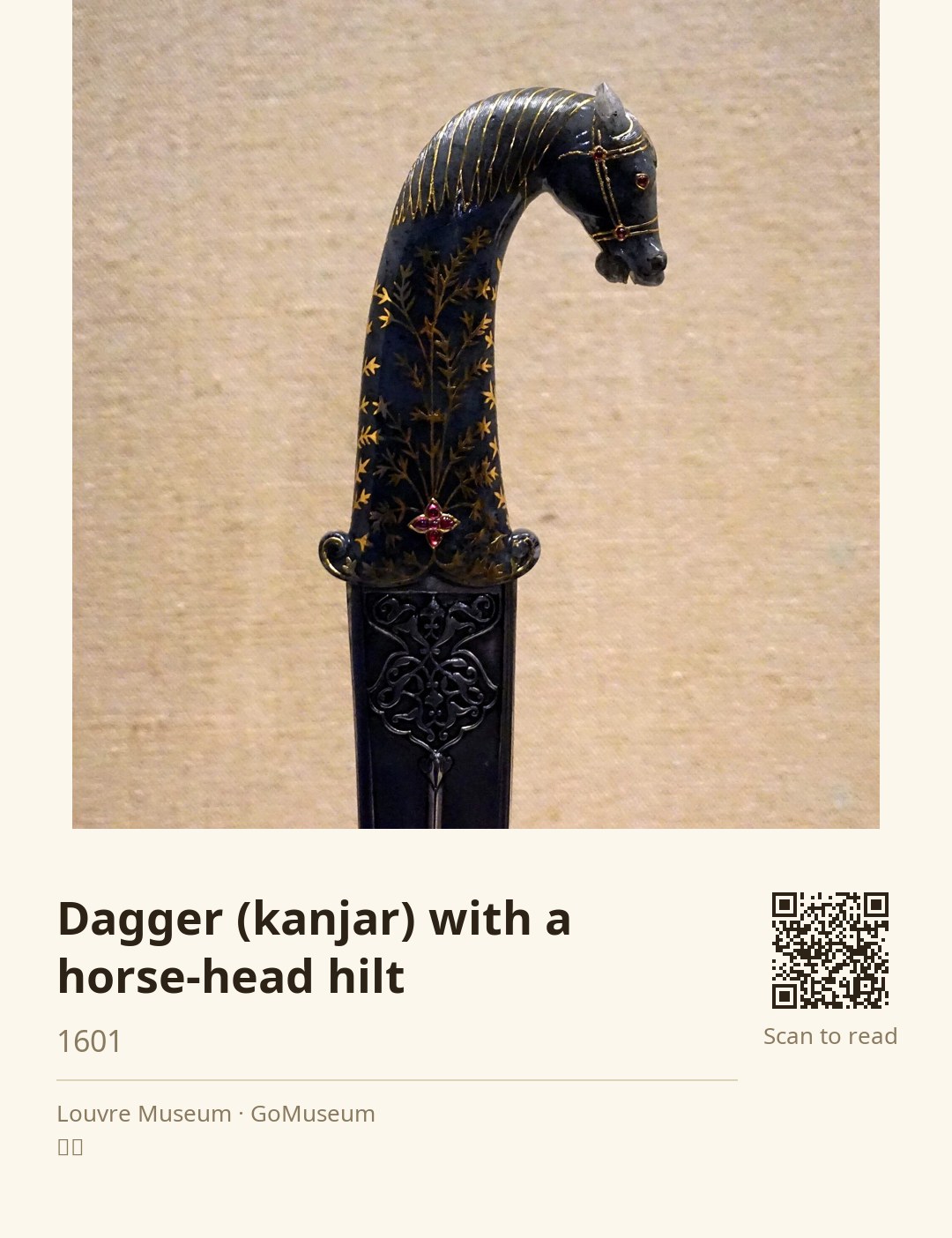
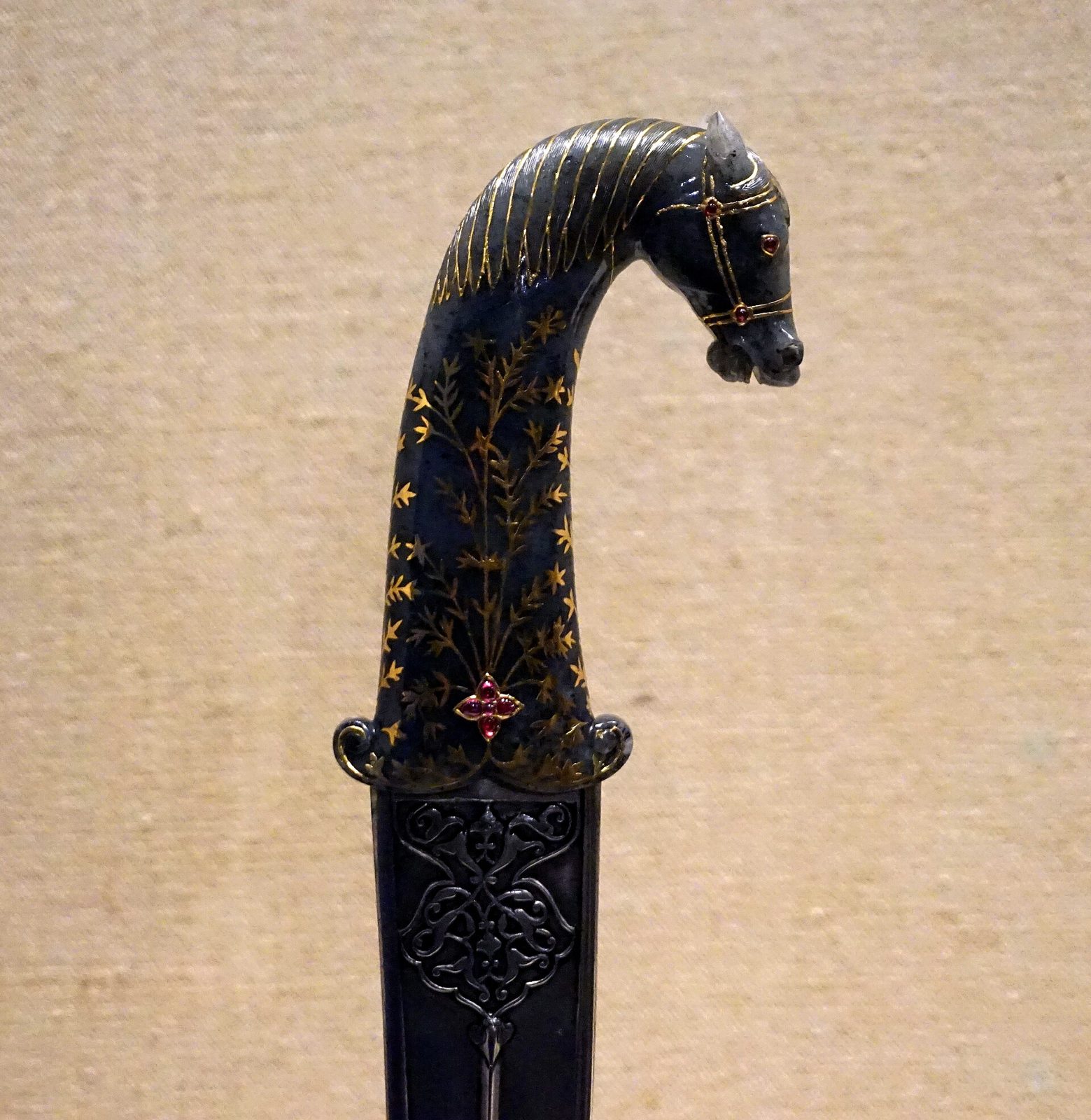
🎧 This work has audio narration — listen in the appThe dagger before you, known as Louvre R 886, features a striking handle shaped like a horse's head, a design that immediately draws the eye. The handle's dark blue or black surface is intricately adorned with gold leaf patterns that evoke the delicate forms of vines or foliage, while the horse's head itself is meticulously detailed, showcasing bridle elements that gleam in gold. The inlaid red eyes, likely crafted from a gemstone, add a captivating touch of life to this elegant piece.
This combination of materials and design reflects a sophisticated blend of functionality and artistry, suggesting that it was not merely a weapon but also a status symbol or decorative object. The ornate sheath, with its symmetrical relief patterns, enhances the overall elegance, indicating that the dagger was crafted with great care and skill. Such craftsmanship points to a culture that valued both beauty and utility in their objects.
Created in 1601, this dagger stands as a testament to the intricate artistry of its time, showcasing the high level of skill and creativity that artisans possessed in the early 17th century.
The dagger known as Louvre R 886 was created in 1601, a time when intricate craftsmanship was highly valued. This particular dagger has been housed in the Louvre, a prestigious museum that has displayed countless masterpieces throughout history. The reception of this work, like many ornate weapons of its time, likely varied, with some viewing it as a mere weapon while others recognized its artistic merit.
The horse's eyes are inlaid with a red material, which is likely a gemstone, adding a striking detail to the overall design.
The handle features a red, jewel-like ornament shaped like a flower, enhancing its decorative appeal.
The sheath is adorned with ornate, symmetrical relief patterns, contributing to the dagger's overall elegance.