 Image: Shonagon · Romainbehar · Romainbehar · Shonagon
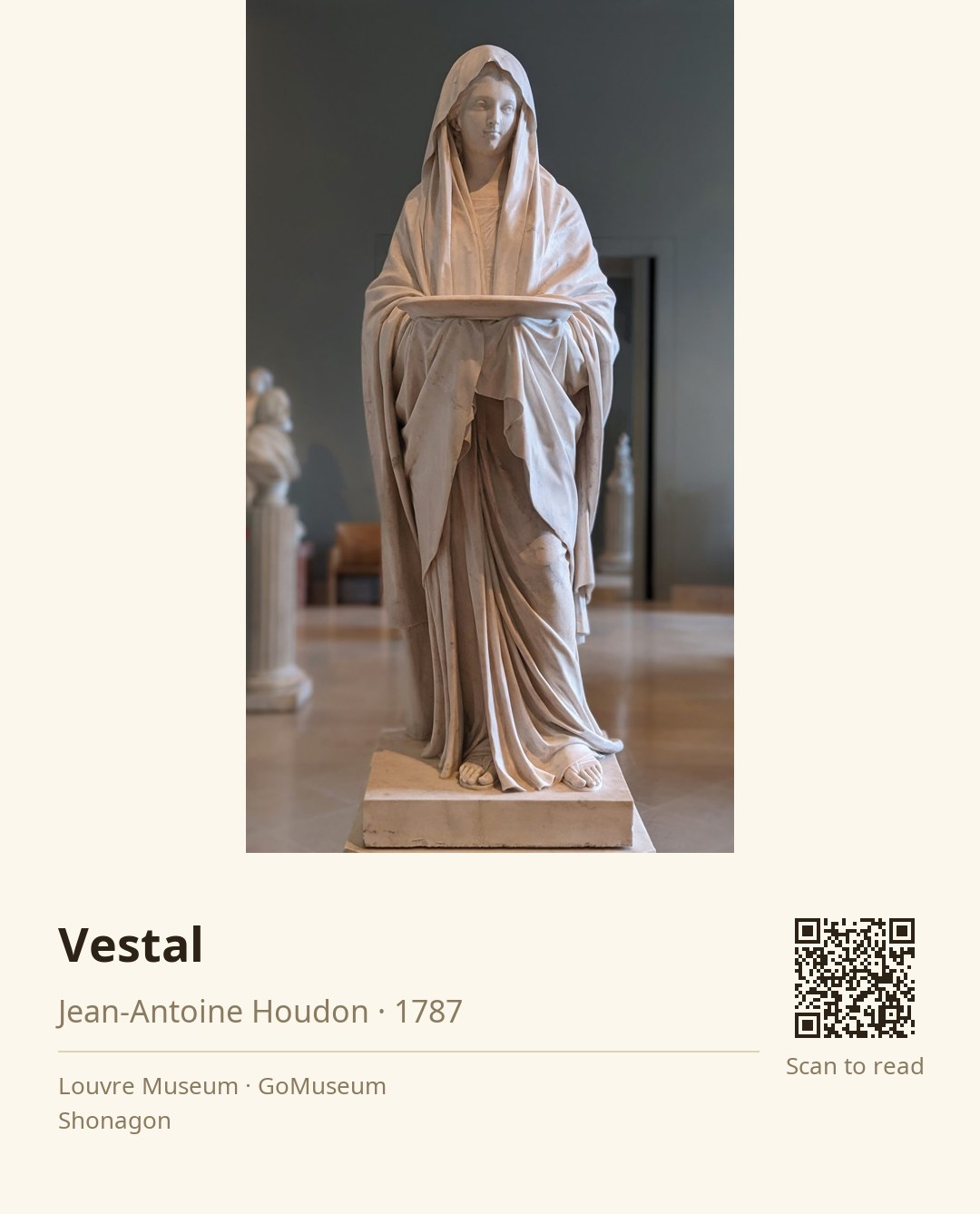
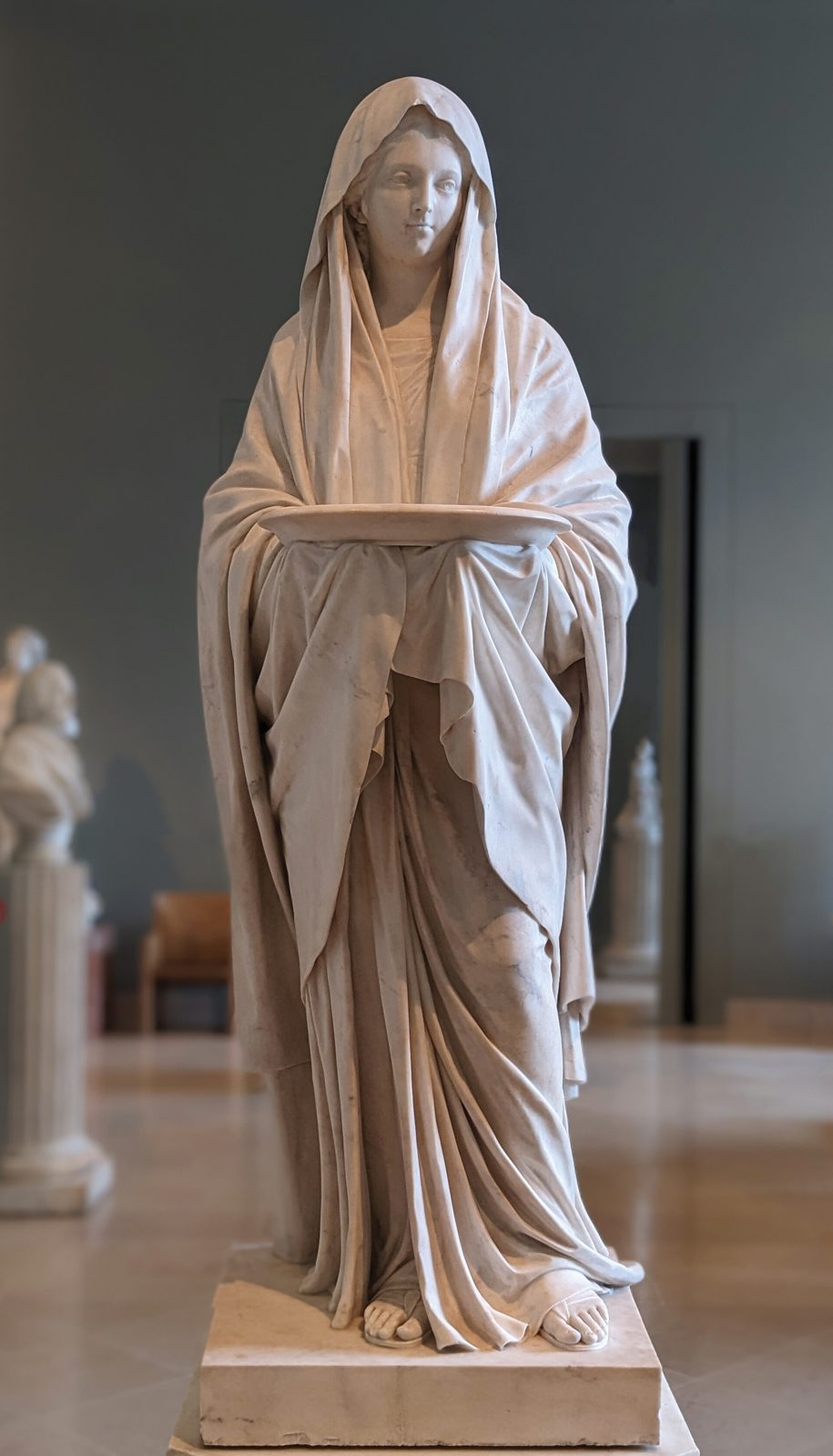
The flowing robe of the figure before you envelops the body in a cascade of intricate folds, suggesting both modesty and grace. The serene face, with its delicate features, invites contemplation, while the hands gently grasp the drapery, emphasizing the softness of the fabric. This masterful carving by Jean-Antoine Houdon captures not just the physical form but also a profound sense of tranquility.
Houdon, a prominent neoclassical sculptor of the 18th century, was known for his ability to blend realism with idealism, drawing from his studies of anatomy and classical art. His works often reflect the Enlightenment's values, portraying figures of great historical significance. The texture of the robe in this sculpture showcases Houdon's exceptional skill in marble, allowing the viewer to appreciate the lifelike quality of the fabric, which contrasts with the solid base beneath. Each fold and contour is meticulously crafted, revealing his dedication to both detail and form.
Born in Versailles in 1741, Houdon trained at the Académie royale de peinture et de sculpture and became renowned for his portrait busts of influential figures, including George Washington and Voltaire. His work from 1787, including this sculpture, reflects the height of his artistic prowess, as he sought to capture the essence of his subjects with both precision and emotional depth.
Jean-Antoine Houdon, born on March 20, 1741, in Versailles, was a prominent French neoclassical sculptor known for his lifelike portrait busts and statues of Enlightenment figures. He studied at the Académie royale de peinture et de sculpture, where he was influenced by masters like René-Michel Slodtz. Winning the Prix de Rome in 1761, Houdon spent four years in Italy, where he honed his skills in realism and anatomy, producing notable works like the écorché.
Returning to Paris, he gained acclaim for his portraits, including those of Voltaire and George Washington, the latter commissioned by Benjamin Franklin. Houdon's ability to capture the essence of his subjects made him a key figure in the art world, earning him membership in the Académie and recognition during the French Consulate and Empire.
Despite facing challenges during the French Revolution, Houdon remained a respected artist, receiving honors such as the Chevalier de la Légion d'honneur. He passed away on July 15, 1828, in Paris, leaving behind a legacy that influenced American art, particularly through his depictions of Washington, which were later used on U.S. postage stamps. His work embodies the spirit of the Enlightenment, bridging classical ideals with contemporary subjects.
Houdon’s mastery of marble is evident in the way he carves the flowing robe, each fold a testament to his skill. The texture mimics the softness of fabric, inviting you to almost reach out and touch it. Notice how the intricate details of the drapery contrast with the solid base beneath, grounding the figure while allowing the robe to appear weightless. This delicate balance showcases Houdon’s profound understanding of both material and form, making the sculpture feel alive, as if it could move at any moment.
Created in 1787, this sculpture was part of Houdon's prolific output during a time when he was at the peak of his career. Houdon was commissioned by various patrons, including notable figures from the Enlightenment, and his works were often displayed at the Salon, the premier art exhibition in France. The reception of his sculptures was generally positive, as audiences were captivated by his ability to blend realism with idealism. This particular piece reflects the artistic trends of the late 18th century, embodying the values of the Enlightenment. Houdon’s works were sought after not just in France but also abroad, influencing artistic circles in places like the United States, where he was invited to create a statue of George Washington.
One intriguing aspect of Houdon’s career is that he was not only a celebrated sculptor but also a member of a masonic lodge, Les Neuf Sœurs, which included prominent figures like Benjamin Franklin. This connection led to Houdon being invited to America to create a statue of George Washington, making him one of the few European artists to have traveled to the United States during that era.
Houdon was a member of the masonic lodge Les Neuf Sœurs, which included notable figures such as Benjamin Franklin, influencing his connections and opportunities.
Houdon's patrons included influential figures from the Enlightenment, and his sculptures were frequently exhibited at the Salon, France's leading art exhibition.
Houdon was invited by Benjamin Franklin to travel to America in 1785 to visit Mount Vernon, where Washington posed for him, leading to the creation of his famous portrait sculpture.