Et in Arcadia ego
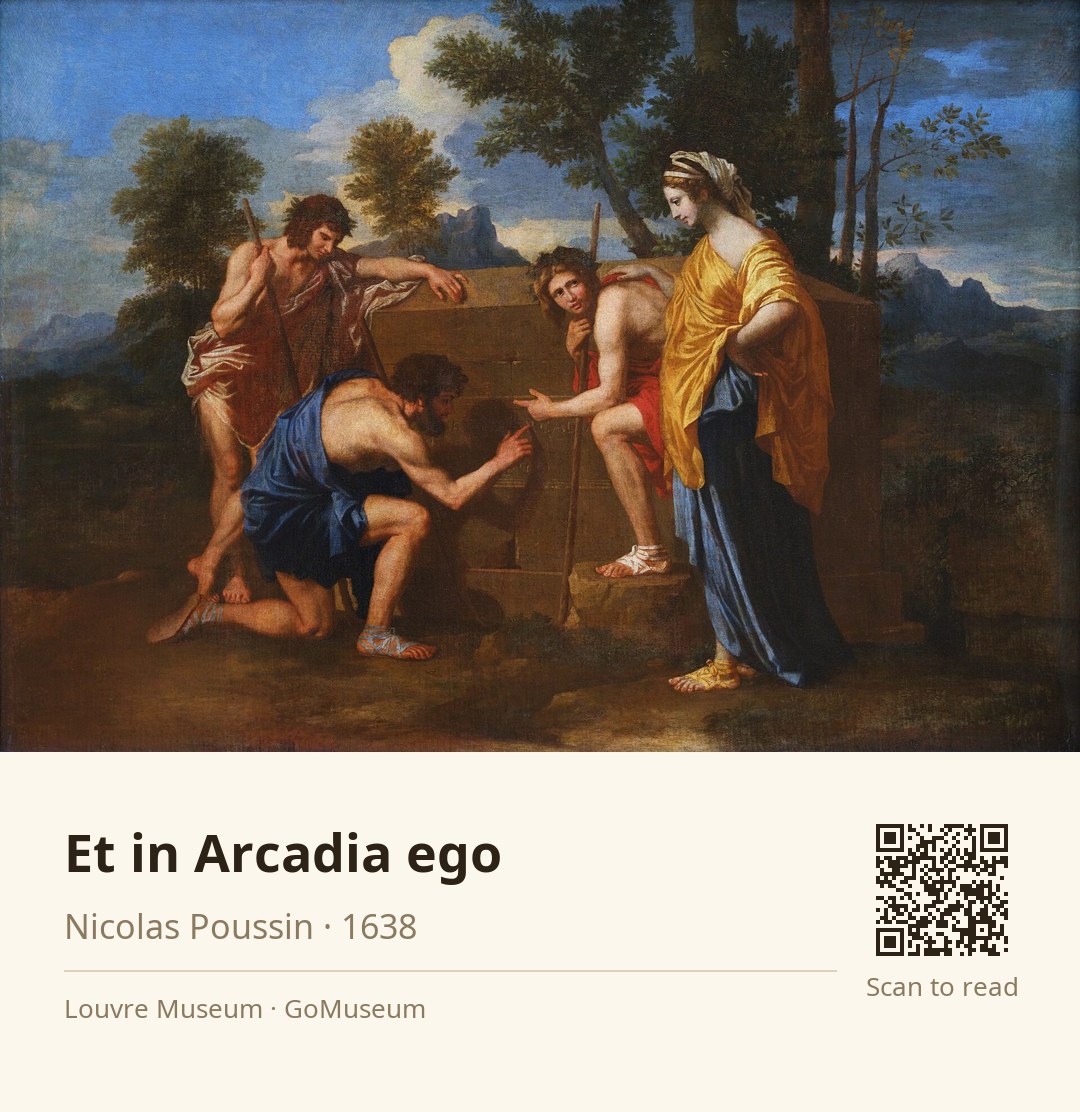
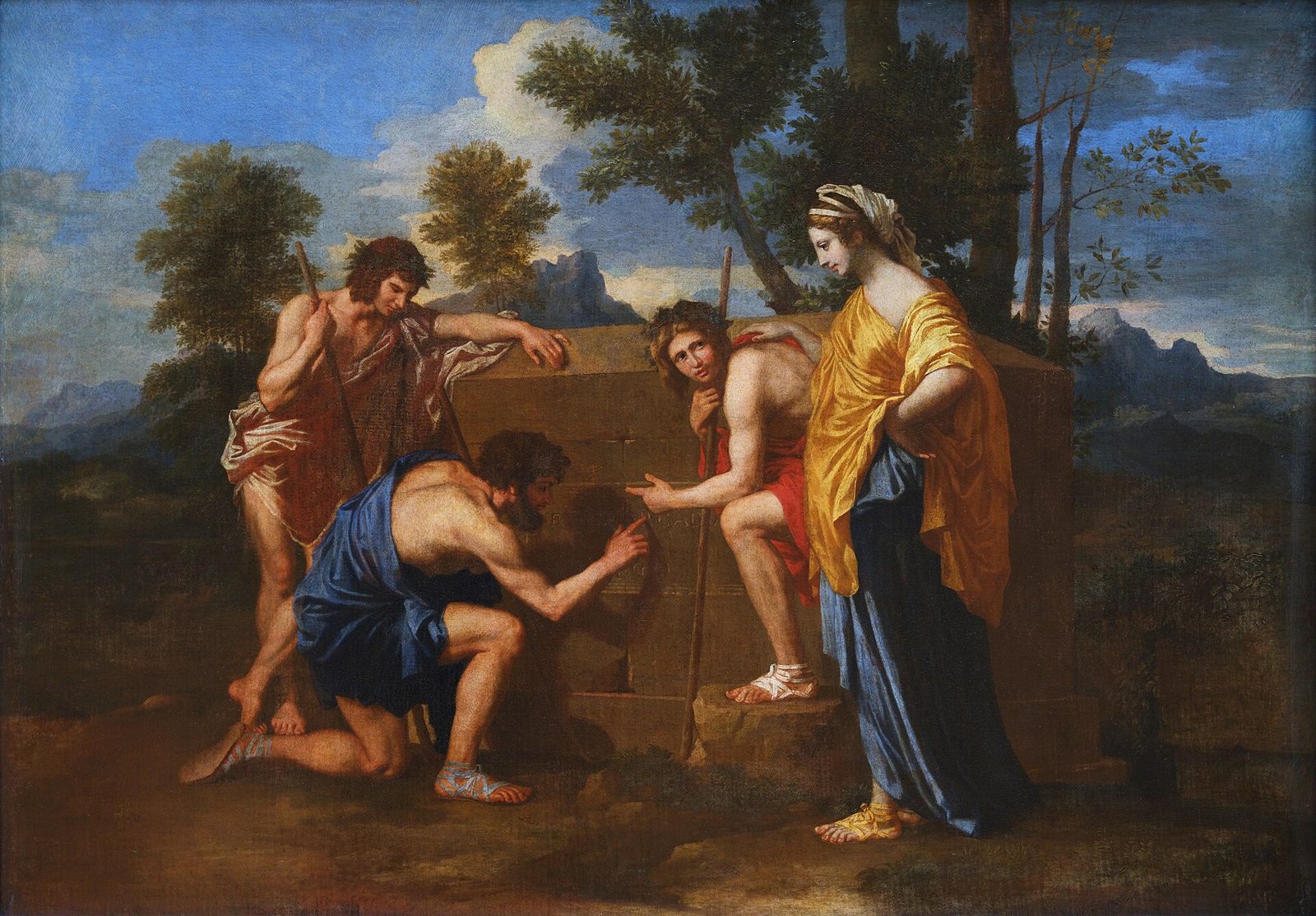
🎧 This work has audio narration — listen in the appTake a moment to really look at "Et in Arcadia ego" by Nicolas Poussin. Notice how the shepherds are gathered around a tomb, their expressions a mix of curiosity and contemplation. The way they interact with the grave speaks volumes; one of them is tracing the shadow of his companion on the stone. This detail is crucial—it’s not just a moment of discovery but a profound commentary on mortality and the nature of art itself.
The phrase "Et in Arcadia ego" translates to "Even in Arcadia, there am I," suggesting that death is an inescapable part of existence, even in an idyllic paradise. This painting serves as a memento mori, a reminder that life’s pleasures are fleeting.
Poussin was influenced by classical themes and literature, drawing from the pastoral ideal of Arcadia, a place of harmony and beauty. Yet, he juxtaposes this with the stark reality of death, creating a tension that resonates through the ages.
As you stand here, think about the shadow on the tomb. What does it mean to you? How does it change your perception of beauty and mortality?
Nicolas Poussin, born in June 1594 near Les Andelys, was a pivotal figure in the classical French Baroque movement, spending most of his career in Rome. His early life was marked by a passion for art that led him to Paris at eighteen, despite his parents' opposition. In Paris, he struggled initially, but his exposure to royal collections ignited his admiration for Italian masters, particularly Raphael. This influence shaped his distinctive style, characterized by clarity, order, and a preference for line over color.
Poussin's artistic journey took him to Rome in 1624, where he developed a reputation for his religious and mythological works, often commissioned by a select group of collectors. His notable pieces include "The Death of Germanicus" and "The Massacre of the Innocents." Although he briefly returned to France as First Painter to Louis XIII, he found the court's demands stifling and returned to Rome, where he continued to evolve, integrating landscapes into his compositions.
His legacy is profound; Poussin's emphasis on classical themes and structure influenced generations of artists, including Jacques-Louis David and Paul Cézanne. He remains a cornerstone of classical painting, with around 260 attributed works and nearly 400 drawings, solidifying his place in art history until his death in 1665.
Nicolas Poussin's 'Et in Arcadia Ego' was painted in 1638, but it's important to note that this was actually the second version of a theme he explored earlier. The first version, created between 1628 and 1630, resides in Chatsworth House, England. This later work, often referred to as 'Les Bergers d'Arcadie,' found its home in the Louvre, where it has captivated audiences ever since. The title itself, translating to 'Even in Arcadia, I am,' carries a profound message about mortality, suggesting that even in idyllic settings, death is an inevitable companion. Poussin's exploration of this theme reflects a broader Renaissance fascination with the juxtaposition of life and death, and the painting's reception over the centuries has only solidified its status as a masterpiece. It has influenced countless artists and continues to be a pivotal piece in the narrative of art history.
As you gaze at 'Et in Arcadia ego,' notice the geometric composition that Poussin employs. The arrangement of the figures around the tomb creates a triangular structure, drawing your eye to the central theme of mortality. The brushwork is meticulous, with each character rendered in a way that conveys both their individuality and their shared experience of contemplation. The color palette is earthy, with muted greens and browns that evoke a sense of pastoral tranquility, contrasting sharply with the stark white of the tomb. This juxtaposition highlights the tension between life and death. Poussin's use of light is also noteworthy; it subtly illuminates the figures, creating a soft glow that enhances the contemplative mood. The shadow cast by one shepherd tracing the outline of his companion on the tomb is particularly striking—it serves as a poignant reminder of the interplay between existence and art, suggesting that even in paradise, the specter of death looms.
Did you know that Poussin actually created two versions of 'Et in Arcadia Ego'? The first one, painted earlier, is more baroque and lively, with the shepherds actively uncovering a tomb. In contrast, the second version, which you see here, is much more contemplative. One of the shepherds even traces the shadow of his companion on the tomb, symbolizing not just the inevitability of death, but also the birth of art itself.
Poussin faced opposition from his parents regarding his pursuit of art, leading him to run away to Paris at 18, where he was exposed to the royal art collections that greatly influenced his style, particularly the works of Raphael.
Arcadia represents an idealized pastoral life, and Poussin's use of this theme reflects a longing for harmony and beauty, while simultaneously confronting the reality of death, creating a complex narrative that resonates with the viewer's understanding of life.