Susanna and the Elders
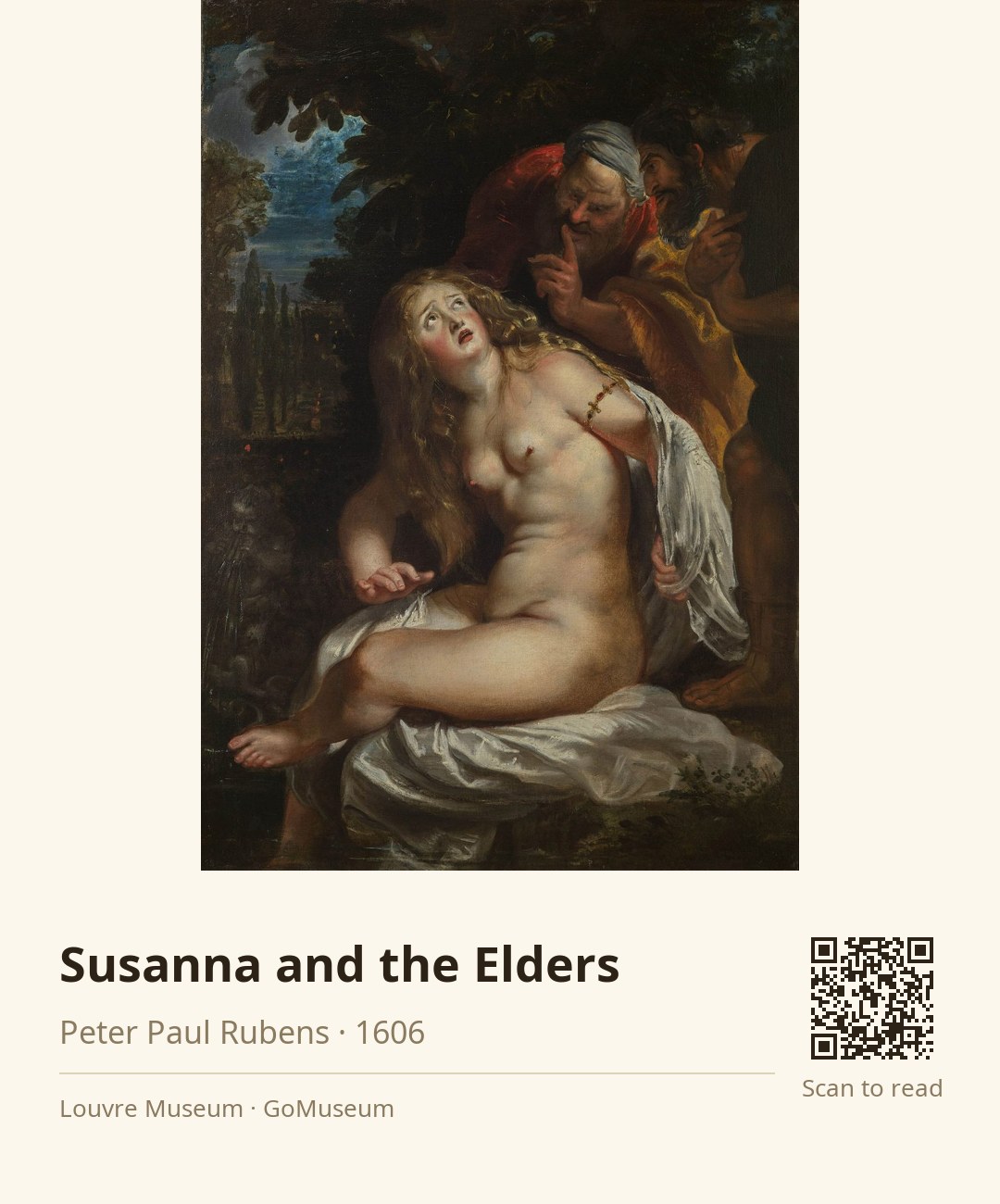
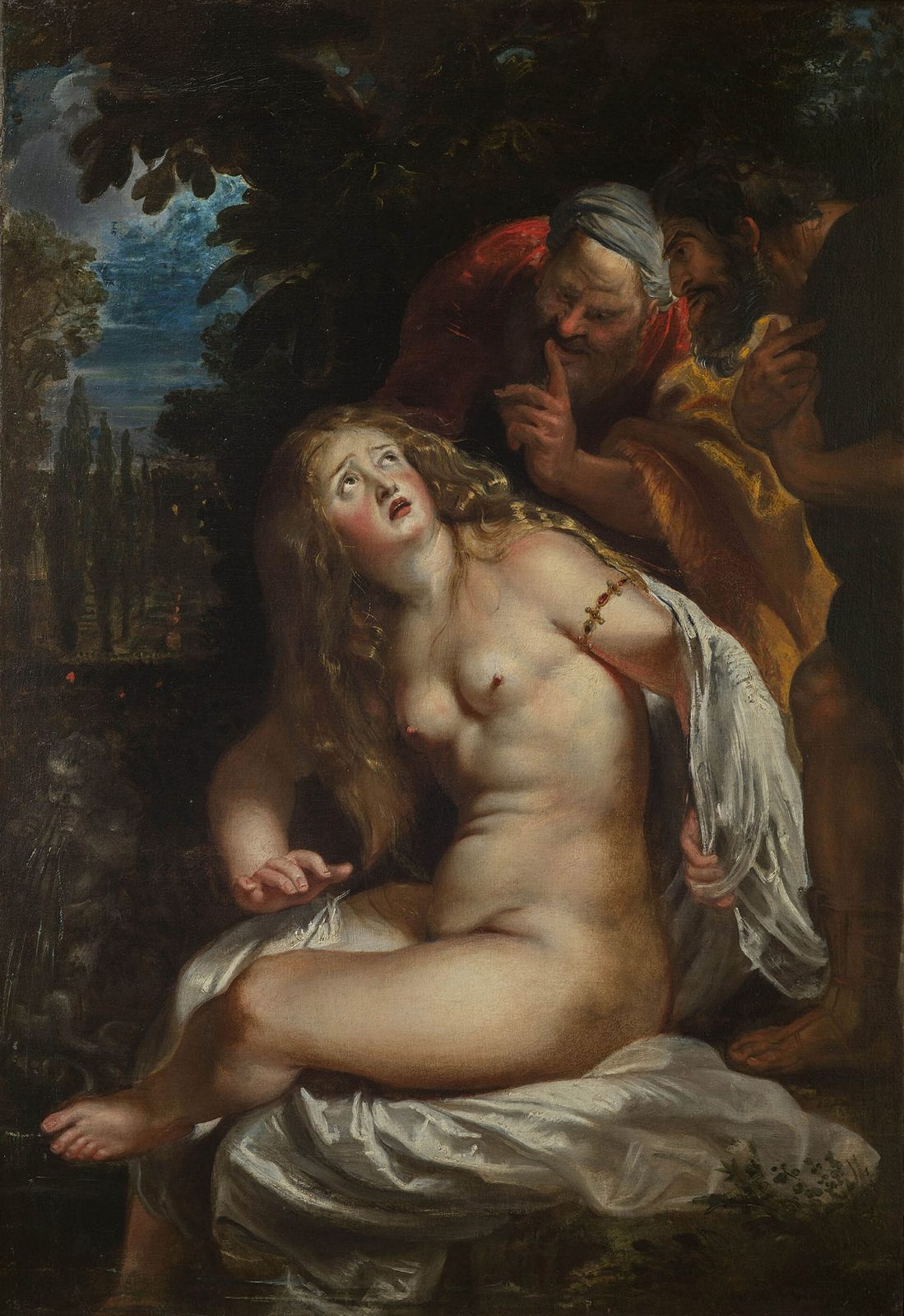
🎧 This work has audio narration — listen in the appTake a moment to really look at "Susanna and the Elders" by Peter Paul Rubens. Notice how Susanna, sitting on that rock, seems almost caught in a moment of vulnerability. Her expression—part shock, part fear—draws you in, doesn’t it? And look at the way the light dances across her skin, highlighting her delicate form while contrasting with the dark, looming figures of the elders behind her.
These details matter because they encapsulate the tension of the moment. Rubens masterfully captures not just the physical beauty of Susanna, but also the moral dilemma she faces. The elders, with their lecherous gazes and gestures, represent the threat of power and lust, while Susanna embodies innocence and virtue. This painting isn’t just a pretty scene; it’s a dramatic narrative about consent and judgment.
As you stand here, think about the emotions this scene evokes. How do you feel about Susanna’s predicament? What does her story say to you today?
Sir Peter Paul Rubens was a Flemish artist and diplomat born on June 28, 1577, in Siegen, Germany. He is celebrated as a leading figure of the Flemish Baroque tradition, renowned for his dynamic compositions that intertwine classical and Christian themes. Rubens's work is characterized by vibrant color, movement, and sensuality, aligning with the dramatic style of the Counter-Reformation. His prolific output includes altarpieces, portraits, landscapes, and history paintings, with a catalog of over 1,400 works.
Raised in Antwerp after fleeing religious persecution, Rubens was a well-educated humanist and skilled diplomat, knighted by both Philip IV of Spain and Charles I of England. He managed a large workshop that produced art for European nobility and collectors, and he was also an influential art dealer. Rubens's designs extended beyond painting; he created tapestries, prints, and even contributed to architectural projects.
His legacy endures in the art world, where he is recognized for his mastery of color and form, and his ability to convey emotion and drama. Rubens's impact on Baroque art is profound, making him a pivotal figure in the evolution of Western art history. He passed away on May 30, 1640, leaving behind a rich artistic heritage that continues to inspire.
This piece is significant as it marks his earliest exploration of the Susanna narrative, a theme he would revisit throughout his career. The painting has been housed in the Galleria Borghese in Rome since at least the mid-17th century, showcasing its long-standing prominence. Over the years, Rubens created multiple versions of this scene, including a youthful interpretation in 1608 and a late-period piece in the Alte Pinakothek. Each version captures different nuances of the story, revealing Rubens's evolving artistic vision and the enduring relevance of Susanna's plight.
As you gaze at 'Susanna and the Elders,' take a moment to appreciate Rubens's masterful brushwork. Notice how the light plays across Susanna's skin, creating a soft glow that contrasts sharply with the darker tones of the elders lurking behind her. This use of chiaroscuro not only highlights her vulnerability but also amplifies the tension in the scene. The composition is dynamic, with Susanna's turned body creating a diagonal line that draws your eye across the canvas. The elders, with their gestures and expressions, seem to invade her space, making the viewer feel the weight of their gaze. Rubens's choice of color is equally compelling; the warm flesh tones of Susanna juxtaposed against the cooler, shadowy figures of the elders create a palpable sense of conflict. The lush, detailed background, with its classical elements, adds depth, inviting you into this moment of moral crisis.
Interestingly, Rubens was not just a painter; he was also a diplomat and a scholar. His extensive travels and education in Italy deeply influenced his artistic style. In fact, he was known to have a vast collection of art and books, which he used to inform his work. This diverse background allowed him to blend classical themes with the emotional intensity of the Baroque, making his art resonate with a wide audience.
The lush, classical background with its trees and fountain not only adds depth to the composition but also reflects the ideals of beauty and nature prevalent in Rubens's time, contrasting with the darker themes of the narrative.