Venus and Cupid with a Satyr
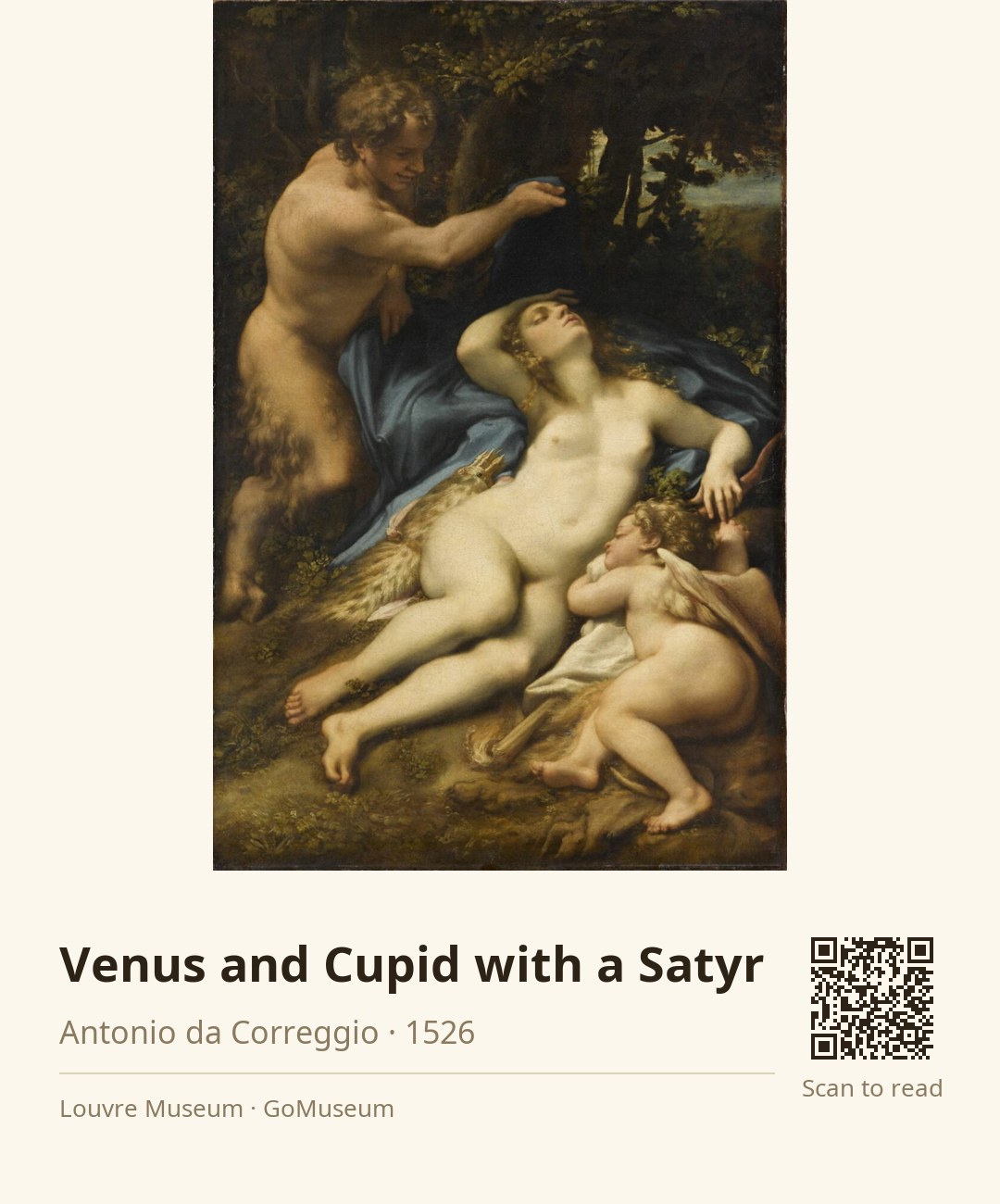
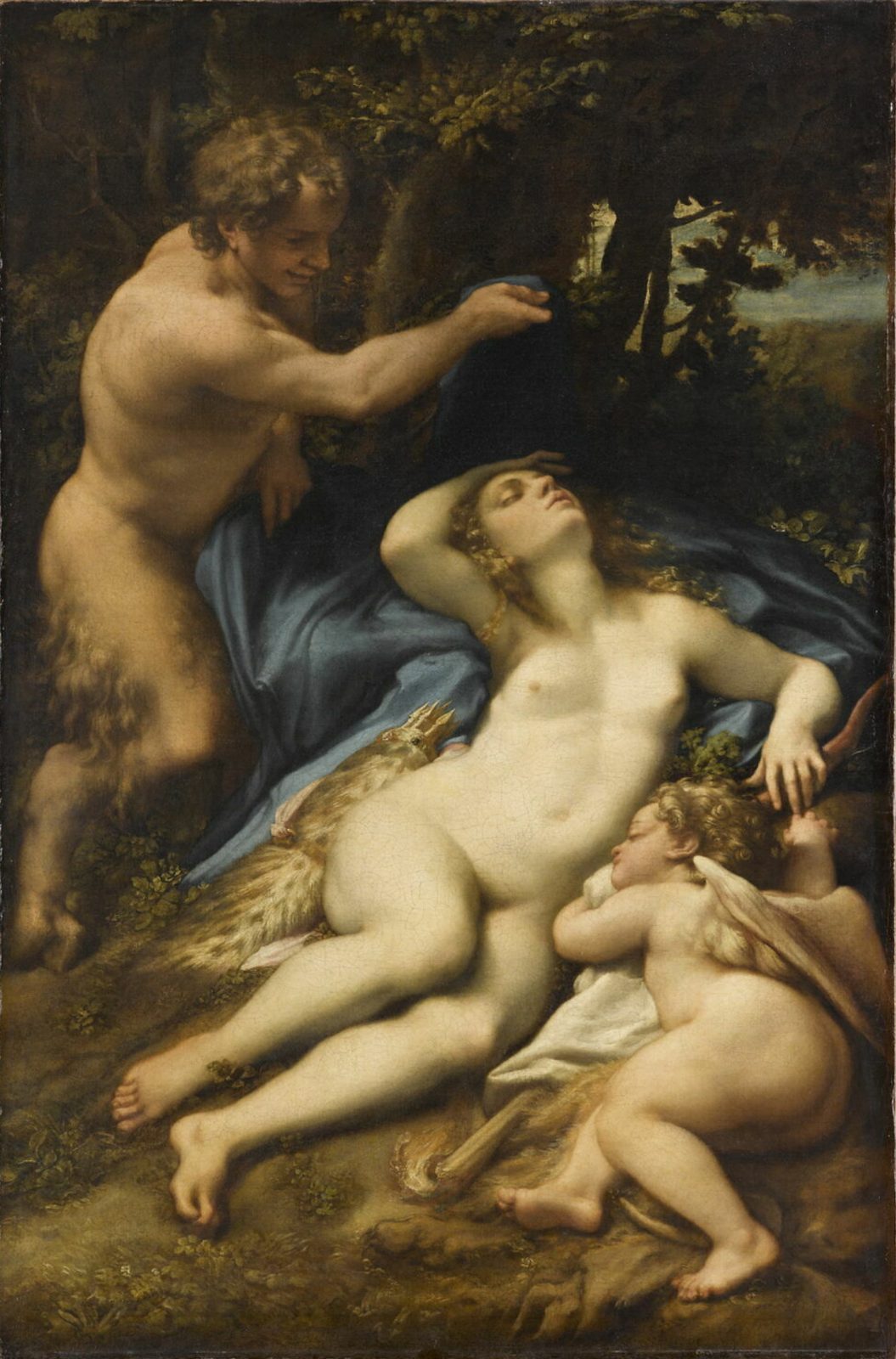
🎧 This work has audio narration — listen in the appAs you stand before "Venus and Cupid with a Satyr," let your eyes wander over the tender scene unfolding here. Notice how Venus, the goddess of love, is draped in soft, flowing fabrics that seem to shimmer in the light, while her son Cupid rests peacefully beside her. But look closely at the satyr lurking behind them—his mischievous expression and goat-like features add a layer of intrigue to this serene moment.
These details matter because they reveal the tension between innocence and desire. The satyr, a creature of lust and revelry, contrasts sharply with the purity of Venus and Cupid, suggesting a playful yet cautionary tale about love's dual nature. Correggio, the artist, was a master of capturing such complexities, using light and shadow to create an almost dreamlike quality that pulls you into the scene.
Created around 1526, this painting is part of a series that explores themes of love and mythology, reflecting the Renaissance's fascination with both classical stories and human emotion.
As you take in this captivating artwork, consider: what does love mean to you? How does this scene resonate with your own experiences of affection and desire?
Antonio Allegri da Correggio, known simply as Correggio, was an influential Italian Renaissance painter born around August 1489 in Correggio, Emilia-Romagna. He emerged as a leading figure in the Parma school, celebrated for his dynamic compositions and mastery of chiaroscuro. Little is known about his early life, but he likely received his initial training from his uncle, Lorenzo Allegri, and later apprenticed with Francesco Bianchi Ferrara in Modena.
Correggio's career flourished in Parma, where he created some of his most significant works, including the ceiling frescoes of the Camera di San Paolo and the dome of the Cathedral of Parma. His innovative use of illusionistic perspective and foreshortening prefigured the Baroque style, influencing future generations of artists. His mythological series, particularly the Loves of Jupiter, showcased his ability to blend sensuality with narrative depth.
Despite a relatively short life, ending in 1534, Correggio's contributions to art were profound, establishing him as a precursor to Baroque painting and a master of emotional expression. His legacy endures, with his works continuing to inspire artists and captivate audiences.
The painting 'Venus and Cupid with a Satyr' was created by Antonio da Correggio around 1526 and has a fascinating history. Initially part of the private collection of Count Nicholas Maffei, it likely found its way into the hands of the Gonzaga family in the 17th century, thanks to family ties through marriage. This connection between the Maffei and Gonzaga families highlights the intricate web of relationships among Renaissance patrons and artists. Over the years, the painting changed hands, eventually becoming part of the collection of Cardinal Mazarin, from whom it was acquired by Louis XIV in 1665. This royal acquisition speaks to the painting's esteemed status, as it transitioned from private enjoyment to a piece of national pride in France, now residing in the illustrious Musée du Louvre in Paris.
When you look at this painting, pay attention to Correggio's masterful use of light and shadow. His brushwork is fluid and dynamic, creating a sense of movement that draws you into the scene. Notice how the soft, flowing fabrics of Venus's garments seem to shimmer, almost alive, under the gentle light. This effect is achieved through a delicate interplay of chiaroscuro, where light and dark contrast to give depth and volume to the figures. The composition is structured diagonally, leading your eye from the serene faces of Venus and Cupid to the satyr's playful intrusion. This diagonal movement not only enhances the dynamism of the painting but also evokes a sense of tension between the tranquil and the mischievous. The colors are rich yet soft, contributing to an ethereal quality that feels both intimate and expansive, inviting you to linger in this moment of mythological allure.
While the painting primarily depicts Venus and Cupid, the satyr's presence evokes this darker narrative of transformation and desire, adding layers of meaning to the artwork. This duality in interpretation reflects Correggio's ability to weave complex stories into his compositions, making viewers reconsider the nature of love and desire.