 Image: Siren at French Wikipedia · Jérémy-Günther-Heinz Jähnick
Bust of Michelangelo
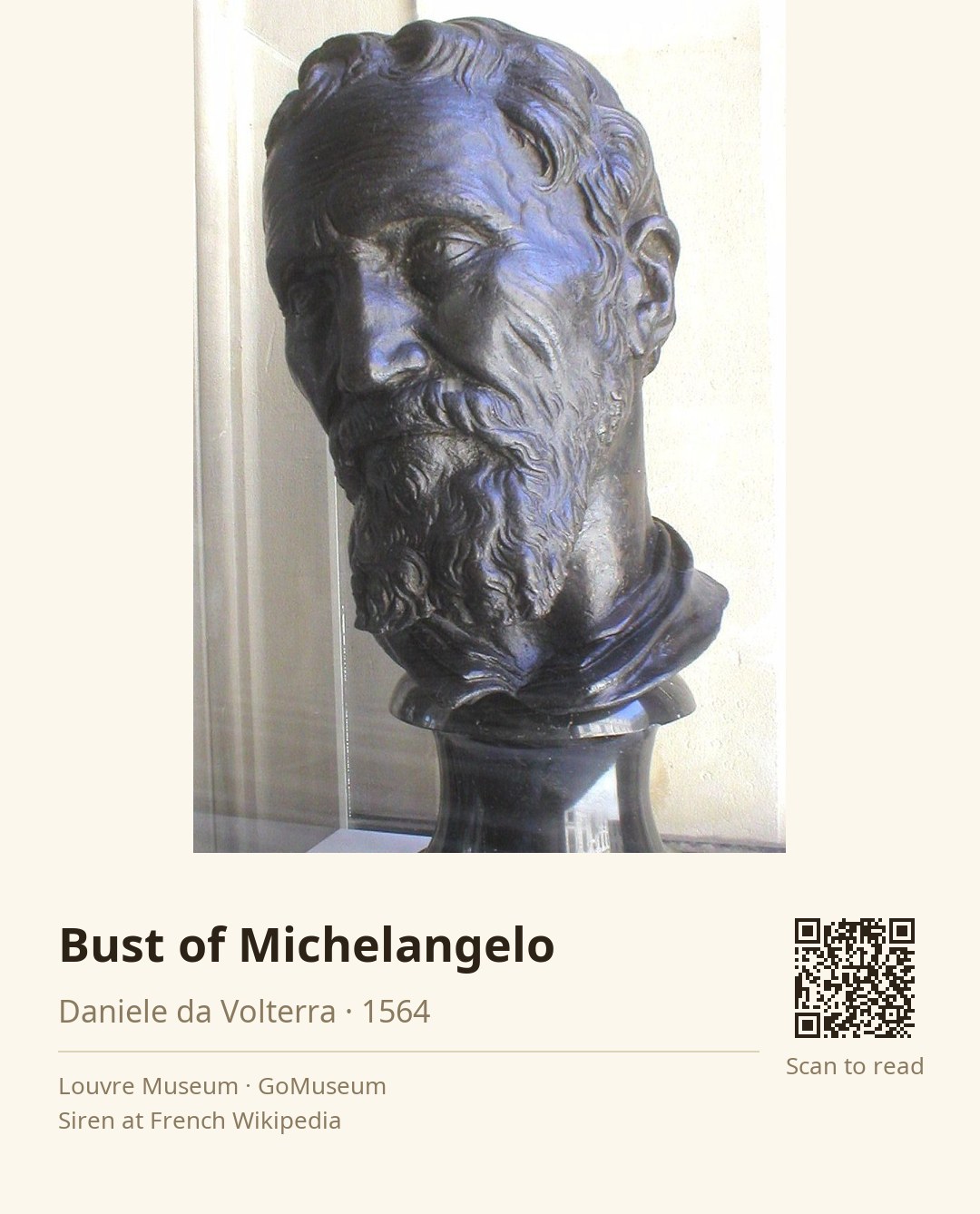
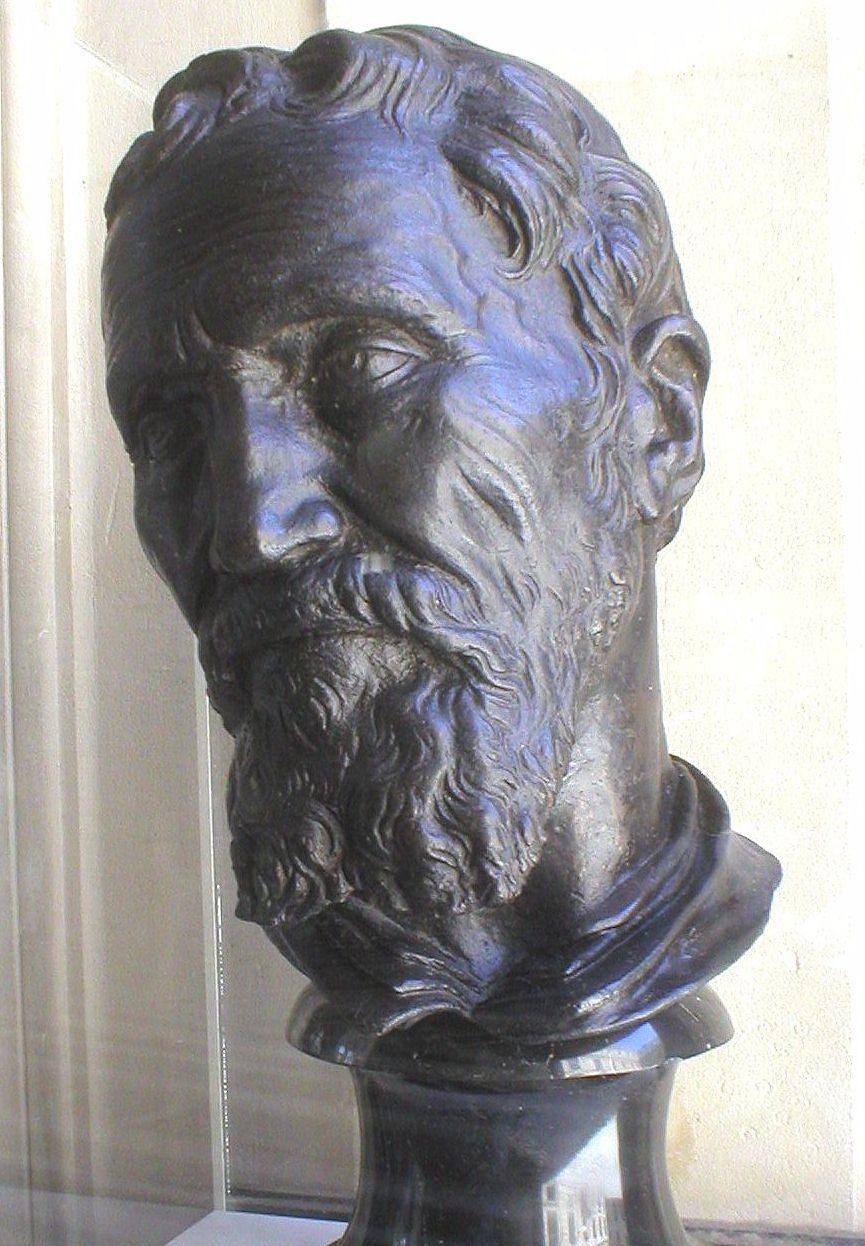
🎧 This work has audio narration — listen in the appTake a moment to really look at this bust of Michelangelo by Daniele da Volterra. Notice how the artist captures not just the likeness but the very essence of Michelangelo's spirit. Look closely at the furrowed brow and the strong jawline—these details convey a sense of intensity and determination, don’t they?
These features matter because they reflect Michelangelo’s relentless pursuit of perfection in art, a quality that Daniele admired deeply. This bust was created in 1564, the same year Michelangelo passed away, making it a poignant tribute to a man who shaped the very course of Renaissance art.
Daniele da Volterra was not just a follower; he was a friend and confidant of Michelangelo, often working under his influence. After Michelangelo’s death, Daniele was even tasked with covering some of the nudity in Michelangelo's Last Judgment, earning him the nickname "Il Braghettone," or "the breeches-maker."
As you stand here, think about what it means to capture someone’s essence in art. What do you think Daniele was trying to convey about Michelangelo’s legacy with this bust?
Daniele Ricciarelli, known as Daniele da Volterra, was a Mannerist painter and sculptor born around 1509 in Volterra, Italy. He trained under Sienese artists but found his true calling in Rome, where he became closely associated with Michelangelo. His career flourished as he received commissions influenced by Michelangelo's designs, notably the frescoes in the Orsini chapel and the renowned Descent from the Cross. After Michelangelo's death, he controversially covered nudity in the Last Judgment, earning the nickname "Il Braghettone." This act reflected the changing attitudes toward nudity in religious art during the Counter-Reformation. Despite his association with Michelangelo, Daniele's style was marked by a blend of beauty and mannerism, sometimes veering into exaggerated prettiness. He remained a significant figure in art history, known for both his paintings and sculptures, including a bust of Michelangelo. Daniele's legacy endures, highlighting the complexities of artistic expression in a transformative era. He died in Rome in 1566, leaving behind a body of work that continues to be studied and appreciated.
As you gaze at this bust, take a moment to appreciate the craftsmanship involved. Daniele da Volterra sculpted this piece from marble, a material that demands both precision and patience. Notice the smoothness of Michelangelo's forehead contrasted with the more textured areas around the jawline. This interplay highlights the artist's skill in manipulating light and shadow, making the face almost lifelike. The way the marble captures the subtle nuances of Michelangelo's features speaks to Daniele's deep understanding of his subject, reflecting not just a likeness but an emotional depth.
This bust was created in 1564, a year marked by profound loss for the art world, as it was also the year Michelangelo passed away. Commissioned as a tribute, it captures the essence of a man who was not just an artist but a towering figure of the Renaissance. Daniele da Volterra, a close friend and confidant of Michelangelo, poured his admiration into this work. After Michelangelo's death, Daniele's connection to him deepened, as he was tasked with altering some of Michelangelo's works, including the infamous 'breeching' of the nudes in the Last Judgment.
One fascinating tidbit about Daniele da Volterra is that he was actually a close friend of Michelangelo. When Michelangelo was on his deathbed, it was Daniele who was called to his side. Not only did he witness the great artist's final moments, but he also took on the solemn task of inventorying Michelangelo's belongings after his passing. Imagine being entrusted with the personal effects of such a towering figure in art history! This connection to Michelangelo profoundly influenced Daniele's work, including this very bust, which is based on a death mask of the master himself.