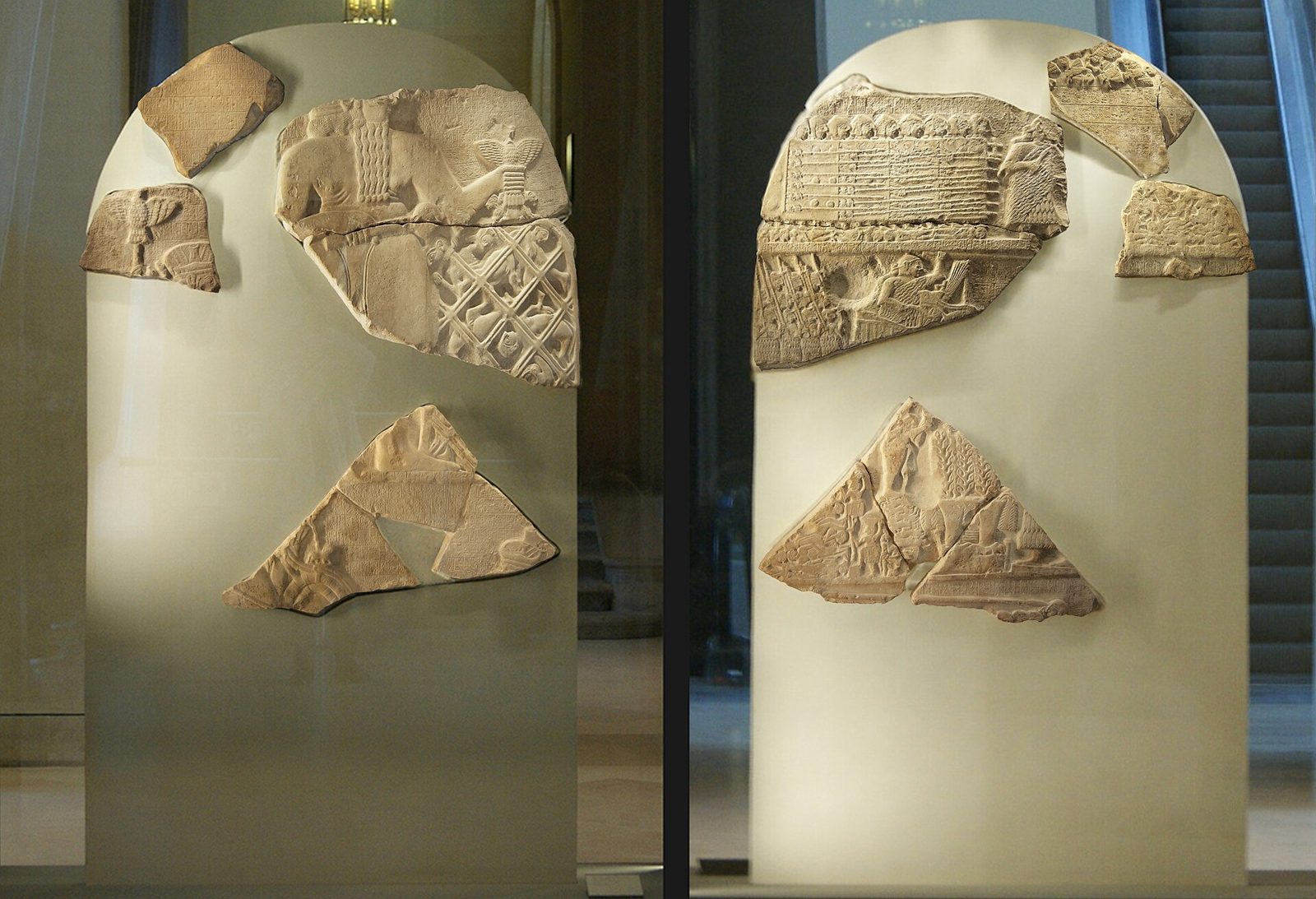
 Image: Background: Kikuyu3
Elements: Eric Gaba (User:Sting)
Composite: पाटलिपुत्र (talk) 10:52, 30 April 2020 (UTC) · Kikuyu3 · Eric Gaba (User:Sting)
Stele of the Vultures
🎧 This work has audio narration — listen in the appAs you stand before the Stele of the Vultures, let your eyes be drawn to the dramatic scene unfolding on its surface. Notice the vultures soaring above, their beaks clutching severed heads—a stark reminder of the brutal victory of Lagash over Umma.
These vultures symbolize not only death but also the divine sanction of King Eannatum’s triumph. They hover over the defeated enemies, emphasizing the stark contrast between the victorious Lagash soldiers and their fallen foes, who lie trampled beneath their feet. This imagery captures the essence of warfare in ancient Mesopotamia, where victories were celebrated and immortalized in stone.
The Stele is the earliest known war monument, a groundbreaking artifact that reflects the political and religious landscape of its time. Eannatum, the ruler of Lagash, commissioned this piece to glorify his achievements and assert his divine right to rule, showcasing his connection to the god Ningirsu, who is depicted on the other side of the stele.
As you take in this powerful representation of history, consider: what stories do you think the people of Lagash told about this battle? How did they remember their victories and losses in a world where such monuments shaped their identity?
The Stele of the Vultures, crafted around 2460 BC, is a remarkable artifact from the Early Dynastic IIIb period in Mesopotamia. It commemorates the victory of Lagash over Umma during a fierce conflict over agricultural land. Commissioned by Eannatum, the ruler of Lagash, this stele was meant to immortalize his triumph and divine right to rule, showcasing his connection to the god Ningirsu. Discovered in the 1880s at Tello, ancient Girsu, the stele was found in fragments, with only seven pieces surviving today. Initially excavated by French archaeologist Ernest de Sarzec, the fragments were later pieced together and are now housed in the Louvre. The stele's inscriptions, written in Sumerian cuneiform, detail the battle and Eannatum's divine favor, making it the earliest known war monument.
Created around 2460 BC, it’s recognized as the earliest known war monument, setting a precedent for how military victories would be commemorated in stone. This stele not only celebrates the triumph of Lagash over Umma but also elevates the role of the ruler, Eannatum, as a heroic figure in the eyes of his people. The stele's dual narrative—mythological and historical—invites viewers to ponder the intertwining of divine favor and human conflict, a theme that resonates through centuries of art and storytelling.
One intriguing aspect of the Stele of the Vultures is its incomplete state; only seven fragments are known to exist today. The seventh fragment, initially acquired by the British Museum in 1898, was not returned to the Louvre until 1932, despite two earlier requests.







