Paris › Musée de l'Orangerie › Claude Monet
Claude Monet at Musée de l'Orangerie
1840 – 1926
Oscar-Claude Monet, born on November 14, 1840, in Paris, was a pioneering French painter and a founder of Impressionism, a movement that transformed the art world. Raised in Le Havre, he developed a passion for nature and painting early on, encouraged by his mother, while his father hoped he would pursue a business career. After his mother's death in 1857, Monet moved in with his aunt, who supported his artistic ambitions.
Monet's career began with caricatures, but he soon sought formal training, studying under Eugène Boudin, who introduced him to plein air painting. His breakthrough came in 1866 with "La Femme à la robe verte," which garnered attention at the Salon. The term "Impressionism" originated from his work "Impression, Sunrise," exhibited in 1874, marking a shift away from traditional art.
Throughout his life, Monet focused on capturing the essence of light and color in nature, creating series of paintings that depicted the same scenes under varying conditions, such as his famous haystacks and water lilies. He settled in Giverny in 1883, where he cultivated a beautiful garden that became his muse. Despite personal hardships, including the loss of loved ones and health issues, Monet's relentless dedication to his craft solidified his place in art history as a master of modernism, influencing countless artists and leaving a lasting legacy. He died on December 5, 1926, in Giverny, celebrated as one of the most significant figures in art.
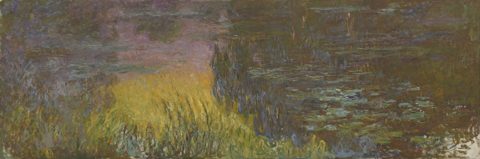 The Water Lilies - Setting Sun
Claude Monet
🎧 Listen
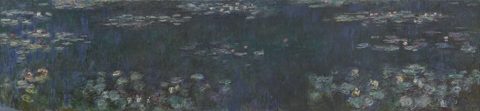 The Water Lilies - Green Reflections
Claude Monet
🎧 Listen
 The Water Lilies - Clear Morning with Willows
Claude Monet
🎧 Listen
 The clouds
Claude Monet
🎧 Listen
 The Water Lilies - Morning
Claude Monet
🎧 Listen
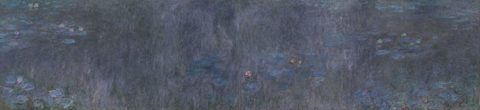 The Water Lilies - Tree Reflections
Claude Monet
 The Water Lilies - The Two Willows
Claude Monet
 Morning with Willows
Claude Monet
