The Water Lilies - Green Reflections
🎧 Free preview: one of 5 works you can listen to here in full.
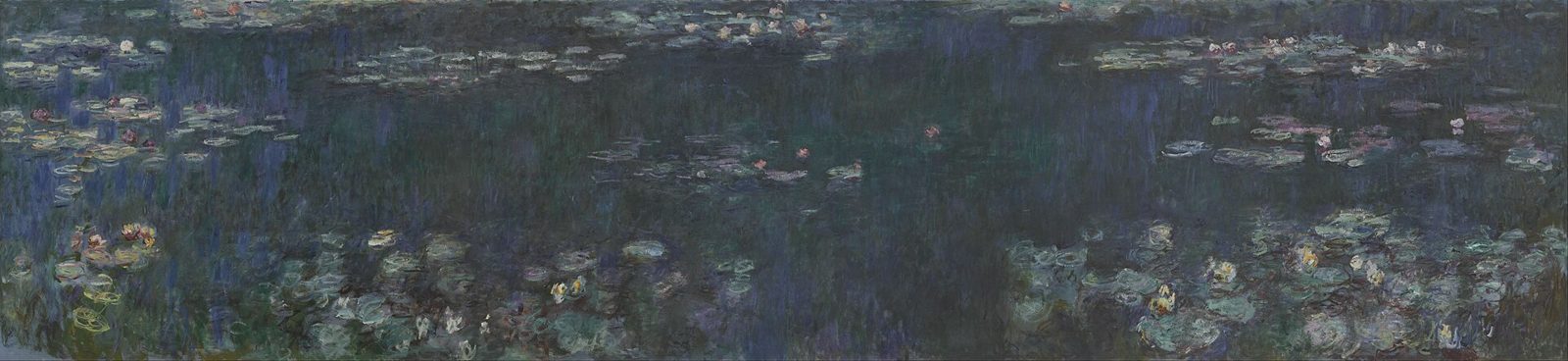
Take a moment to really soak in the colors of Monet's "The Water Lilies - Green Reflections." Notice how the vibrant greens dance across the canvas, almost as if the water itself is alive. Look closely at the way the light plays on the surface of the water, creating a shimmering effect that draws you in. He wasn't just painting a scene; he was expressing a feeling, a moment in time, where light and water merge into one. This technique, known as Impressionism, was all about perception, and Monet was a master at it. Created in 1920, this piece is part of his extensive water lily series, painted in his beloved garden in Giverny. Monet spent the last two decades of his life perfecting this series, exploring how light changes throughout the day and seasons. As you stand here, think about how Monet's reflections invite you to see the world differently. What do you feel when you look at this serene scene? How does it change your perception of nature?
Oscar-Claude Monet, born on November 14, 1840, in Paris, was a pioneering French painter and a founder of Impressionism, a movement that transformed the art world. Raised in Le Havre, he developed a passion for nature and painting early on, encouraged by his mother, while his father hoped he would pursue a business career. After his mother's death in 1857, Monet moved in with his aunt, who supported his artistic ambitions.
Monet's career began with caricatures, but he soon sought formal training, studying under Eugène Boudin, who introduced him to plein air painting. His breakthrough came in 1866 with "La Femme à la robe verte," which garnered attention at the Salon. The term "Impressionism" originated from his work "Impression, Sunrise," exhibited in 1874, marking a shift away from traditional art.
Throughout his life, Monet focused on capturing the essence of light and color in nature, creating series of paintings that depicted the same scenes under varying conditions, such as his famous haystacks and water lilies. He settled in Giverny in 1883, where he cultivated a beautiful garden that became his muse. Despite personal hardships, including the loss of loved ones and health issues, Monet's relentless dedication to his craft solidified his place in art history as a master of modernism, influencing countless artists and leaving a lasting legacy. He died on December 5, 1926, in Giverny, celebrated as one of the most significant figures in art.
Monet's "The Water Lilies - Green Reflections" was created in 1920, during a time when he was deeply immersed in his iconic water lily series. This particular piece was painted in his garden at Giverny, a sanctuary he meticulously crafted over the years. Initially, Monet's innovative approach to capturing light and nature was met with skepticism. However, as the art world evolved, his work became a cornerstone of Impressionism, influencing countless artists. The painting's provenance traces back to Monet himself, showcasing his personal connection to the piece, which adds a layer of intimacy to its history.
As you gaze at "Green Reflections," notice the way Monet's brushwork feels almost spontaneous, as if he captured the essence of the moment rather than the details. His technique involves layering colors, allowing the vibrant greens to shimmer and blend into one another. The composition is expansive, drawing your eye across the canvas and inviting you to explore the interplay of light on the water. Monet's choice of a large scale—almost two meters high—creates an immersive experience, making you feel as if you could step right into the scene. The dappled light effects are achieved through quick, short strokes that mimic the rippling surface of the water, giving life to the reflections and enhancing the feeling of tranquility.
This piece, created in 1920, showcases Monet's mastery of color and light, capturing the serene beauty of his beloved water lily pond in Giverny. His innovative approach influenced generations of artists, pushing boundaries beyond traditional representation. By immersing viewers in the interplay of reflections and colors, Monet invites us to experience nature as he did—fluid and ever-changing. This painting exemplifies the essence of Impressionism, a movement that not only transformed landscape painting but also laid the groundwork for modern art's exploration of perception and abstraction.
He dedicated the last two decades of his life to capturing the reflections and colors of this serene scene, often painting the same view multiple times to capture the changing light and seasons. This painting, 'Green Reflections,' is a part of that extraordinary journey, showcasing his relentless pursuit of beauty in nature.
Monet's garden in Giverny was not just a backdrop but a living canvas that he meticulously designed to explore light and color. The specific arrangement of plants and water features allowed him to experiment with reflections and the interplay of natural elements, which became central to his Impressionist technique.