Paris › Louvre Museum › Bartolomé Esteban Murillo
Bartolomé Esteban Murillo at Louvre Museum
1617 – 1682
Bartolomé Esteban Murillo was a prominent Spanish Baroque painter, born in Seville in late December 1617. Orphaned at a young age, he was raised by his sister and her husband, which fostered a close-knit family environment. Murillo began his artistic training under his uncle, Juan del Castillo, where he developed a realist style influenced by the tenebrism of Francisco de Zurbarán and the naturalism of Caravaggio. He married Beatriz Cabrera in 1645 and had ten children, though only five survived.
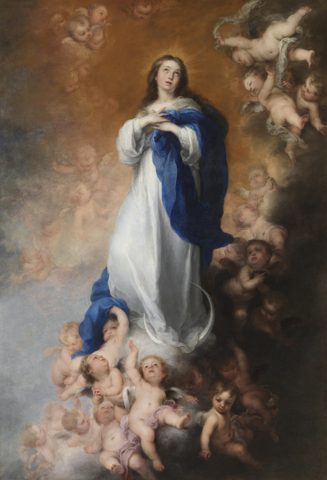
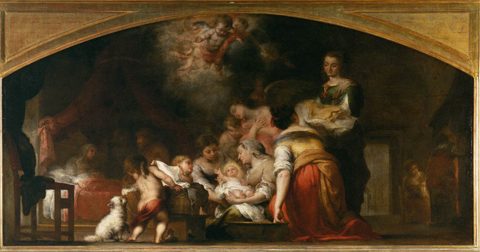
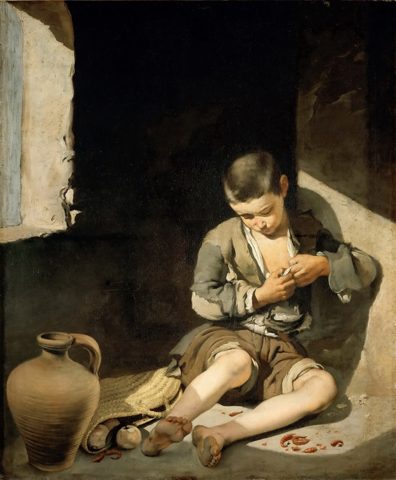
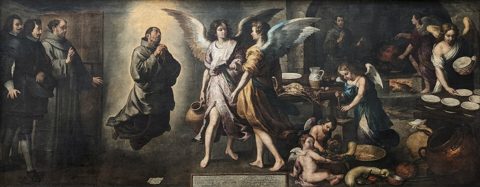
Murillo is celebrated for his religious works, particularly those commissioned by Franciscan convents, but he also gained fame for his genre paintings depicting the lives of the poor, including children and street urchins. His ability to capture the essence of everyday life set him apart from his contemporaries. He established an influential workshop in Seville and founded the Academy of Fine Arts, aiming to elevate the standards of artistic training.
Despite never leaving Seville, Murillo became a leading figure in the Spanish Golden Age, alongside Diego Velázquez and Francisco de Zurbarán. His legacy endures through his extensive body of work, which includes notable pieces in major museums like the Louvre and the Prado. Murillo died in 1682 after a fall while painting, leaving behind a rich artistic heritage that continues to resonate in the art world.