Paris › Nicolas Poussin
Nicolas Poussin at Paris
1594 – 1665
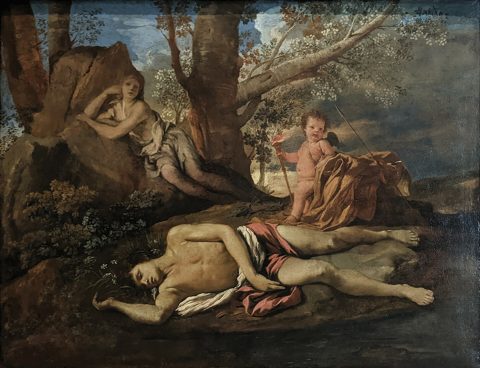
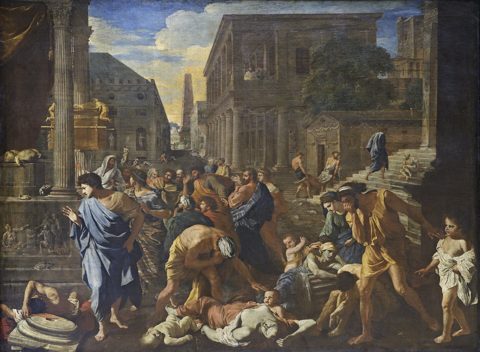
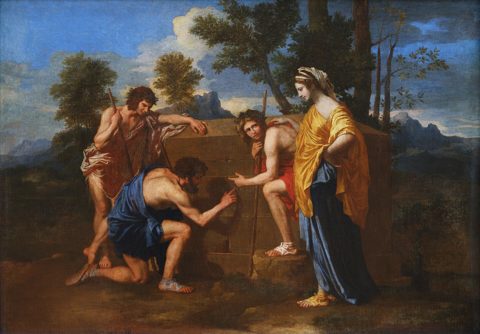
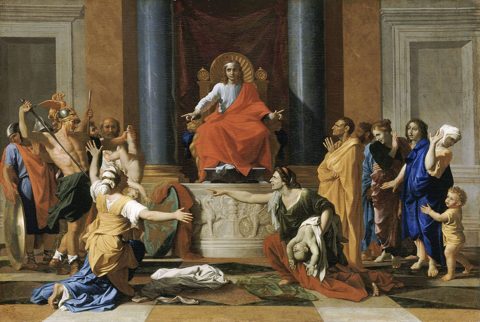
Nicolas Poussin, born in June 1594 near Les Andelys, was a pivotal figure in the classical French Baroque movement, spending most of his career in Rome. His early life was marked by a passion for art that led him to Paris at eighteen, despite his parents' opposition. In Paris, he struggled initially, but his exposure to royal collections ignited his admiration for Italian masters, particularly Raphael. This influence shaped his distinctive style, characterized by clarity, order, and a preference for line over color.
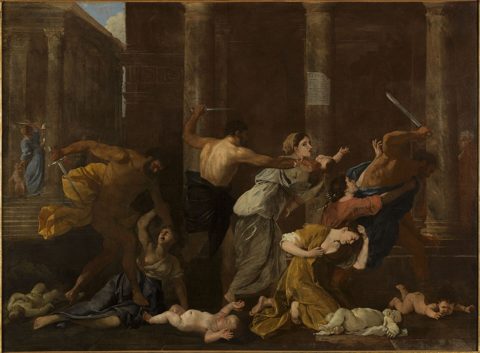
Poussin's artistic journey took him to Rome in 1624, where he developed a reputation for his religious and mythological works, often commissioned by a select group of collectors. His notable pieces include "The Death of Germanicus" and "The Massacre of the Innocents." Although he briefly returned to France as First Painter to Louis XIII, he found the court's demands stifling and returned to Rome, where he continued to evolve, integrating landscapes into his compositions.
His legacy is profound; Poussin's emphasis on classical themes and structure influenced generations of artists, including Jacques-Louis David and Paul Cézanne. He remains a cornerstone of classical painting, with around 260 attributed works and nearly 400 drawings, solidifying his place in art history until his death in 1665.