 Image: anonymous
Saint Martin
🎧 Free preview: one of 5 works you can listen to here in full.
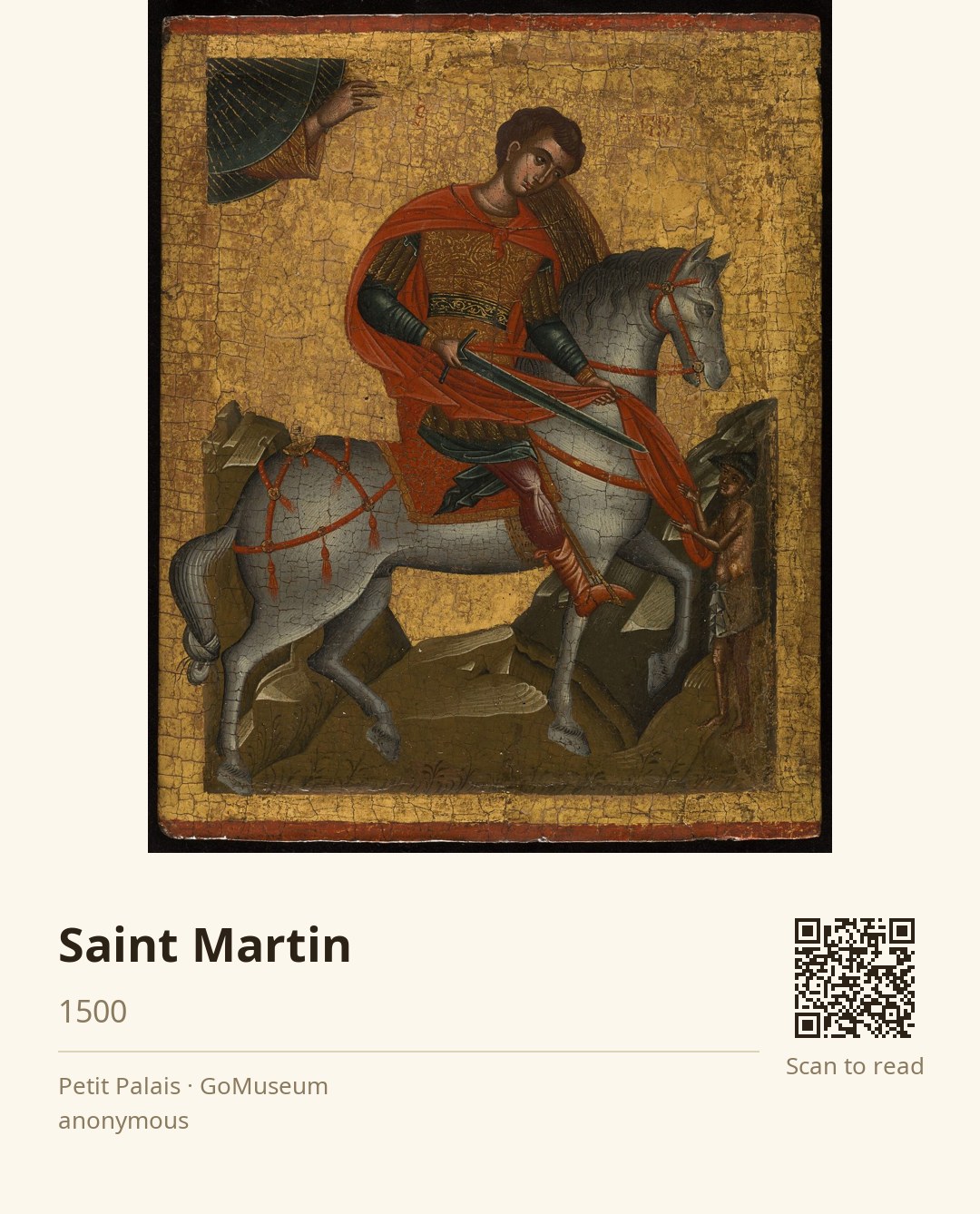
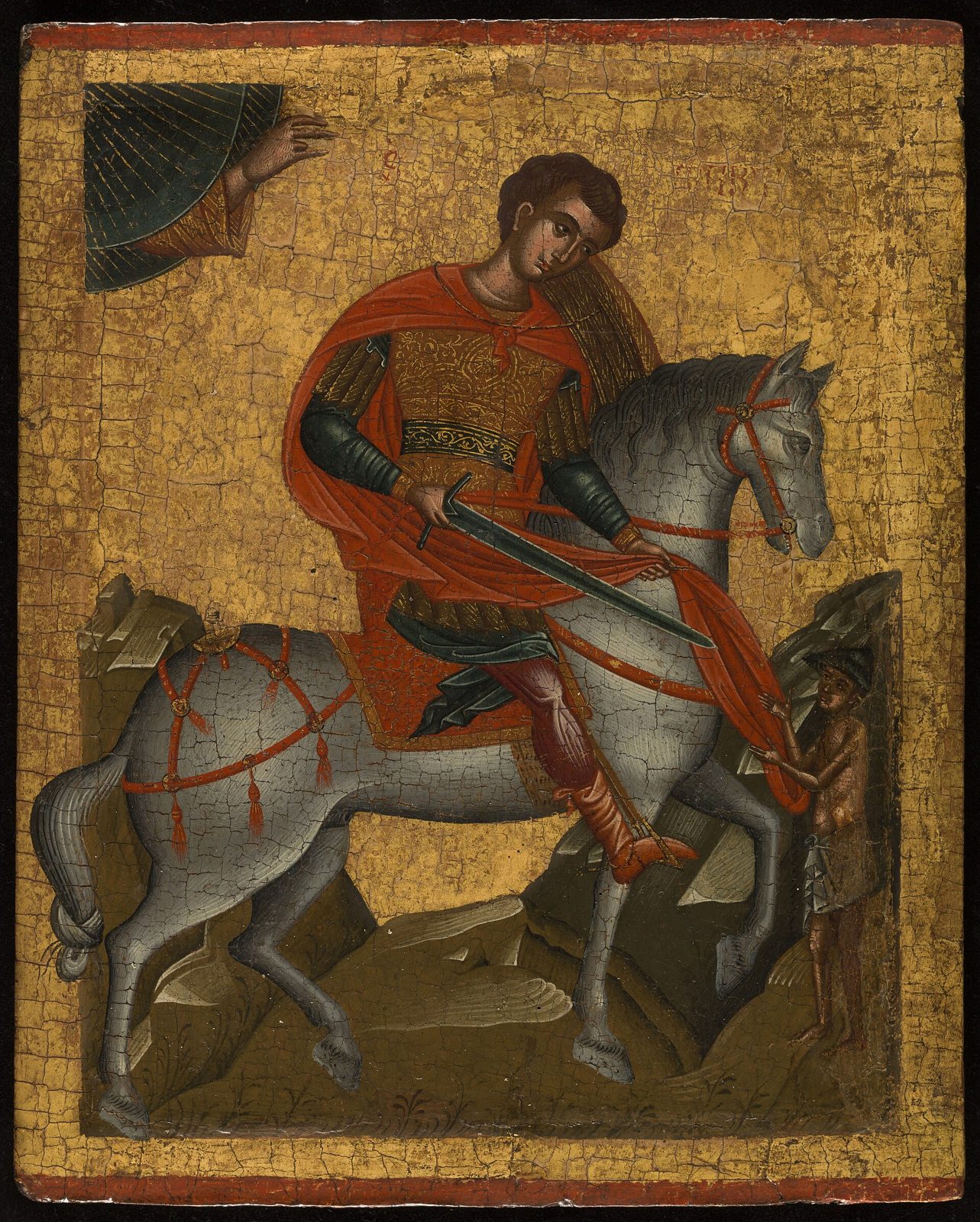
A mounted figure in ornate armor commands attention at the center of this painting, his red cloak billowing as he grips a sword. The gray horse beneath him is strikingly adorned with red harnesses, emphasizing the nobility of both rider and steed. To the right, a partially clothed figure reaches out, creating a moment of connection that hints at a narrative unfolding.
The gold leaf background enhances the scene's divine quality, a hallmark of the iconographic style prevalent in the early 16th century. The rocky terrain beneath the horse grounds the figures in a tangible world, while the detailed brushwork captures the intricate textures of the armor and the flowing fabric of the cloak.
Created in 1500 by the Cretan-Venetian school, this painting titled "Saint Martin" reflects the artistic trends of its time, merging religious themes with a vivid portrayal of human emotion and interaction.
Commissioned in the year 1500, this painting titled 'Saint Martin' hails from the Cretan-Venetian school, a vibrant artistic movement blending influences from both regions. The work was likely created for a religious setting, reflecting the era's deep devotion and the importance of saints in daily life. Its provenance traces back to Roger Cabal, indicating it has been cherished and preserved through the centuries. Initially displayed in ecclesiastical contexts, it garnered attention for its vivid portrayal of compassion and nobility, resonating with viewers who found solace in its message. The reception of the painting was likely warm, as it encapsulated the spiritual fervor of the early 16th century, a time when art was not just for decoration but a means of conveying divine narratives.
The armor of the rider gleams with a lifelike quality, achieved through layered applications of paint that create depth and texture. The red cloak, flowing dramatically, contrasts beautifully with the gold leaf background, which not only enhances the divine atmosphere but also serves to elevate the figures, making them appear almost celestial. The rocky terrain beneath the horse grounds the scene in reality, while the balanced composition draws the eye naturally to the interaction between the mounted figure and the reaching figure.
A hand is depicted emerging from a cloud in the upper left corner, pointing towards the rider, which implies a connection to the divine.