Sunset on the Seine at Lavacourt, in winter
🎧 Free preview: one of 5 works you can listen to here in full.
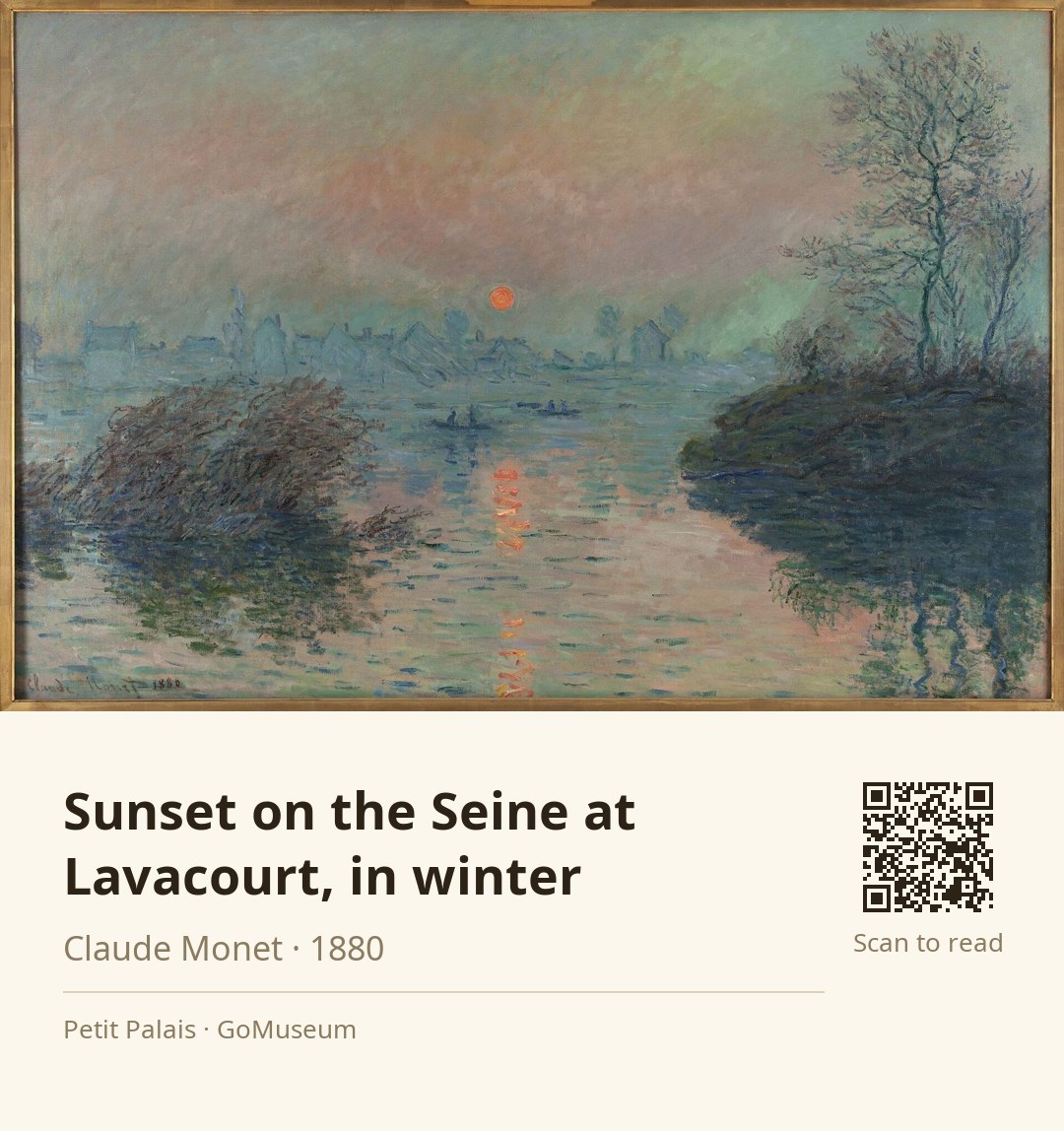
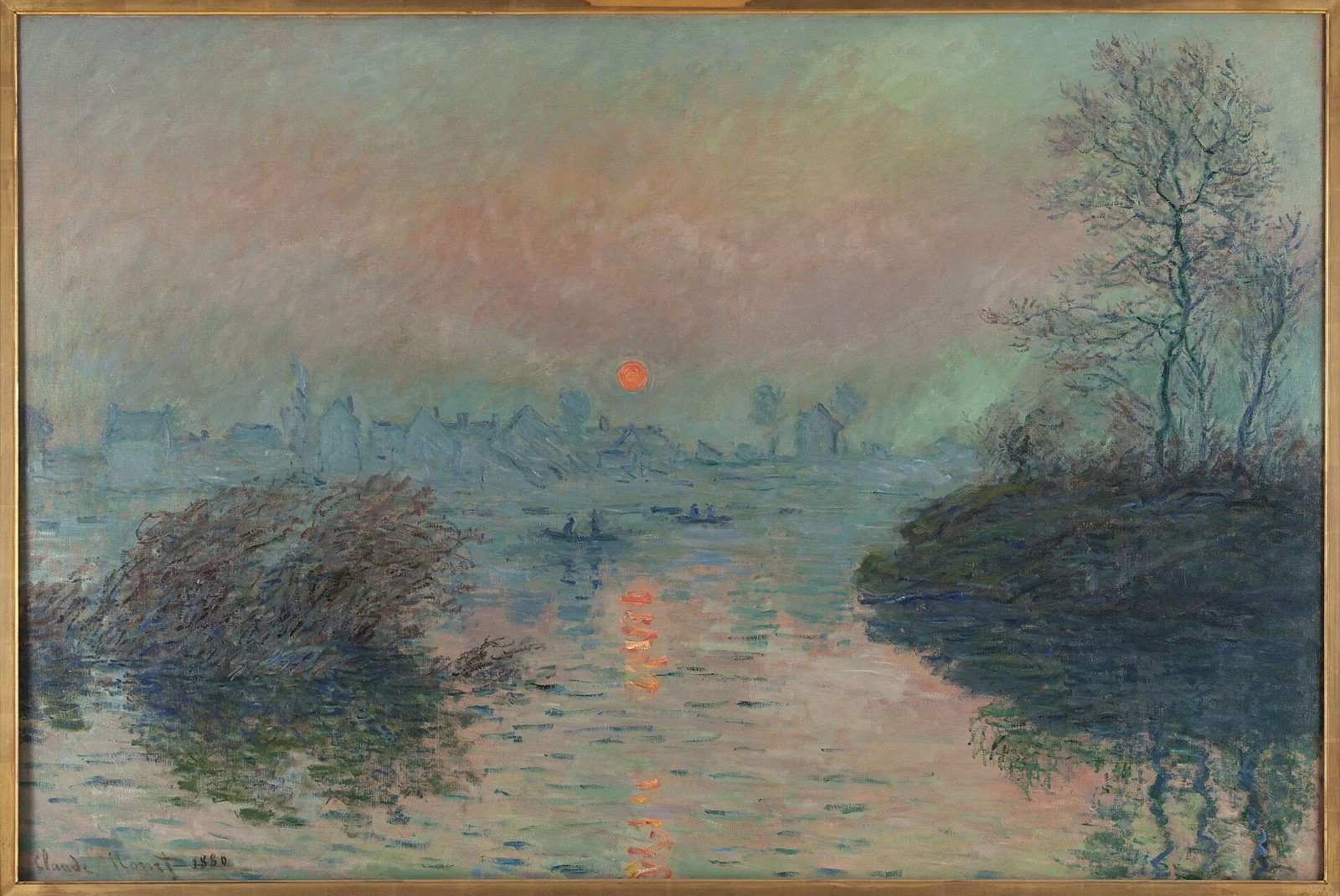
The vibrant orange sun setting over the Seine at Lavacourt captures a fleeting moment of winter beauty, as painted by Claude Monet in 1880. Dark, bushy plants frame the left side, while a small, tree-covered landmass emerges on the right, creating a natural balance in the composition. Two small boats glide across the calm river, their figures silhouetted against the shimmering water, where the sun’s reflection creates a striking vertical line of orange.
Monet’s choice of colors—soft pinks, blues, and greens—evokes a tranquil atmosphere, inviting viewers to immerse themselves in the serene landscape. This painting, created during a pivotal time in Monet's career, reflects his desire to reconnect with the Impressionist movement after years of independent exploration. Although he aimed to present this work at the Salon, he ultimately decided against it, feeling it did not align with the jury's expectations. Instead, he painted it from studies conducted at his home in Vétheuil, breaking from his usual practice of painting en plein air.
In the years following its completion, Monet sold the painting to art dealer Paul Durand-Ruel in 1881, and it was later exhibited at the Impressionist exhibition in 1882.
Oscar-Claude Monet, born on November 14, 1840, in Paris, was a pioneering French painter and a founder of Impressionism, a movement that transformed the art world. Raised in Le Havre, he developed a passion for nature and painting early on, encouraged by his mother, while his father hoped he would pursue a business career. After his mother's death in 1857, Monet moved in with his aunt, who supported his artistic ambitions.
Monet's career began with caricatures, but he soon sought formal training, studying under Eugène Boudin, who introduced him to plein air painting. His breakthrough came in 1866 with "La Femme à la robe verte," which garnered attention at the Salon. The term "Impressionism" originated from his work "Impression, Sunrise," exhibited in 1874, marking a shift away from traditional art.
Throughout his life, Monet focused on capturing the essence of light and color in nature, creating series of paintings that depicted the same scenes under varying conditions, such as his famous haystacks and water lilies. He settled in Giverny in 1883, where he cultivated a beautiful garden that became his muse. Despite personal hardships, including the loss of loved ones and health issues, Monet's relentless dedication to his craft solidified his place in art history as a master of modernism, influencing countless artists and leaving a lasting legacy. He died on December 5, 1926, in Giverny, celebrated as one of the most significant figures in art.
In 1880, Claude Monet created 'Sunset on the Seine at Lavacourt, in winter,' a pivotal piece during a tumultuous period in his artistic journey. After years of painting independently, Monet sought to reconnect with the Impressionist movement and aimed to present this work at the Salon. However, he ultimately felt it didn't meet the jury's expectations and withdrew it. The painting was sold to art dealer Paul Durand-Ruel in 1881 and later exhibited at the Impressionist exhibition in 1882. Its provenance includes a notable ownership by Edward Brandus, reflecting its significance in Monet's career and the Impressionist movement.
Monet's technique in 'Sunset on the Seine at Lavacourt' showcases his mastery of loose brushwork and vibrant color application. The painting's scale, measuring 101.5 cm by 150 cm, allows for an expansive view of the serene river scene. Monet's choice of colors—soft pinks, blues, and greens—creates a harmonious atmosphere, while the vivid orange sun serves as a focal point, drawing the eye. The brushstrokes are fluid and expressive, capturing the ephemeral quality of light as it dances on the water's surface. This impressionistic approach not only conveys the tranquility of the moment but also reflects Monet's desire to evoke emotion rather than detail, inviting viewers to experience the scene rather than merely observe it.
Unlike his typical practice of painting outdoors, Monet created this work based on studies he made at his home in Vétheuil.
Paul Durand-Ruel was an art dealer who played a crucial role in Monet's career by purchasing his works and promoting Impressionism.