Halles
🎧 Free preview: one of 5 works you can listen to here in full.
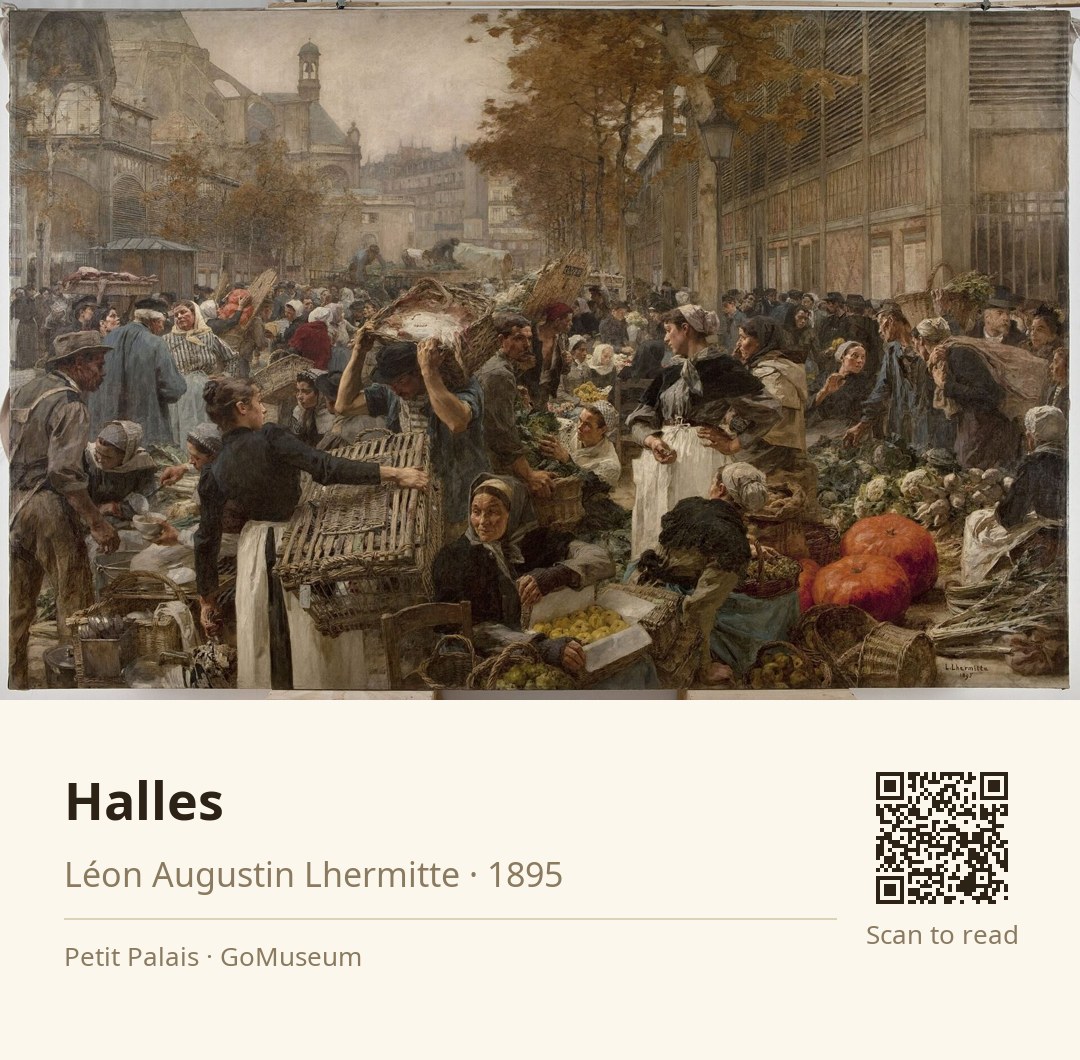
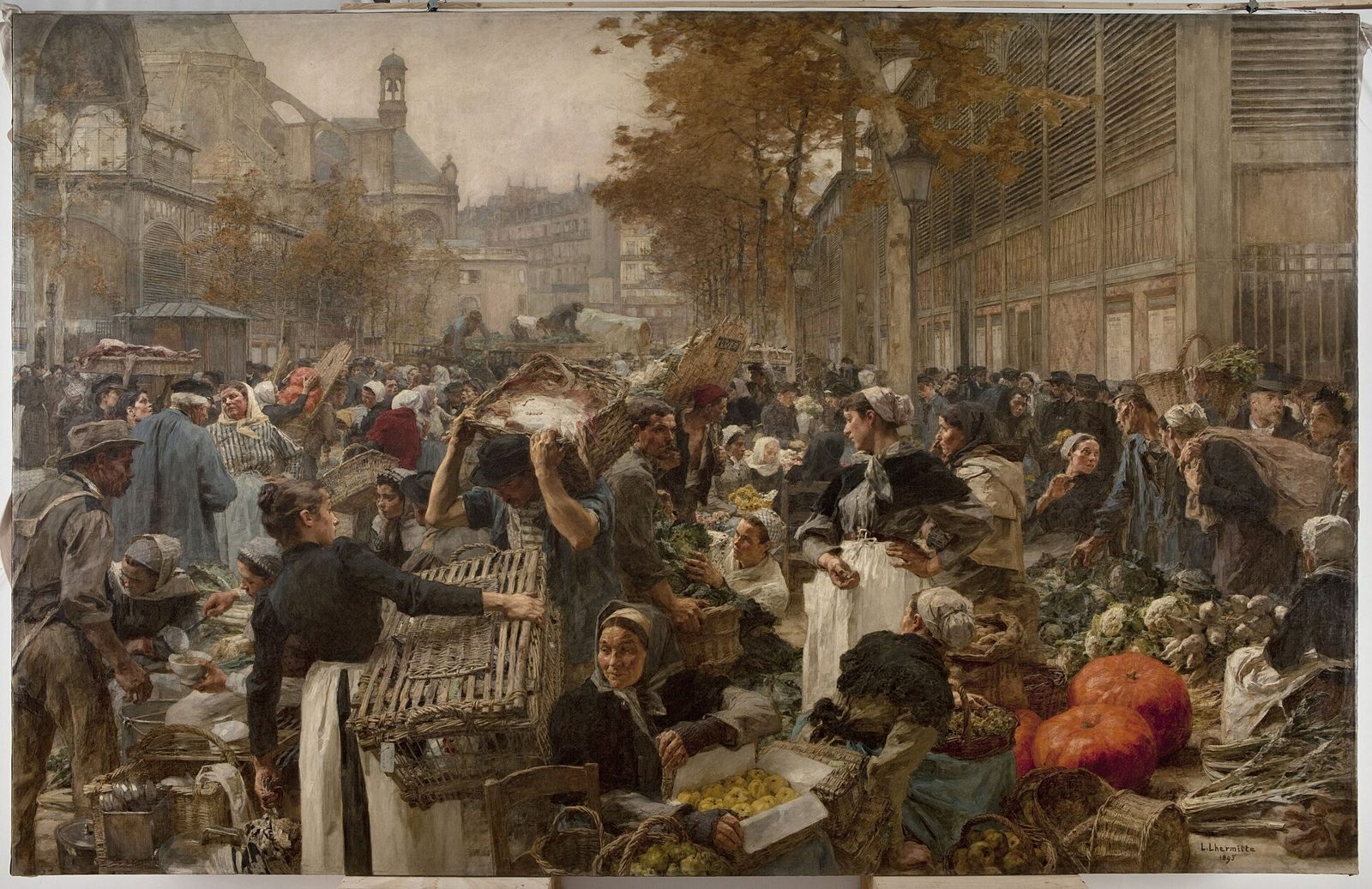
A bustling market scene unfolds in Léon Augustin Lhermitte's "Halles," where vendors and customers create a lively tapestry of urban life. In the foreground, a woman in a black blouse and white apron engages with a man balancing a large basket on his head, while vibrant displays of cabbages and pumpkins draw the eye, hinting at the abundance of fresh produce available.
These interactions capture the essence of daily life in late 19th-century Paris, reflecting the social dynamics of the time. The earthy palette of browns, grays, and muted greens enhances the realism, immersing viewers in the chaotic yet vibrant atmosphere of the market. Lhermitte's attention to detail, from the expressions of the figures to the architectural elements in the background, invites a deeper appreciation of the working-class experience, showcasing the interconnectedness of community and commerce.
Léon Augustin Lhermitte was a French naturalist painter and etcher, born on July 31, 1844, in Mont-Saint-Père, Picardy. Raised in a modest yet cultured family, his artistic talent was nurtured by his father, a schoolteacher. Lhermitte studied at the Petite École and later at the Paris School of Fine Arts, where he honed his skills in capturing rural life. He became known as the "painter of harvesters," focusing on the dignity of peasant labor through evocative scenes of rural and urban work. His 1882 painting, The Harvesters' Pay, marked a turning point in his career, garnering acclaim and establishing his reputation.
Lhermitte's work resonated with contemporaries, including Vincent van Gogh, who praised his innovative use of pastels and compared him to great masters like Michelangelo. He enjoyed international recognition, exhibiting widely and receiving numerous awards, including being named a commander of the Legion of Honour in 1910. His legacy endures in major museum collections worldwide, reflecting his significant contribution to the naturalist movement and his portrayal of the human condition in art. Lhermitte passed away on July 28, 1925, in Paris, leaving behind a rich legacy that continues to inspire.
Léon Augustin Lhermitte's painting 'Halles' was unveiled in 1895 at the Salon, a prestigious annual art exhibition in Paris. Commissioned to capture the essence of the bustling Les Halles market, it reflects the vibrant life of late 19th-century Paris. Initially housed at the Paris City Hall, the painting later found its home in the Petit Palais in 1904. However, during World War II, it was stored away for safety, first at the Auteuil municipal depot and then in Ivry. A significant restoration, made possible by the patronage of the Rungis market, allowed it to return to the Petit Palais, where it continues to be appreciated today.
In 'Halles,' Lhermitte employs a rich palette of earthy tones—browns, grays, and muted greens—to evoke the lively atmosphere of the market. His brushwork is both dynamic and meticulous, capturing the energy of the scene with a sense of immediacy. The figures are rendered with a remarkable attention to detail, from the textures of their clothing to the expressions on their faces, bringing the characters to life. The composition is densely packed, creating a sense of movement and chaos that mirrors the bustling environment. Lhermitte's choice of oil paint allows for a depth of color and texture that enhances the realism, making the viewer feel as if they could step right into the market. This technique not only showcases the vibrancy of urban life but also reflects Lhermitte's commitment to portraying the working-class experience.
Interestingly, Lhermitte's innovative use of pastels was so admired that Vincent van Gogh once expressed a desire to see his works featured regularly in publications, highlighting the impact Lhermitte had on his contemporaries. Van Gogh's letters reveal a deep appreciation for Lhermitte's ability to capture the essence of rural and urban life, suggesting that the two artists shared a common vision of portraying the human experience.
Lhermitte came from a modest yet educated family, with his father being a schoolteacher who encouraged his artistic talent.
Van Gogh greatly admired Lhermitte's innovative use of pastels and wished to see his works published regularly, indicating a high regard for his artistic contributions.
Lhermitte was recognized with the title of rosati of honor in 1902 and was later promoted to commander of the Legion of Honour in 1910.