The Royal Bridge and the Pavilion of Flora, Morning, Sun
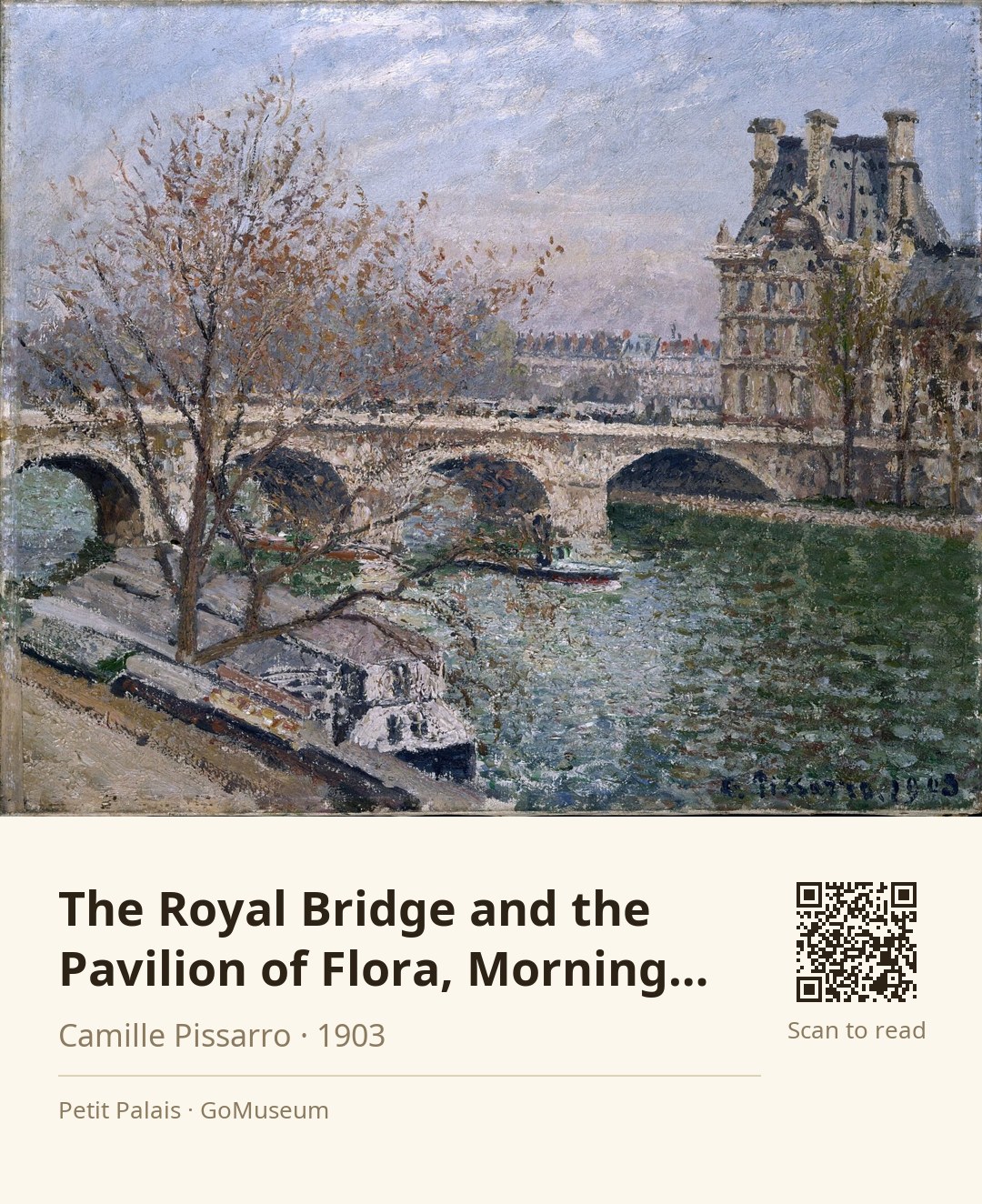
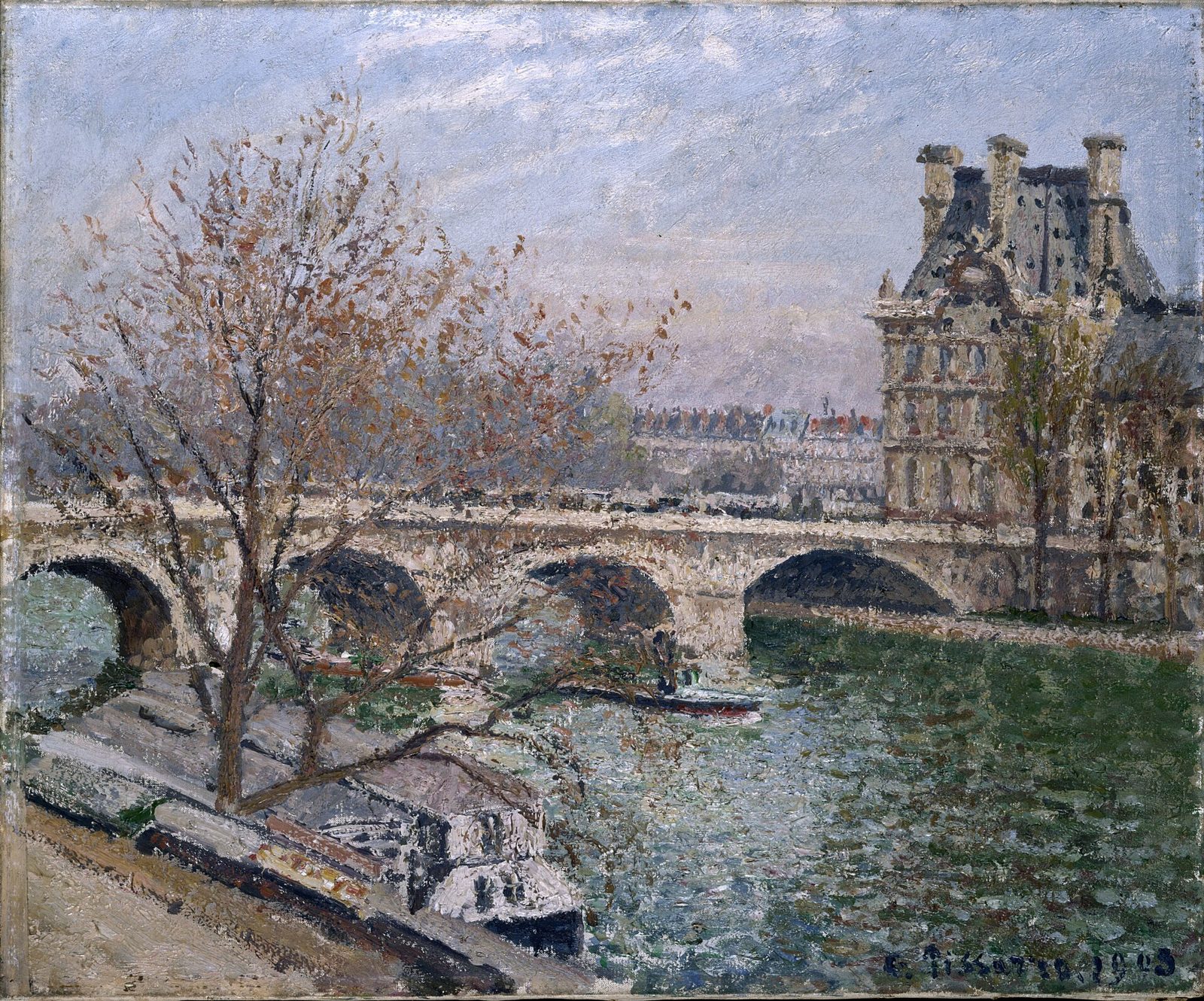
🎧 This work has audio narration — listen in the appThe stone arches of the Royal Bridge stretch across the river, their sturdy form contrasting with the delicate autumn leaves of the tree in the foreground. Below, several boats are moored along the riverbank, their stillness mirrored in the muted greens and grays of the water, creating a serene yet dynamic interplay between nature and architecture.
This scene captures a moment of quiet beauty, where the bridge serves as a symbol of connection amidst the tranquility of the landscape. The ornate building on the right, with its steep roof and chimneys, adds a touch of grandeur, anchoring the composition in the everyday life of the area. Pissarro’s loose brushwork enhances the atmospheric effects, allowing the viewer to feel the soft light filtering through the overcast sky, which is painted in gentle blues and grays.
Created in 1903, this work reflects Pissarro's dedication to portraying the essence of rural life and the natural world, a theme he explored throughout his career.
Jacob Abraham Camille Pissarro, born on July 10, 1830, in Saint Thomas, was a Danish-French painter pivotal to the Impressionist and Neo-Impressionist movements. His artistic journey began under the influence of masters like Courbet and Corot, and he later collaborated with Seurat and Signac, embracing Neo-Impressionism at age 54. Pissarro's dedication to depicting rural life and the working class set him apart; he painted everyday scenes without grandeur, focusing on authenticity.
As a mentor, Pissarro played a crucial role in the development of fellow artists, including Cézanne, Gauguin, and Van Gogh, earning him the title "dean of the Impressionist painters." His warm personality and wisdom made him a father figure within the art community. Pissarro was the only artist to exhibit in all eight Paris Impressionist exhibitions from 1874 to 1886, solidifying his legacy. Despite facing criticism for his subjects, he remained committed to his vision, advocating for a personal approach to classicism. Pissarro passed away on November 13, 1903, leaving an indelible mark on art history.
Pissarro's technique in this painting is a masterclass in the use of oil on canvas, where his loose brushwork creates a sense of immediacy and atmosphere. The way he layers paint allows for a rich texture that captures the essence of the scene—notice how the autumn leaves flutter with a sense of life, contrasting with the solid, stoic arches of the bridge. His choice of muted greens and grays reflects the overcast sky, imbuing the work with a serene yet dynamic quality. The composition is thoughtfully arranged, with the bridge serving as a focal point that draws the eye across the canvas, while the boats below add a sense of calm. Pissarro's ability to blend color and form creates an immersive experience, inviting viewers to feel the tranquility of the moment he captured.
Interestingly, Pissarro was the only artist to participate in all eight of the Impressionist exhibitions held in Paris from 1874 to 1886. This dedication not only highlights his commitment to the movement but also his role as a unifying figure among his peers, often acting as a mentor to younger artists.
James Gay Sawkins, a British painter living in St. Thomas, is believed to have inspired Pissarro's early drawings and artistic direction.