The Visitation
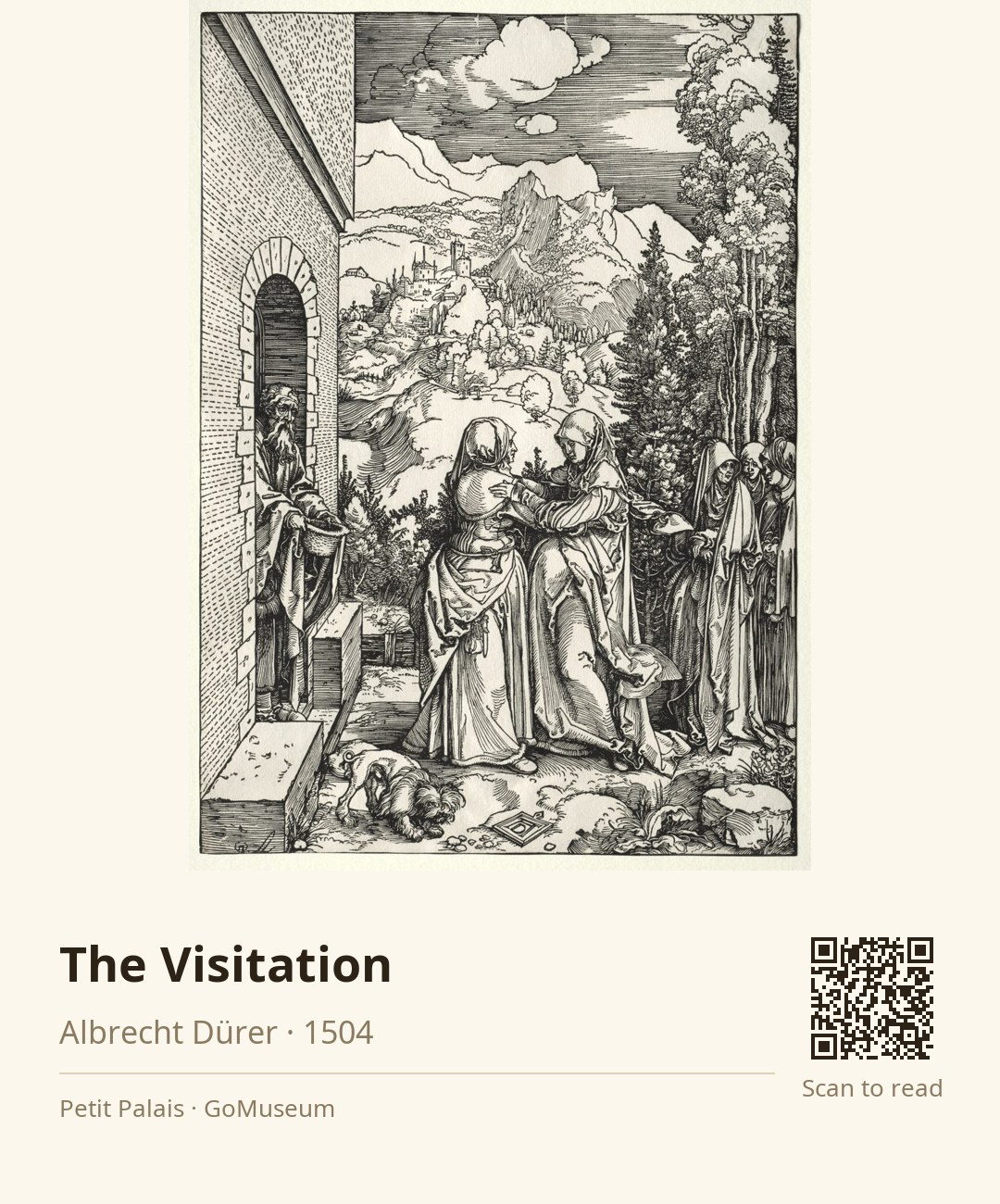
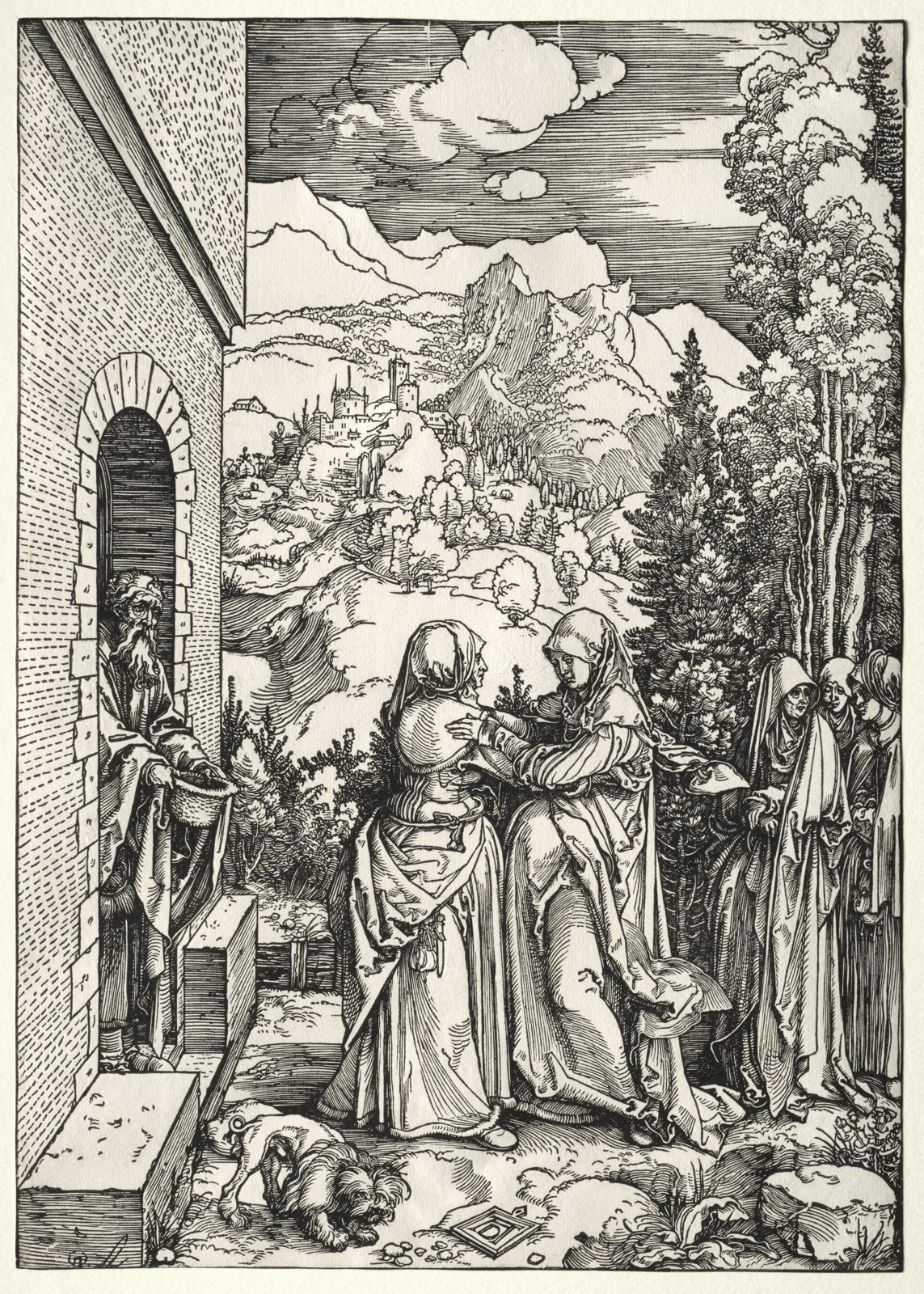
🎧 This work has audio narration — listen in the appMary and Elisabeth share a heartfelt embrace in this woodcut, a moment of connection that transcends their circumstances. The flowing garments of the two women, rich in detail, highlight their grace and the significance of their meeting, while the bearded man, Zacharias, stands silently in the doorway, embodying the weight of his wife's miraculous pregnancy. A small dog near the steps adds a touch of warmth to the scene, grounding it in everyday life amidst the spiritual significance.
This artwork captures the Visitation, a pivotal moment from the Gospel of Luke, where Mary, heavily pregnant, visits her older cousin Elisabeth, who is also expecting. The expansive landscape in the background, inspired by Dürer’s travels through the Alps, adds a sense of place and context, suggesting a world beyond their immediate interaction.
Albrecht Dürer, born on May 21, 1471, in Nuremberg, was a pivotal figure of the German Renaissance, renowned for his contributions as a painter, printmaker, and theorist. His artistic journey began early, showing exceptional talent in drawing, which led him to apprentice under Michael Wolgemut. By his twenties, Dürer gained recognition across Europe, particularly for his innovative woodcuts that transformed the medium. His engravings, characterized by meticulous detail and tonal range, further established his reputation.
Dürer's interactions with leading Italian artists, including Raphael and Leonardo da Vinci, enriched his work, allowing him to integrate classical motifs and the human form into Northern art. His theoretical writings on perspective and proportions reflect his deep engagement with the principles of mathematics in art. Dürer's legacy is marked by his ability to bridge the gap between Northern and Southern European artistic traditions, making him a central figure in art history. His works, including iconic pieces like "Melencolia I" and "Knight, Death, and the Devil," continue to influence artists and captivate audiences today. Dürer passed away on April 6, 1528, leaving behind a vast and impactful body of work.
Dürer's technique in The Visitation is a testament to his skill in woodcut printing, a medium that allows for both precision and expressive detail. The intricate line work captures the flowing garments of Mary and Elisabeth, emphasizing their emotional connection through the embrace. Dürer’s choice of a vast landscape in the background, inspired by his Alpine travels, adds depth and context to the scene, drawing the viewer's eye beyond the figures. The careful arrangement of the figures, with Zacharias standing in the doorway, creates a narrative tension, as he silently witnesses this miraculous moment. The small dog at their feet introduces a touch of warmth and everyday life, grounding the spiritual significance in a relatable reality. This blend of detailed craftsmanship and emotional storytelling is what makes Dürer’s work resonate so profoundly.
Dürer's interactions with Italian artists and humanists helped him introduce classical motifs and the nude into Northern art, enhancing his significance in the Northern Renaissance.
Dürer interacted with prominent Italian artists such as Raphael, Giovanni Bellini, and Leonardo da Vinci.