The Pit Sawyers
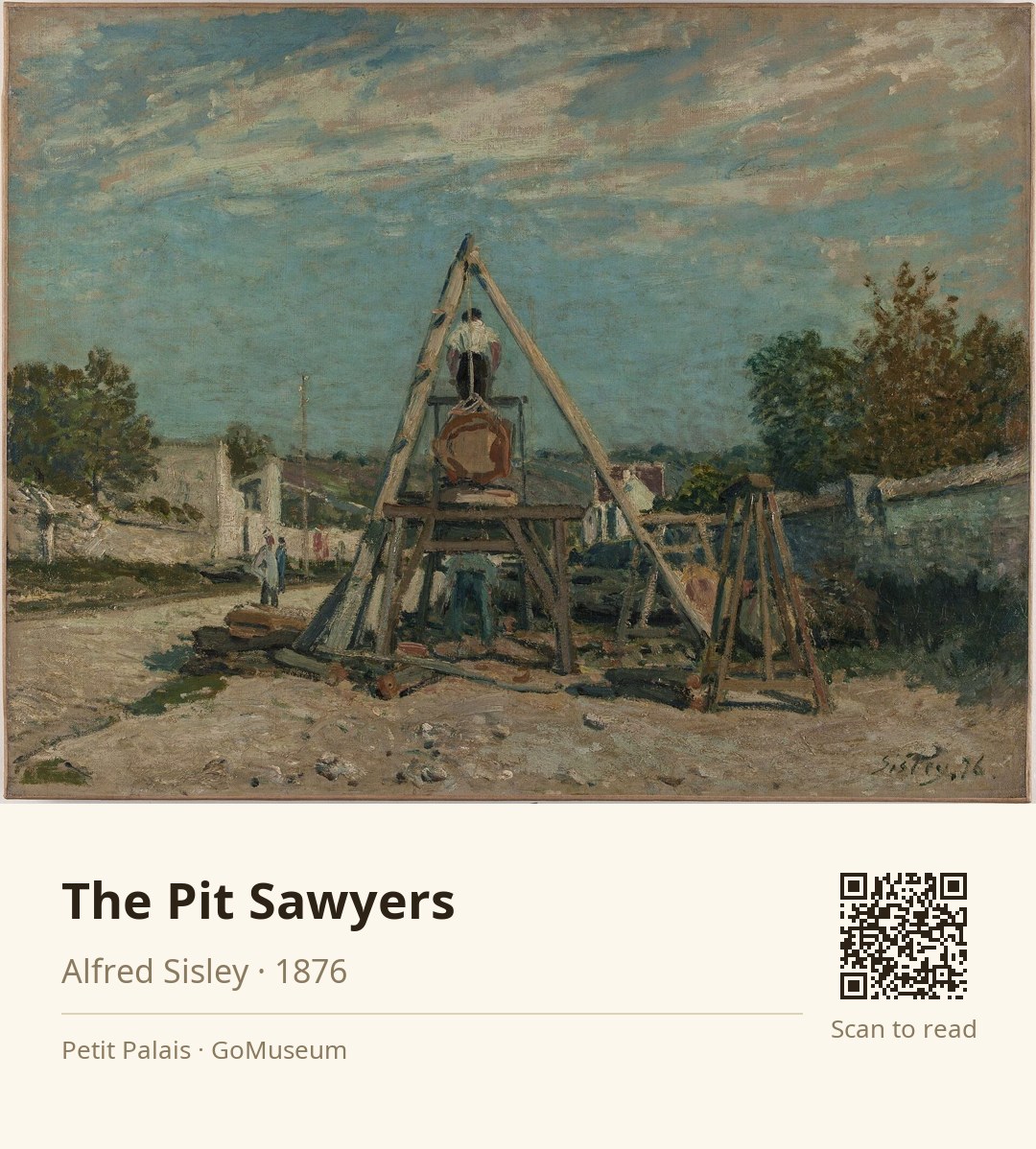
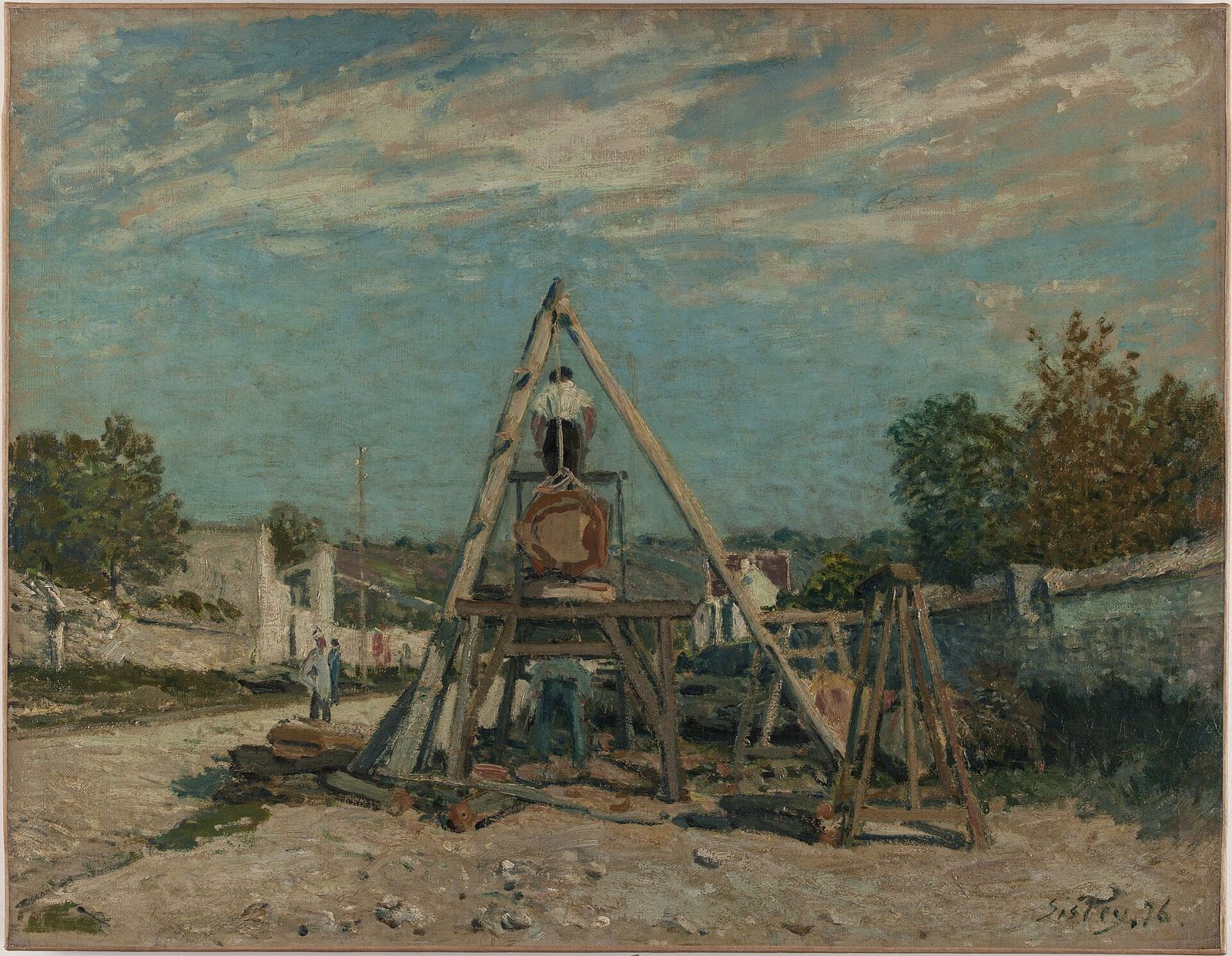
🎧 This work has audio narration — listen in the appA man stands atop a large wooden structure in Alfred Sisley’s "The Pit Sawyers," his focused posture hinting at the labor-intensive task of cutting timber. Below him, a few figures traverse a winding path, framed by stone walls and lush trees, while a clear blue sky stretches overhead, dotted with soft clouds. The earthy palette of greens, browns, and grays evokes the tranquility of rural life, inviting you to immerse yourself in this serene landscape.
The wooden structure, resembling a scaffold, serves as the focal point, symbolizing the connection between human effort and nature’s bounty. Sisley’s loose brushwork captures the textures of the ground and sky, emphasizing the fleeting moments of daily life in the countryside. This scene reflects the Impressionist commitment to portraying the world as it is experienced, with an emphasis on light and atmosphere. Sisley, dedicated to painting outdoors, often found inspiration in the landscapes surrounding Paris, where he painted en plein air alongside fellow artists like Monet and Renoir.
Created in 1876, "The Pit Sawyers" exemplifies Sisley’s ability to convey the beauty of everyday labor against the backdrop of nature. Throughout his career, Sisley remained focused on landscapes, ultimately becoming recognized as a key figure in the Impressionist movement, despite facing financial struggles during his lifetime.
Alfred Sisley was a British-born Impressionist landscape painter, born in Paris on October 30, 1839, to affluent expatriate parents. His dedication to painting outdoors, or en plein air, marked him as one of the most consistent figures within the Impressionist movement. Sisley’s work primarily focused on landscapes, with notable series depicting the River Thames, the floods at Marly-le-Roi, and the Gothic church at Moret-sur-Loing. Despite his talent, he struggled for recognition and financial stability throughout his life, often relying on the support of patrons and friends.
Sisley's artistic journey began in earnest after returning to Paris from London, where he had been sent to pursue a business career. Instead, he found his calling in art, studying at the École des Beaux-Arts and forming close friendships with fellow artists like Monet and Renoir. His personal life was marked by hardship, particularly after the Franco-Prussian War disrupted his family's financial support. He married Eugénie Lescouezec, and together they faced many challenges, including the loss of a child and Sisley’s ongoing financial instability.
Although Sisley’s work was largely overlooked during his lifetime, it has since gained significant appreciation, solidifying his place in art history as a key contributor to Impressionism and French landscape painting. His delicate depictions of nature continue to resonate, showcasing the beauty of the world around him. Sisley passed away on January 29, 1899, in Moret-sur-Loing, leaving behind a legacy that would flourish posthumously.
Alfred Sisley's 'The Pit Sawyers' was created in 1876, a time when the Impressionist movement was gaining traction but still faced skepticism from traditional art critics. This particular work was likely painted en plein air, capturing the essence of rural life and labor, which Sisley often depicted. Despite his talent, Sisley struggled financially throughout his life, relying on the support of patrons and friends. His work received little recognition during his lifetime, and it wasn't until after his death in 1899 that he began to be appreciated for his contributions to Impressionism.
In 'The Pit Sawyers,' Sisley employs loose brushwork that brings the scene to life, allowing the viewer to feel the textures of the earth and sky. His choice of an earthy palette—rich greens, browns, and grays—evokes a sense of tranquility, perfectly capturing the essence of rural labor. The composition centers around the large wooden structure, drawing the eye to the figure working above, while the winding path and surrounding trees create a sense of depth and movement. Sisley’s technique emphasizes the interplay between human activity and the natural environment, showcasing his ability to convey the fleeting moments of daily life. The scale of the painting invites you to step into this serene landscape, making you feel as if you are part of the scene itself.
Eugénie Lescouezec worked as an artist's model and florist in the Batignolles quarter of Paris when she met Sisley.
Being born to British expatriate parents and spending time in London exposed Sisley to the works of artists like Turner and Constable, which greatly influenced his painting style.
Sisley faced significant financial struggles, depending on the support of patrons and friends to sustain his artistic career.