The Four Seasons: Autumn
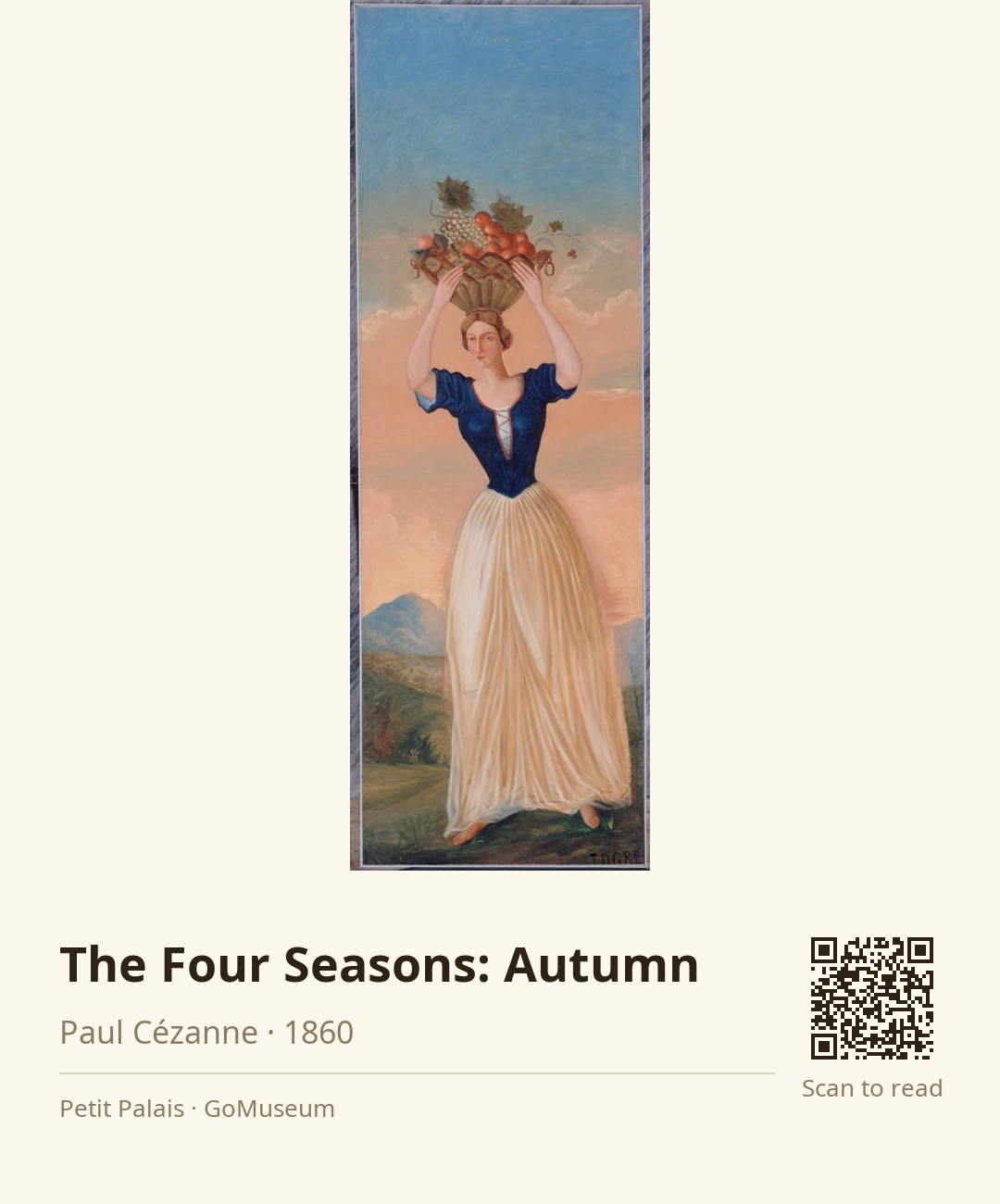
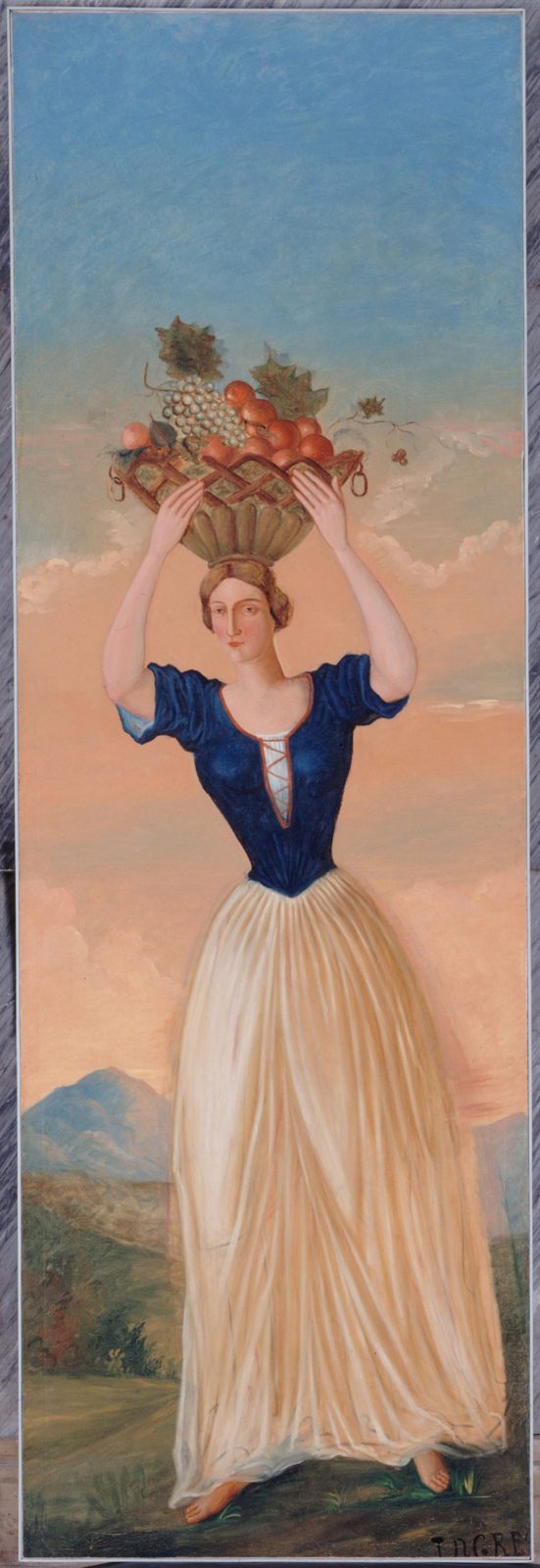
🎧 This work has audio narration — listen in the appA woman stands tall against a backdrop of mountains in Cézanne's "The Four Seasons: Autumn," her blue blouse and flowing white skirt contrasting beautifully with the warm hues of the sky. Balancing a large basket filled with vibrant fruits like grapes and apples on her head, she embodies the harvest season, a symbol of abundance and the cyclical nature of life. The meticulous brushwork captures the texture of her clothing and the fruits, drawing attention to the details that reveal Cézanne's deep engagement with his subject.
This painting, created in 1860, reflects Cézanne's exploration of form and color, bridging the gap between Impressionism and the emerging modern art movements. The vertical composition not only emphasizes the figure's height but also highlights the weight of the basket she carries, suggesting both physical and metaphorical burdens. Cézanne's innovative approach to perspective and structure is evident here, as he moves away from traditional representations, focusing instead on the essence of the scene.
Cézanne's work was initially met with skepticism, yet it laid the groundwork for future artistic developments. His dedication to capturing the complexities of nature and human experience would later influence generations of artists, marking him as a pivotal figure in the evolution of modern art. In 1895, Ambroise Vollard held Cézanne's first solo exhibition, bringing his work to a wider audience.
Paul Cézanne was a French Post-Impressionist painter born on January 19, 1839, in Aix-en-Provence. His innovative approach to color and form bridged the gap between Impressionism and the emerging Cubism of the early 20th century. Initially influenced by Romanticism and Realism, Cézanne developed a unique style that emphasized the underlying structure of objects, using repetitive brushstrokes and planes of color to create depth and complexity in his work.
Despite facing ridicule and misunderstanding from critics during his early career, Cézanne garnered support from fellow artists like Camille Pissarro and the art dealer Ambroise Vollard, who recognized his talent. His first solo exhibition in 1895 marked a turning point, leading to greater appreciation of his contributions to art. Cézanne's legacy is profound; both Henri Matisse and Pablo Picasso acknowledged him as a foundational figure in modern art, dubbing him "the father of us all." He passed away on October 22, 1906, leaving behind a transformative body of work that continues to influence artists today.
Cézanne's "The Four Seasons: Autumn" was painted in 1860, a time when he was still finding his unique voice in the art world. Commissioned by Ambroise Vollard, a key figure in promoting Cézanne's work, this painting marked a significant moment in the artist's career. Initially, the reception of his work was mixed; critics often failed to grasp his innovative approach, leading to skepticism among the public. However, the painting eventually found its way into exhibitions, including Cézanne's first solo show in 1895, which was pivotal in bringing his art to a wider audience. The provenance traces back to Vollard, who recognized the potential in Cézanne's work, and this painting has since become a cornerstone of his legacy, showcasing his early exploration of color and form.
The vertical composition not only emphasizes the figure's height but also the weight of the basket, suggesting a duality of strength and burden. His use of color modulation is particularly striking; the warm hues of the sky contrast beautifully with the cooler tones of the woman's attire. This choice enhances the emotional resonance of the scene, inviting viewers to feel the warmth of the harvest season. Cézanne's brushstrokes are methodical yet expressive, building layers that give life to the fabric of her clothing and the fruits in the basket. This meticulous attention to detail reflects his deep engagement with the subject, capturing not just the physical form but the essence of the harvest.
Cézanne's brushstrokes are known for being repetitive and exploratory, which contributes to the distinctive quality of his paintings.
When Cézanne's work was first shown, it faced skepticism and mixed reviews from critics and the public.
Cézanne's innovative approach to art influenced many generations of artists who followed him.