Rochers et branches à Bibémus
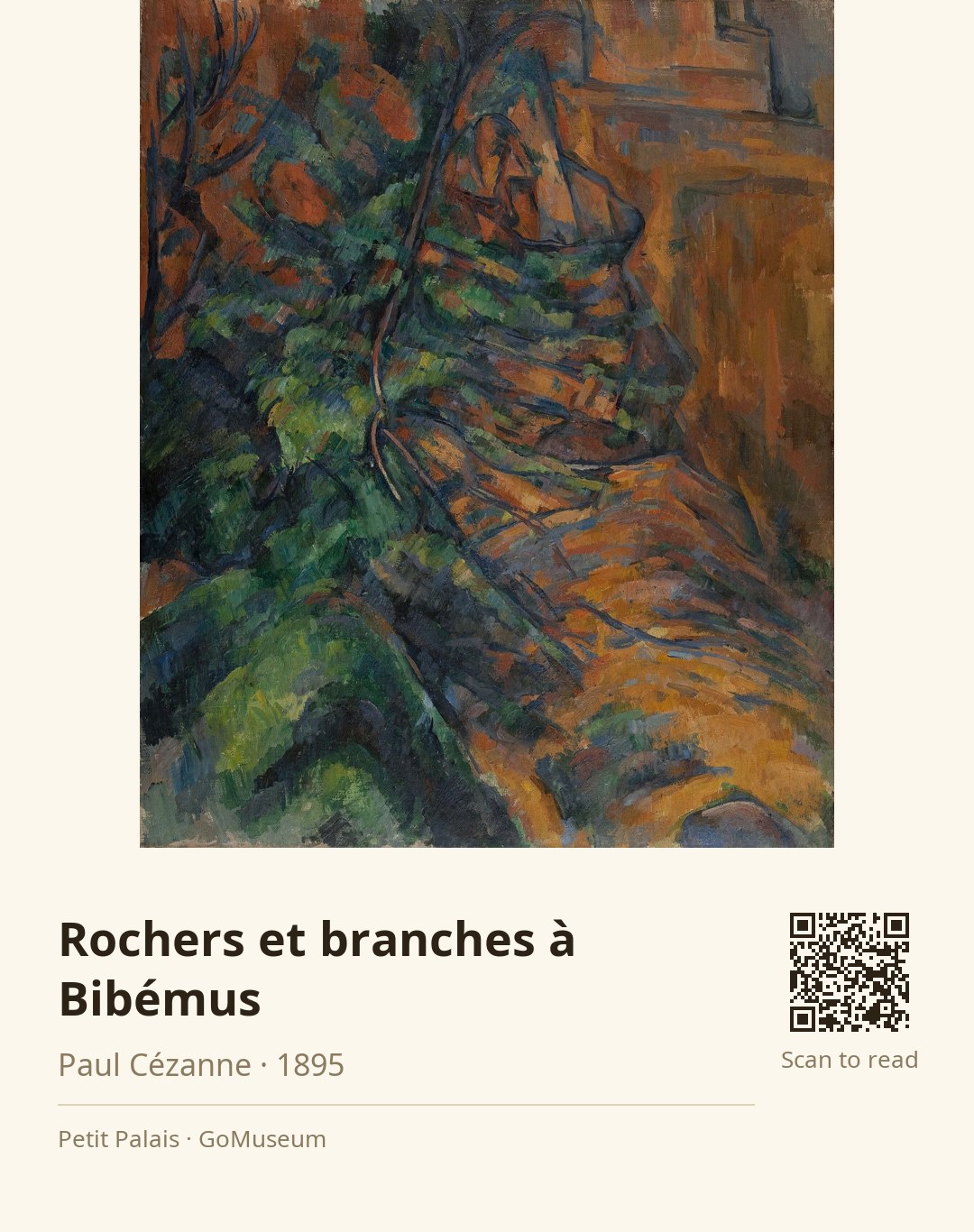
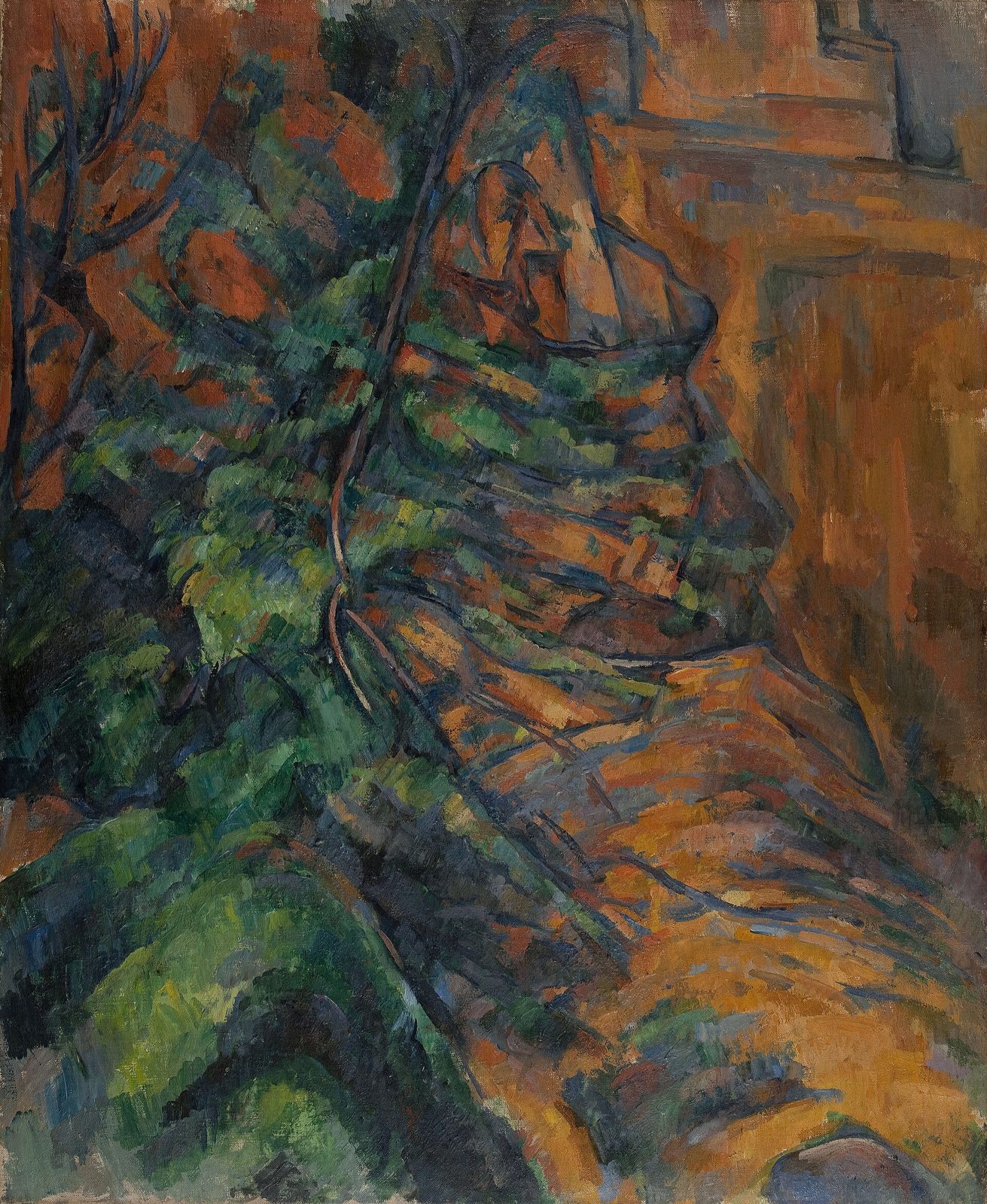
🎧 This work has audio narration — listen in the appThe rugged rocks in "Rochers et branches à Bibémus" rise dramatically, their angular forms layered in rich shades of orange, brown, and ochre. In the foreground, a blend of green and blue hints at moss-covered stones, while bold, expressive brushstrokes create a dynamic texture that invites you to explore the depth of the landscape.
Cézanne's choice of color and form here reflects his innovative approach to capturing the essence of nature, moving beyond mere representation to convey the underlying structure of the scene. The visible brushwork, a hallmark of his style, emphasizes the artist's intense study of his subjects, transforming the landscape into a vibrant tapestry of color and form. This painting exemplifies his desire to merge traditional techniques with the impressionistic exploration of light and color, creating a unique visual language that would influence future generations of artists.
In 1895, the same year this work was completed, Cézanne's first solo exhibition opened in Paris, marking a pivotal moment in his career and the broader art world.
Paul Cézanne was a French Post-Impressionist painter born on January 19, 1839, in Aix-en-Provence. His innovative approach to color and form bridged the gap between Impressionism and the emerging Cubism of the early 20th century. Initially influenced by Romanticism and Realism, Cézanne developed a unique style that emphasized the underlying structure of objects, using repetitive brushstrokes and planes of color to create depth and complexity in his work.
Despite facing ridicule and misunderstanding from critics during his early career, Cézanne garnered support from fellow artists like Camille Pissarro and the art dealer Ambroise Vollard, who recognized his talent. His first solo exhibition in 1895 marked a turning point, leading to greater appreciation of his contributions to art. Cézanne's legacy is profound; both Henri Matisse and Pablo Picasso acknowledged him as a foundational figure in modern art, dubbing him "the father of us all." He passed away on October 22, 1906, leaving behind a transformative body of work that continues to influence artists today.
In 1895, Paul Cézanne completed 'Rochers et branches à Bibémus,' a work that would soon become a cornerstone of his artistic legacy. This painting was part of his first solo exhibition, organized by the influential art dealer Ambroise Vollard at his Paris gallery. The reception was mixed; while some critics struggled to understand Cézanne's break from tradition, others began to recognize his genius. This exhibition marked a turning point, leading to greater visibility for Cézanne's work. It was during this period that fellow artists like Henri Matisse and Pablo Picasso would later cite Cézanne as a pivotal influence, calling him the 'father of us all.'
Cézanne is known for his repetitive and exploratory brushstrokes, which create a distinctive and recognizable style in his paintings.
The year 1895 was pivotal for Cézanne as it marked the opening of his first solo exhibition in Paris, which played a crucial role in increasing his visibility in the art world.
Initially, Cézanne's work faced incomprehension and ridicule from contemporary critics, highlighting the challenges he faced in gaining acceptance for his innovative style.