Alphonse de Toulouse-Lautrec-Monfa Driving his Mail-Coach in Nice
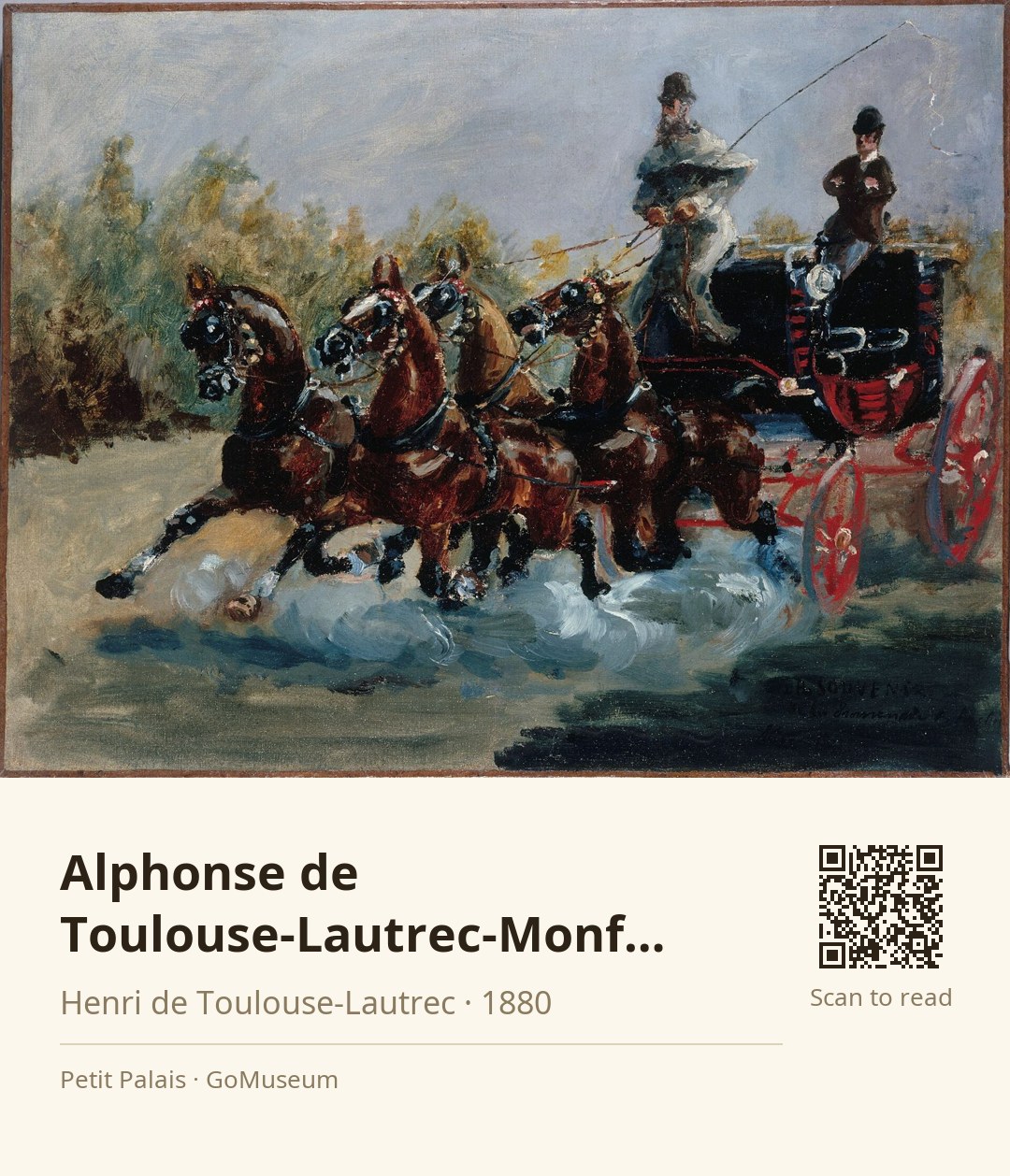
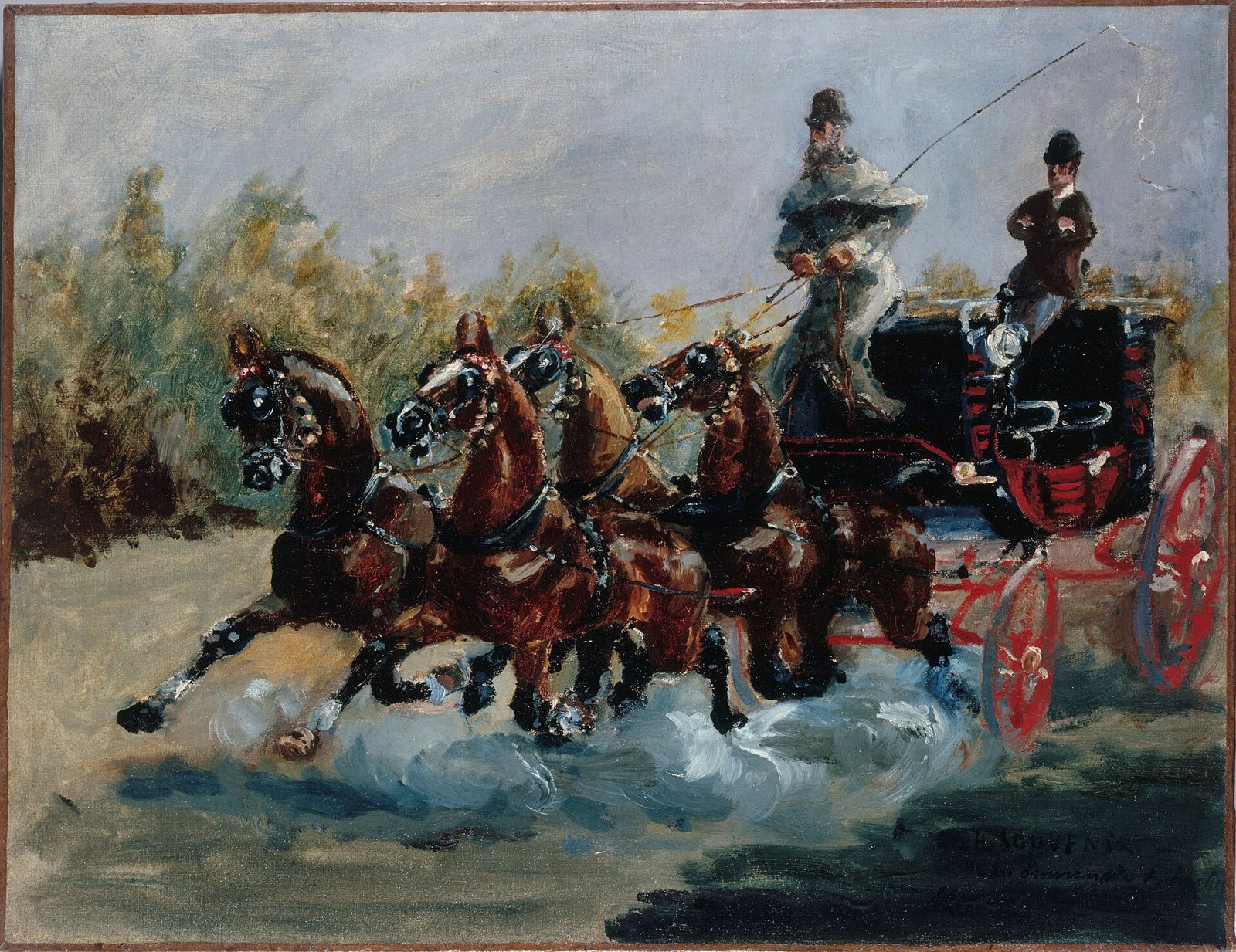
🎧 This work has audio narration — listen in the appAlphonse de Toulouse-Lautrec-Monfa grips the reins of a vibrant mail-coach, his four galloping horses bursting with energy, their brown coats rendered with lively brushstrokes. The carriage, with its striking red wheels, races through a blurred landscape, evoking a sense of speed and excitement, while the soft tones of the sky provide a gentle contrast to the vivid colors below.
This dynamic portrayal captures not just a moment in time but also reflects Toulouse-Lautrec's deep admiration for his father, a passionate horse lover. The expressive movement of the horses and the confident posture of Alphonse convey a sense of freedom and joy, emblematic of the artist's youthful exuberance at just 17 years old. Influenced by equestrian scenes and engravings, Toulouse-Lautrec's work showcases his early artistic development, merging personal affection with technical skill.
Painted during a period when the artist frequently visited Nice for his health, this piece is a testament to his formative years, where he drew inspiration from the vibrant life around him. Completed in 1880, it stands as an early example of Toulouse-Lautrec's ability to blend personal narrative with the broader themes of movement and vitality in art.
Henri de Toulouse-Lautrec, born on November 24, 1864, in Albi, France, was a pivotal figure in the Post-Impressionist movement. Despite his aristocratic background, his life was marked by physical challenges, including a genetic disorder that stunted his growth. This condition shaped his unique perspective and deep empathy for the marginalized, particularly the vibrant characters of Paris's Belle Époque, including prostitutes and performers.
Toulouse-Lautrec's artistic journey began in earnest when he moved to Paris, where he immersed himself in the bohemian lifestyle of Montmartre. His work, characterized by bold colors and dynamic compositions, captured the essence of nightlife, cabarets, and the human condition. He became known for his posters and illustrations, which brought the world of the Moulin Rouge to life. His relationships with fellow artists, such as Vincent van Gogh, and his romantic entanglements, notably with Suzanne Valadon, influenced his creative output.
His legacy endures as he is celebrated for his innovative approach to art and his ability to convey the spirit of an era. Toulouse-Lautrec's works continue to resonate, offering a glimpse into the exuberance and struggles of a society on the brink of modernity, solidifying his place in art history as a masterful chronicler of the human experience. He passed away on September 9, 1901, leaving behind a rich body of work that remains influential to this day.
This painting, titled 'Alphonse de Toulouse-Lautrec-Monfa Driving his Mail-Coach in Nice,' was completed in 1880 when Toulouse-Lautrec was just 17 years old. It was created during a time when the artist was frequently visiting Nice for health reasons, a place that inspired much of his early work. The piece is a tribute to his father, Count Alphonse, a passionate horse lover. The painting is now housed in the Petit Palais in Paris.
The vibrant brushwork captures the dynamic movement of the galloping horses, each stroke conveying energy and life. The choice of oil paint on canvas allows for rich color saturation, making the brown coats of the horses pop against the softer tones of the background. The bright red wheels of the carriage draw your eye, creating a focal point that contrasts beautifully with the blurred landscape, suggesting speed and excitement. The composition is dynamic, with the figures seated in the carriage exuding confidence and joy, while the background remains intentionally vague, emphasizing the motion of the scene.
The painting is signed in the bottom right-hand corner with 'HTL, Souvenir de la Promenade des Anglais,' which reflects Toulouse-Lautrec's personal connection to the scene and serves as a memento of his time spent in Nice.
Toulouse-Lautrec was influenced by equestrian scenes from artists like Crafty and British and American engravings of horse-teams, which can be seen in the dynamic portrayal of the horses and the vibrant brushwork in this piece.