Portrait of Ambroise Vollard
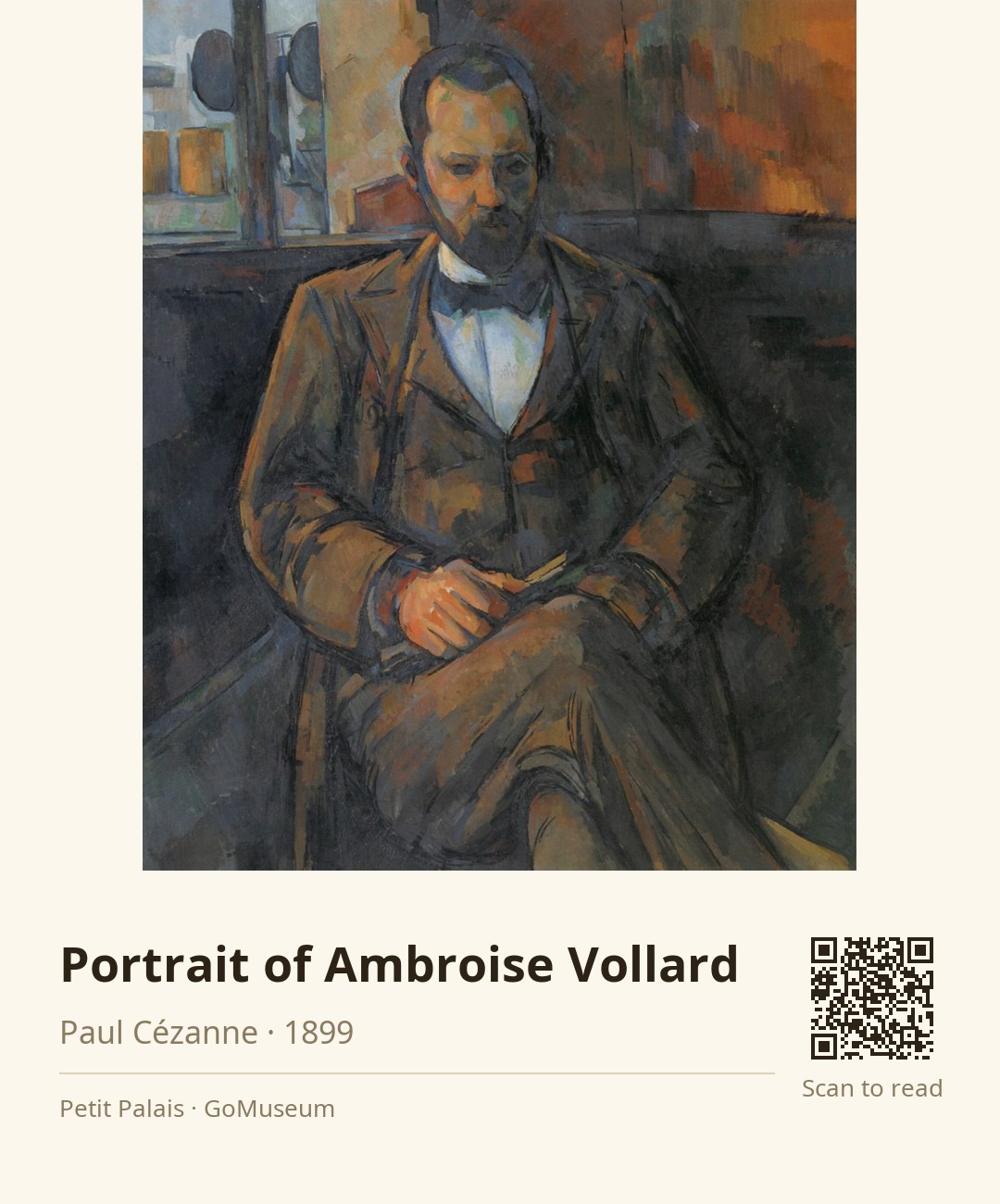
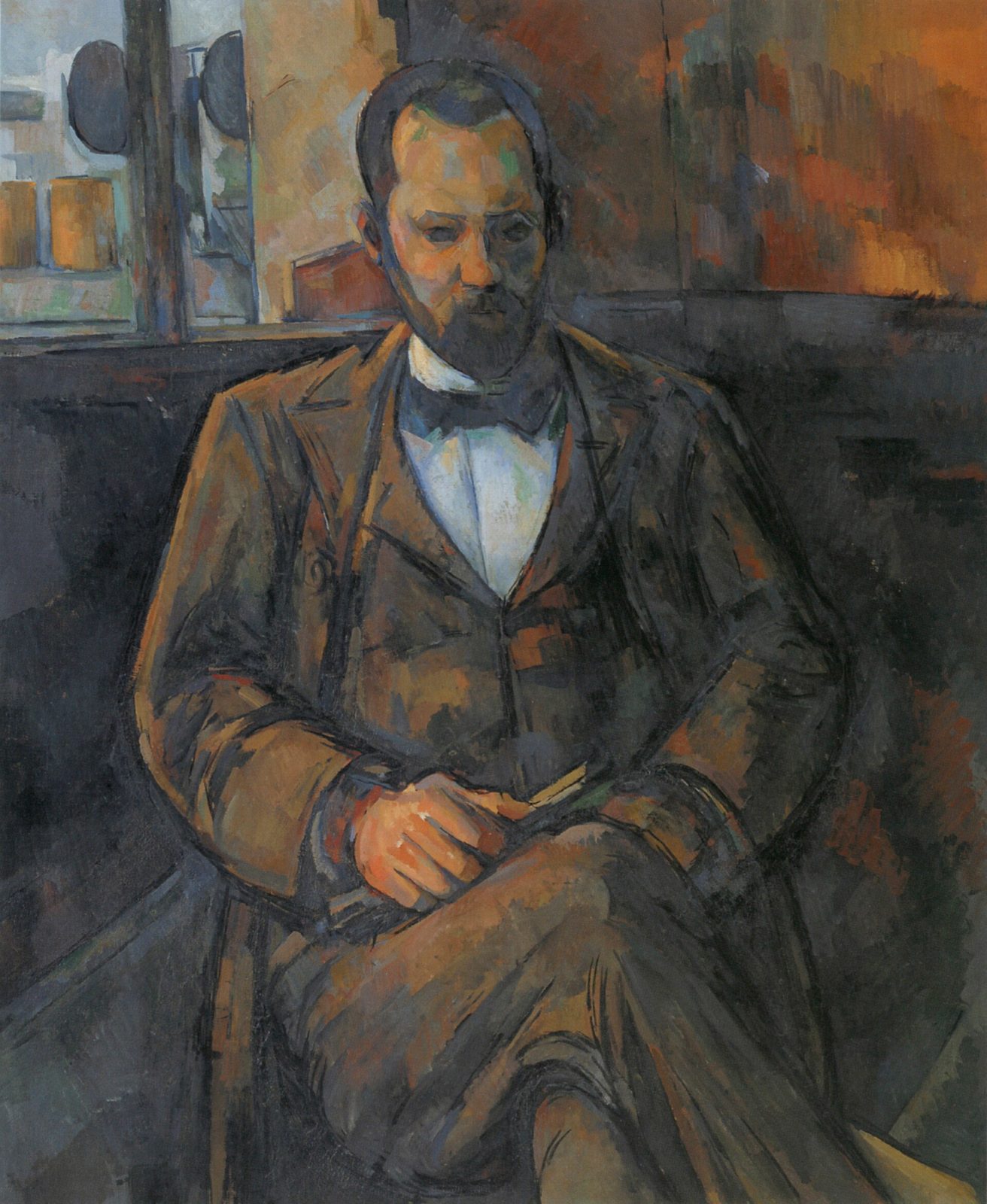
🎧 This work has audio narration — listen in the appAmbroise Vollard sits in a brown suit, his legs crossed, with a book resting in his lap, exuding a sense of quiet contemplation. His white shirt and bow tie contrast with the earthy tones of the background, where abstract shapes blend into muted colors, hinting at the world outside through a window on the left. The visible brushwork adds texture, creating depth that draws you into the scene.
Cézanne's choice of earthy colors and the way he captures Vollard's expression reflect a complex relationship between artist and patron. This portrait was not just a commission; it embodies the gratitude Cézanne felt towards Vollard, who played a pivotal role in elevating him from obscurity to prominence in the art world. The hours spent in silence during 115 sittings, with Vollard often described as appearing exhausted, reveal the intensity of their collaboration. Cézanne's insistence on perfection led him to leave parts of the painting unfinished, a testament to his meticulous nature and the high standards he set for himself.
Ambroise Vollard was instrumental in hosting Cézanne's first solo exhibition in 1895, which transformed the artist's career and solidified his place in the history of modern art.
Paul Cézanne was a French Post-Impressionist painter born on January 19, 1839, in Aix-en-Provence. His innovative approach to color and form bridged the gap between Impressionism and the emerging Cubism of the early 20th century. Initially influenced by Romanticism and Realism, Cézanne developed a unique style that emphasized the underlying structure of objects, using repetitive brushstrokes and planes of color to create depth and complexity in his work.
Despite facing ridicule and misunderstanding from critics during his early career, Cézanne garnered support from fellow artists like Camille Pissarro and the art dealer Ambroise Vollard, who recognized his talent. His first solo exhibition in 1895 marked a turning point, leading to greater appreciation of his contributions to art. Cézanne's legacy is profound; both Henri Matisse and Pablo Picasso acknowledged him as a foundational figure in modern art, dubbing him "the father of us all." He passed away on October 22, 1906, leaving behind a transformative body of work that continues to influence artists today.
In 1899, Paul Cézanne painted the Portrait of Ambroise Vollard, a significant work that emerged from a deep collaboration between artist and patron. Vollard, an influential art dealer, discovered Cézanne's work in a shop window and was immediately captivated, leading him to seek out the artist in Provence. This portrait was not merely a commission; it was a culmination of 115 intense sittings, where Vollard often appeared exhausted, reflecting the demanding nature of Cézanne's pursuit of perfection. The painting remained unfinished, a testament to Cézanne's meticulous standards. Upon Vollard's death, he bequeathed this portrait to the Petit Palais in Paris, where it continues to reside, a symbol of their profound relationship and the transformative impact Vollard had on Cézanne's career.
Interestingly, during one of the long sittings, when Vollard shifted in his seat, Cézanne famously compared him to an apple, insisting he must sit still like one. This quirky analogy highlights Cézanne's intense focus on form and structure, revealing his unique perspective on portraiture and the lengths he would go to achieve his artistic vision.
There are two small patches of bare canvas on Vollard's right hand that are not immediately noticeable, indicating that Cézanne left parts of the painting unfinished.
Vollard was a significant figure for many artists of the period, including Degas, Gauguin, and Picasso, helping to elevate their careers through his exhibitions and support.
The unfinished parts of the portrait highlight Cézanne's perfectionism and his reluctance to risk ruining the work by guessing at colors or details.