The Village of Knokke
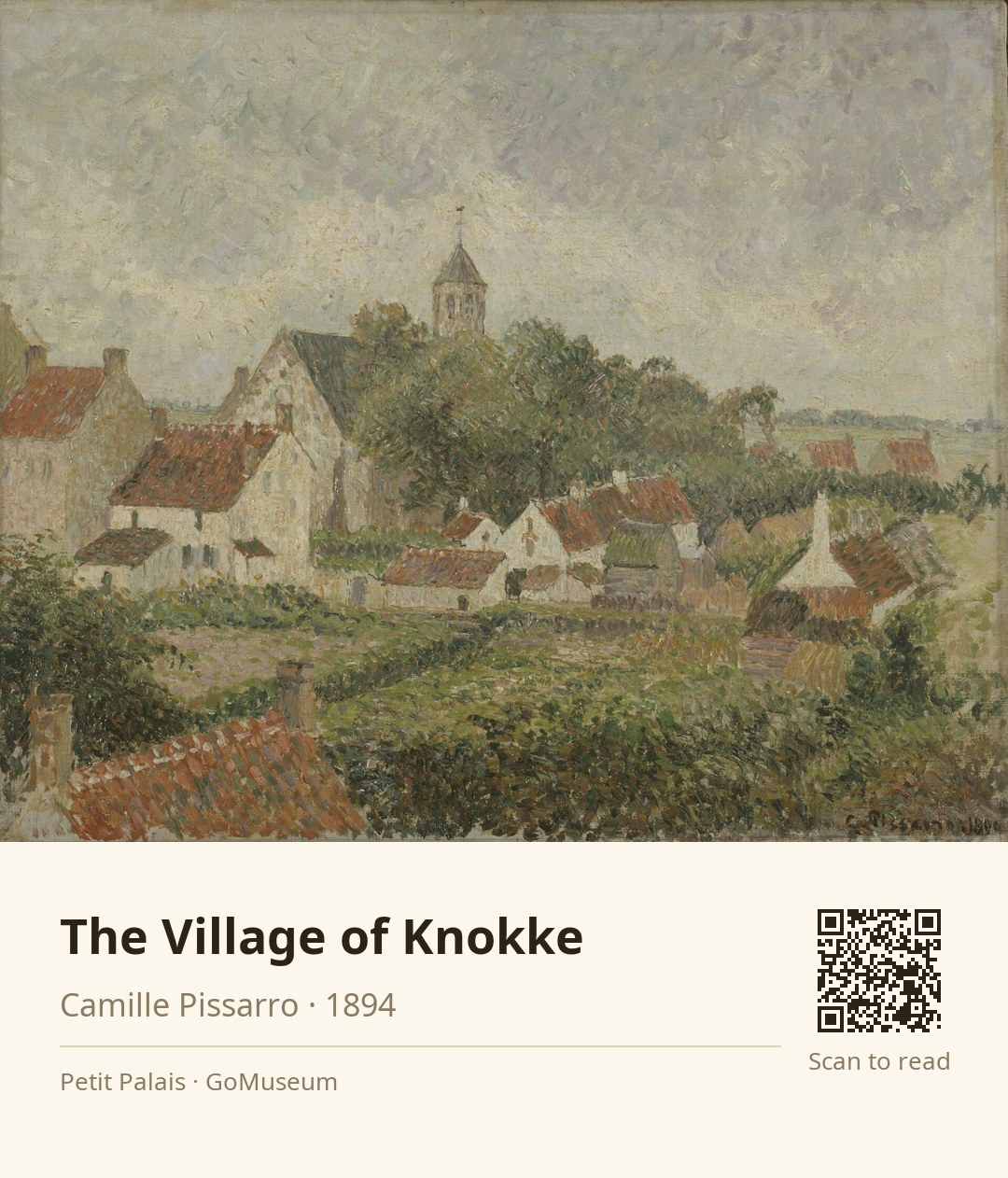
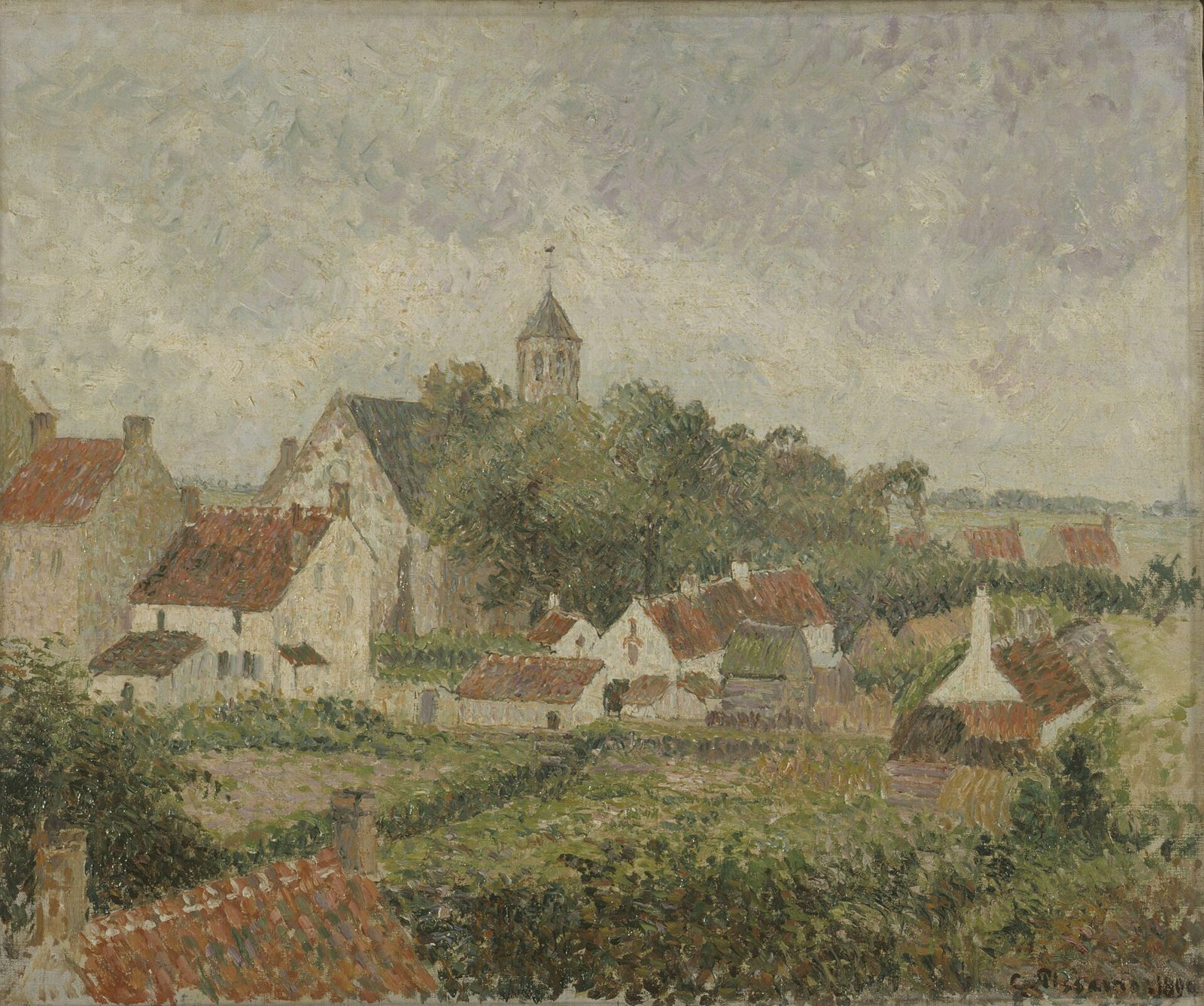
🎧 This work has audio narration — listen in the appThe church tower in "The Village of Knokke" rises prominently above the lush greenery, its steeple a striking vertical element against the soft, muted tones of the overcast sky. Below, the quaint houses with their red-tiled roofs cluster together, creating a sense of community that feels both intimate and timeless. The textured brushwork captures the essence of the landscape, with dappled strokes that breathe life into the scene.
Pissarro’s choice to depict this serene village reflects his deep appreciation for rural life and the everyday moments that often go unnoticed. The earthy palette of greens, browns, and reds not only grounds the painting in nature but also evokes a sense of warmth and familiarity. This work, created in 1894, showcases Pissarro's mastery of Impressionism, where he focused on capturing the fleeting effects of light and atmosphere, allowing the viewer to feel the tranquility of a cloudy day in the countryside.
Born in the Danish West Indies, Pissarro became a pivotal figure in the Impressionist movement, influencing many artists with his dedication to portraying the common man in natural settings. In 1894, he painted "The Village of Knokke," a testament to his enduring love for the rural landscapes of France.
Jacob Abraham Camille Pissarro, born on July 10, 1830, in Saint Thomas, was a Danish-French painter pivotal to the Impressionist and Neo-Impressionist movements. His artistic journey began under the influence of masters like Courbet and Corot, and he later collaborated with Seurat and Signac, embracing Neo-Impressionism at age 54. Pissarro's dedication to depicting rural life and the working class set him apart; he painted everyday scenes without grandeur, focusing on authenticity.
As a mentor, Pissarro played a crucial role in the development of fellow artists, including Cézanne, Gauguin, and Van Gogh, earning him the title "dean of the Impressionist painters." His warm personality and wisdom made him a father figure within the art community. Pissarro was the only artist to exhibit in all eight Paris Impressionist exhibitions from 1874 to 1886, solidifying his legacy. Despite facing criticism for his subjects, he remained committed to his vision, advocating for a personal approach to classicism. Pissarro passed away on November 13, 1903, leaving an indelible mark on art history.
In 'The Village of Knokke,' Pissarro employs a textured brushwork technique that breathes life into the landscape. His use of dappled strokes creates a sense of movement and vibrancy, capturing the fleeting effects of light on the village scene. The earthy palette of greens, browns, and reds not only grounds the painting in nature but also evokes warmth and familiarity. Pissarro's decision to depict the church tower as a vertical element against the soft, muted tones of the overcast sky draws the viewer's eye upward, creating a dynamic tension within the composition. The scale of the painting, with its dimensions of 54.5 by 65.5 cm, allows for an intimate yet expansive view of the village, inviting you to step into this tranquil moment. Each brushstroke reflects Pissarro's mastery of Impressionism, as he captures the essence of a cloudy day in the countryside.
One surprising aspect of Pissarro's life is that he was the only artist to exhibit at all eight of the Paris Impressionist exhibitions from 1874 to 1886. This remarkable achievement underscores his commitment to the movement and his role in fostering a sense of community among the Impressionists, despite the challenges they faced in gaining recognition during their time.
Pissarro's father was of Portuguese Jewish descent and had French nationality.
The British painter James Gay Sawkins, who lived in Charlotte Amalie, influenced Pissarro's early artistic development.