The Church in Moret
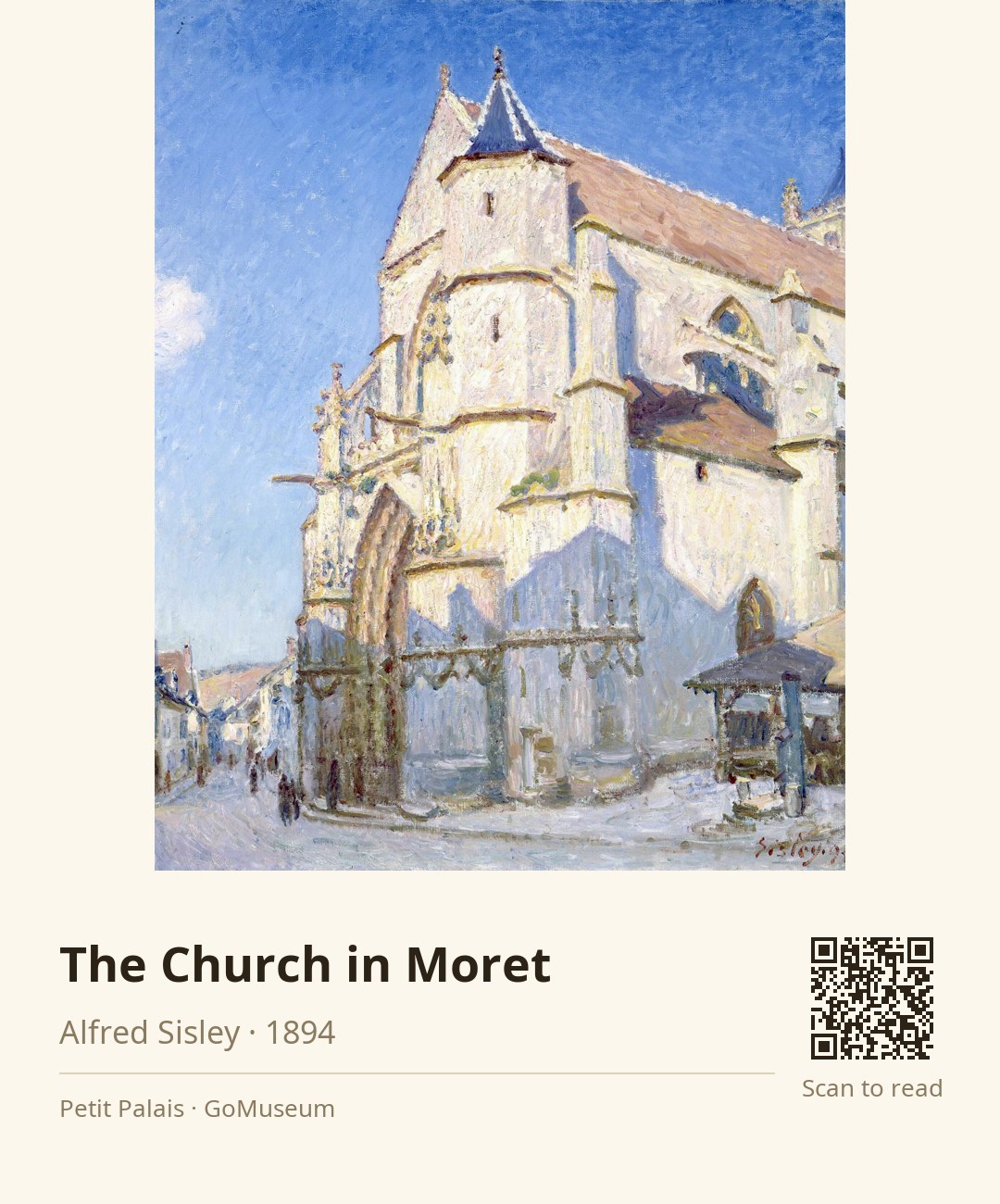
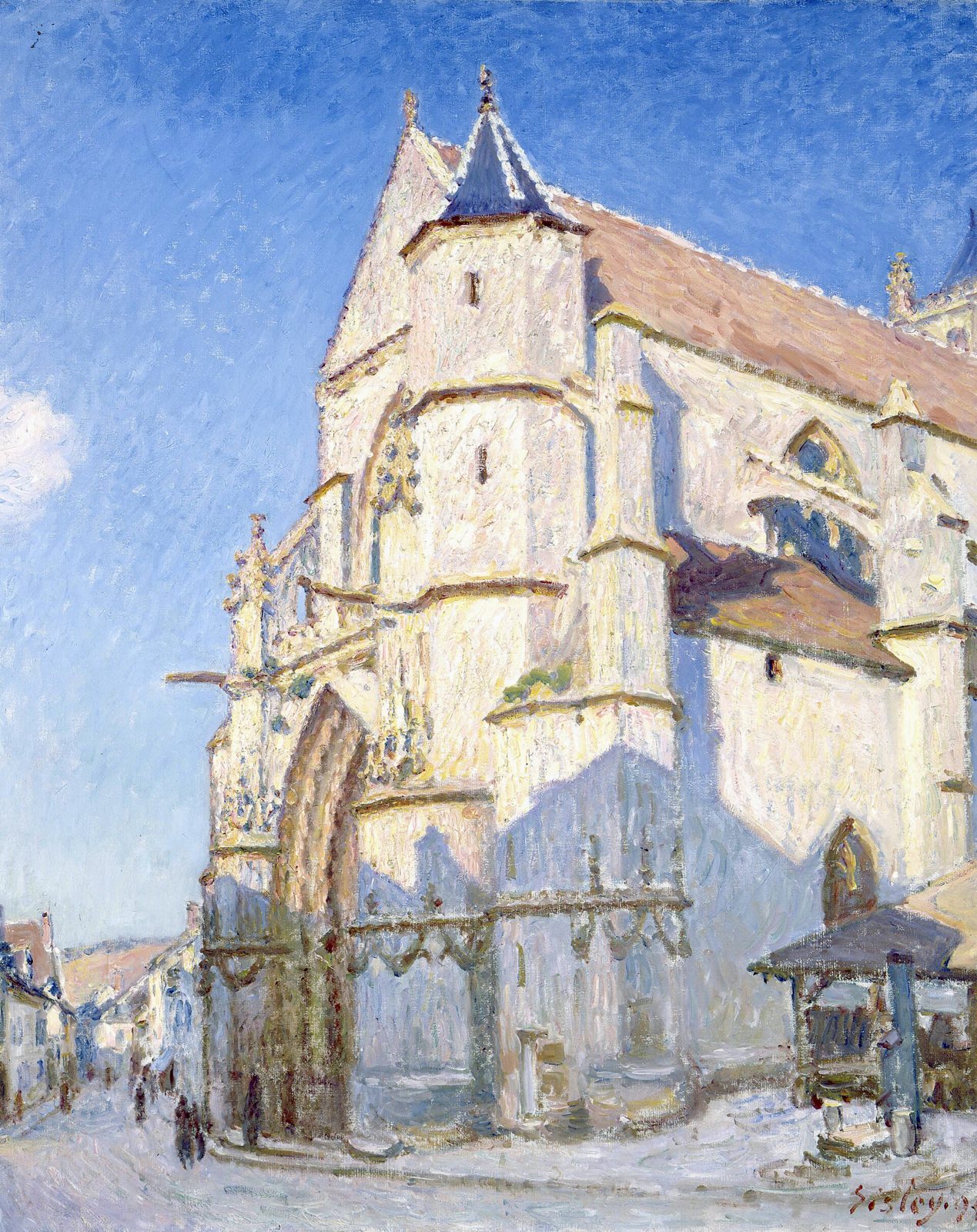
🎧 This work has audio narration — listen in the appThe Gothic church stands prominently in Alfred Sisley’s "The Church in Moret," its intricate pointed arches and decorative stonework catching the sunlight. The facade casts shadows on the cobblestone street, where small figures stroll, seemingly drawn into the warm embrace of the scene. The clear blue sky amplifies the soft palette of creams and earthy browns, creating a serene atmosphere that invites contemplation.
This interplay of architectural detail and natural light reflects Sisley’s dedication to capturing the essence of a moment in time, a hallmark of Impressionism. The loose brushwork conveys movement and life, emphasizing the church’s grandeur while simultaneously grounding it in the everyday experience of the townspeople. Sisley’s choice to depict this particular church in Moret-sur-Loing highlights his connection to the landscape and community, as he often painted en plein air, immersing himself in the environment around him.
Born in Paris in 1839, Sisley spent much of his life in France, where he faced financial hardships despite his artistic talent. "The Church in Moret," created in 1894, is one of the many landscapes that showcase his skill and commitment to the Impressionist movement, which would only gain recognition after his passing in 1899.
Alfred Sisley was a British-born Impressionist landscape painter, born in Paris on October 30, 1839, to affluent expatriate parents. His dedication to painting outdoors, or en plein air, marked him as one of the most consistent figures within the Impressionist movement. Sisley’s work primarily focused on landscapes, with notable series depicting the River Thames, the floods at Marly-le-Roi, and the Gothic church at Moret-sur-Loing. Despite his talent, he struggled for recognition and financial stability throughout his life, often relying on the support of patrons and friends.
Sisley's artistic journey began in earnest after returning to Paris from London, where he had been sent to pursue a business career. Instead, he found his calling in art, studying at the École des Beaux-Arts and forming close friendships with fellow artists like Monet and Renoir. His personal life was marked by hardship, particularly after the Franco-Prussian War disrupted his family's financial support. He married Eugénie Lescouezec, and together they faced many challenges, including the loss of a child and Sisley’s ongoing financial instability.
Although Sisley’s work was largely overlooked during his lifetime, it has since gained significant appreciation, solidifying his place in art history as a key contributor to Impressionism and French landscape painting. His delicate depictions of nature continue to resonate, showcasing the beauty of the world around him. Sisley passed away on January 29, 1899, in Moret-sur-Loing, leaving behind a legacy that would flourish posthumously.
In 'The Church in Moret,' Sisley employs a loose and textured brushwork that breathes life into the scene. The way he handles paint creates a sense of movement, almost as if the light itself is dancing across the church's facade. The warm palette of creams and earthy browns is not just visually appealing; it evokes a feeling of warmth and tranquility that draws you into the moment. Sisley’s choice to place the church on the right side of the canvas allows the eye to travel along the cobblestone street, inviting you to explore the scene further. The clear blue sky serves as a perfect backdrop, enhancing the church’s intricate details while also reflecting the serenity of the day. This technique of capturing fleeting moments in nature is a hallmark of Impressionism, and Sisley’s commitment to painting en plein air allows for an authenticity that resonates with viewers.
One surprising aspect of Sisley's life is that despite his British heritage, he spent most of his life in France and sought French citizenship twice, though he was never granted it before his death. This reflects the complexities of his identity as an artist caught between two cultures, yet fully immersed in the French Impressionist scene.
Sisley's loose and textured brushwork not only captures the play of light and shadow but also creates a sense of movement, making the scene feel alive as if the light is dancing across the church's facade.
Despite his talent, Sisley faced significant financial hardships throughout his life, relying on the support of patrons and friends, which influenced his ability to create and exhibit his work during his lifetime.
The church's placement on the right side of the canvas guides the viewer's eye along the cobblestone street, inviting exploration of the scene and reflecting Sisley's deep connection to the landscape and community of Moret-sur-Loing.