Avenue of Chestnut Trees in La Celle-Saint-Cloud
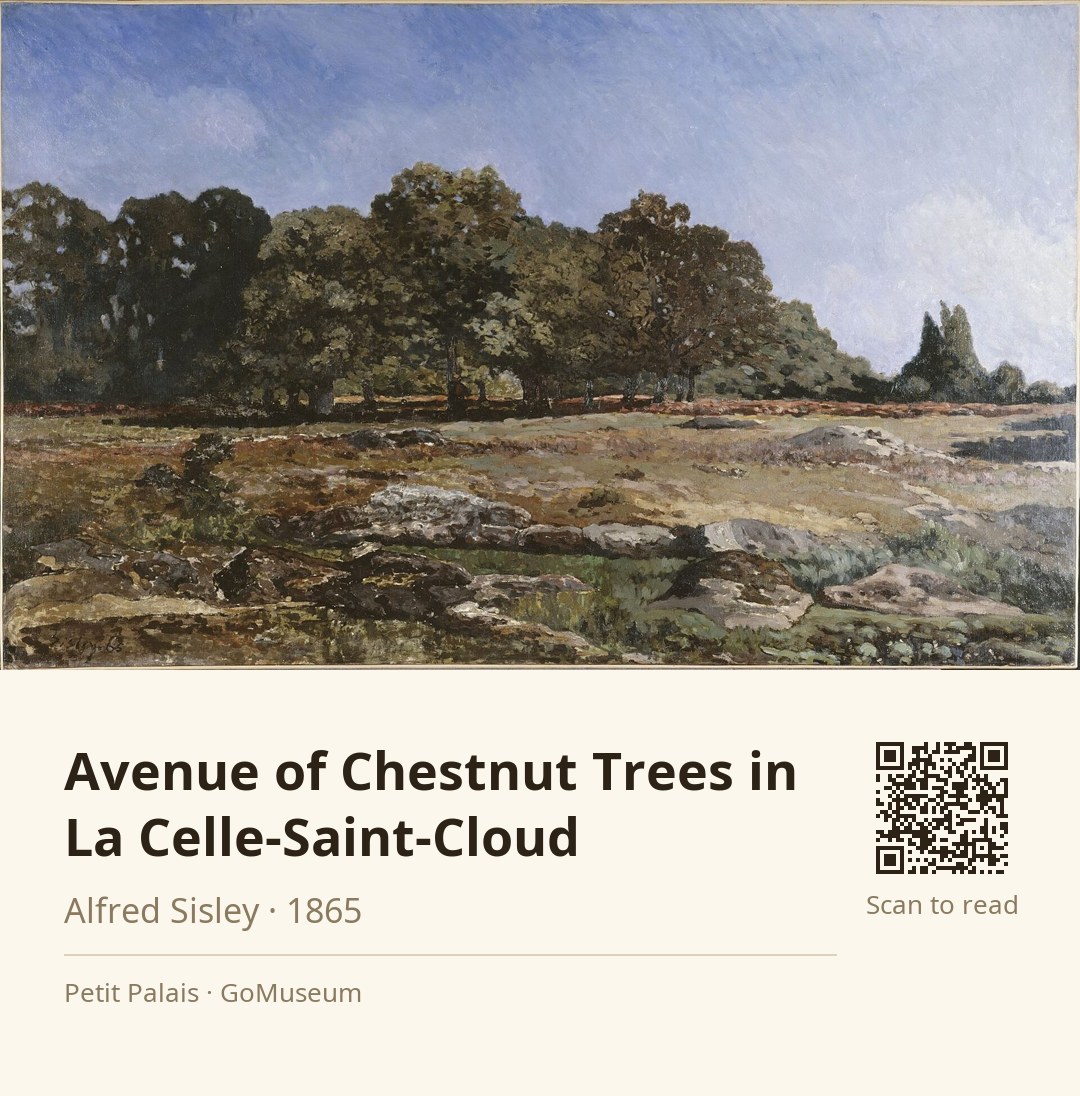
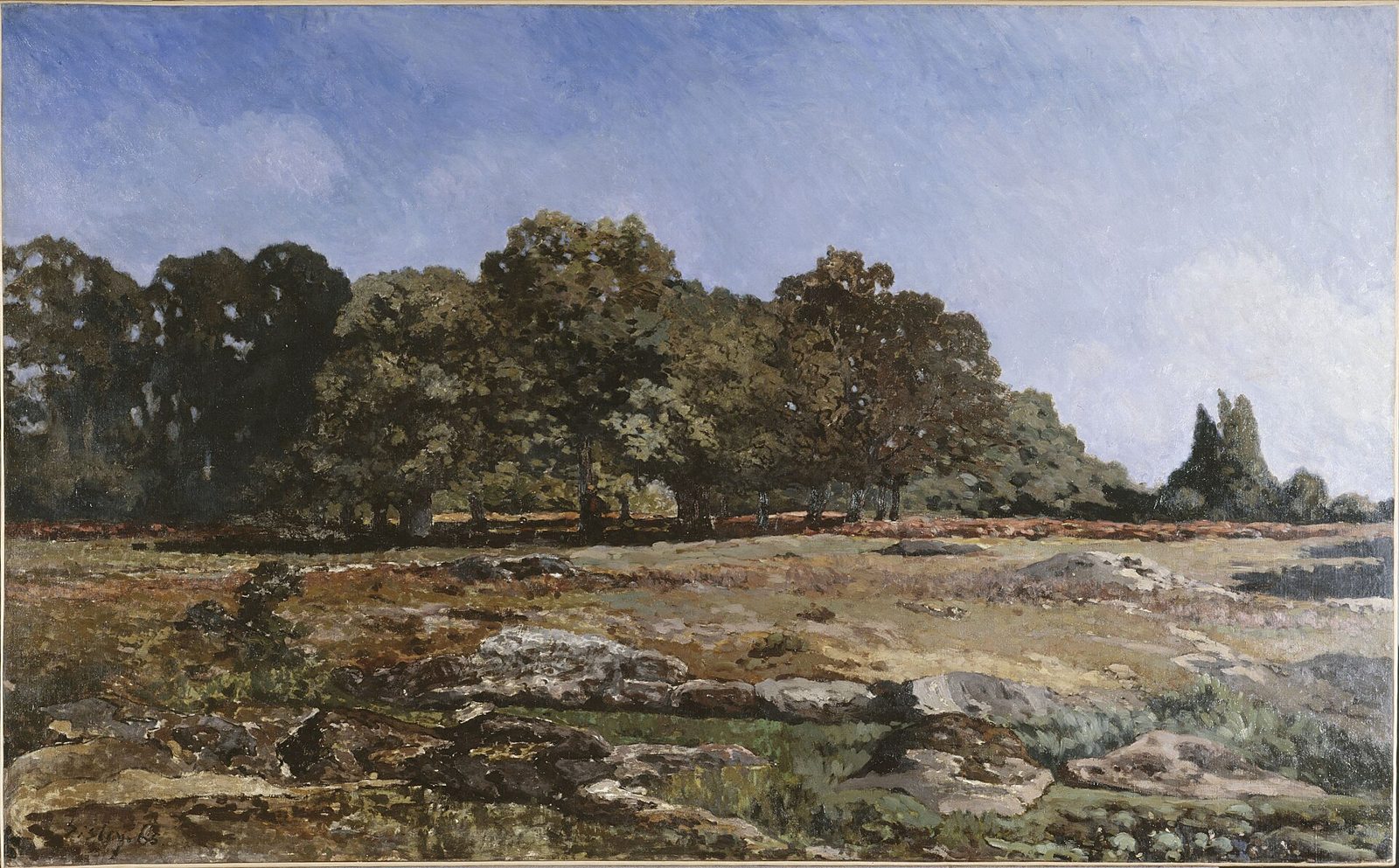
🎧 This work has audio narration — listen in the appThe chestnut trees stand tall and lush in Alfred Sisley’s painting, their vibrant greens and browns suggesting the warmth of late summer or early autumn. The uneven, rocky foreground contrasts with the serene blue sky dotted with soft clouds, creating a sense of depth and tranquility. Each brushstroke captures the texture of the foliage, inviting you to feel the ruggedness of the terrain beneath your feet.
This scene, painted in 1865, reflects Sisley’s deep connection to nature and his commitment to painting outdoors, a hallmark of the Impressionist movement. The trees act as a natural barrier, framing the landscape and emphasizing the expansive sky above, which speaks to the freedom and refuge sought by Parisians escaping the city. Sisley painted this work in the woods of La Celle-Saint-Cloud, a popular retreat for artists and city dwellers alike, who sought solace in the beauty of the natural world.
Despite its innovative composition and technique, this painting was rejected by the Paris Salon in 1867, a common fate for many works that would later define Impressionism.
Alfred Sisley was a British-born Impressionist landscape painter, born in Paris on October 30, 1839, to affluent expatriate parents. His dedication to painting outdoors, or en plein air, marked him as one of the most consistent figures within the Impressionist movement. Sisley’s work primarily focused on landscapes, with notable series depicting the River Thames, the floods at Marly-le-Roi, and the Gothic church at Moret-sur-Loing. Despite his talent, he struggled for recognition and financial stability throughout his life, often relying on the support of patrons and friends.
Sisley's artistic journey began in earnest after returning to Paris from London, where he had been sent to pursue a business career. Instead, he found his calling in art, studying at the École des Beaux-Arts and forming close friendships with fellow artists like Monet and Renoir. His personal life was marked by hardship, particularly after the Franco-Prussian War disrupted his family's financial support. He married Eugénie Lescouezec, and together they faced many challenges, including the loss of a child and Sisley’s ongoing financial instability.
Although Sisley’s work was largely overlooked during his lifetime, it has since gained significant appreciation, solidifying his place in art history as a key contributor to Impressionism and French landscape painting. His delicate depictions of nature continue to resonate, showcasing the beauty of the world around him. Sisley passed away on January 29, 1899, in Moret-sur-Loing, leaving behind a legacy that would flourish posthumously.
Alfred Sisley's 'Avenue of Chestnut Trees in La Celle-Saint-Cloud' was painted in 1865, during a time when the Impressionist movement was still finding its footing. This particular piece was created in the woods of La Celle-Saint-Cloud, a favored retreat for artists seeking inspiration away from the bustling city of Paris. Despite its beauty and innovative approach, the painting faced rejection at the Paris Salon in 1867, a fate shared by many works that would later be celebrated as masterpieces of Impressionism. It was not until 1877 that the opera singer Jean-Baptiste Faure acquired it, and later, in 1921, it found a permanent home at the Petit Palais in Paris, thanks to Joseph Duveen's generous donation. The painting's journey reflects the struggles and triumphs of an artist whose work was often overlooked during his lifetime.
Sisley's technique in this painting showcases his mastery of oil on canvas, employing a loose brushwork that brings the landscape to life. The varied greens and browns of the chestnut trees are layered in thin glazes, creating a depth that mimics the natural play of light in the forest. The rocky foreground is rendered with a rough texture, contrasting beautifully with the smooth, serene sky above. This balance is not just aesthetic; it draws the viewer's eye upward, evoking a sense of freedom and escape. Sisley’s choice to paint en plein air allowed him to capture the fleeting moments of nature, and here, the composition feels spontaneous, as if he seized a perfect moment in time. The trees act as a natural frame, enhancing the expansive feel of the sky, while the uneven ground adds a touch of rugged realism.
La Celle-Saint-Cloud served as a favored escape for artists and Parisians seeking tranquility and inspiration in nature, making it a vibrant hub for creative expression during Sisley's time.
Sisley collaborated with fellow artist Frédéric Bazille, which highlights the camaraderie among Impressionist painters during their outdoor excursions.
Sisley's approach emphasized painting en plein air, allowing him to capture the immediate effects of light and atmosphere in natural settings, contrasting with the more studio-bound practices of earlier artists.