The Betrothal of the Virgin
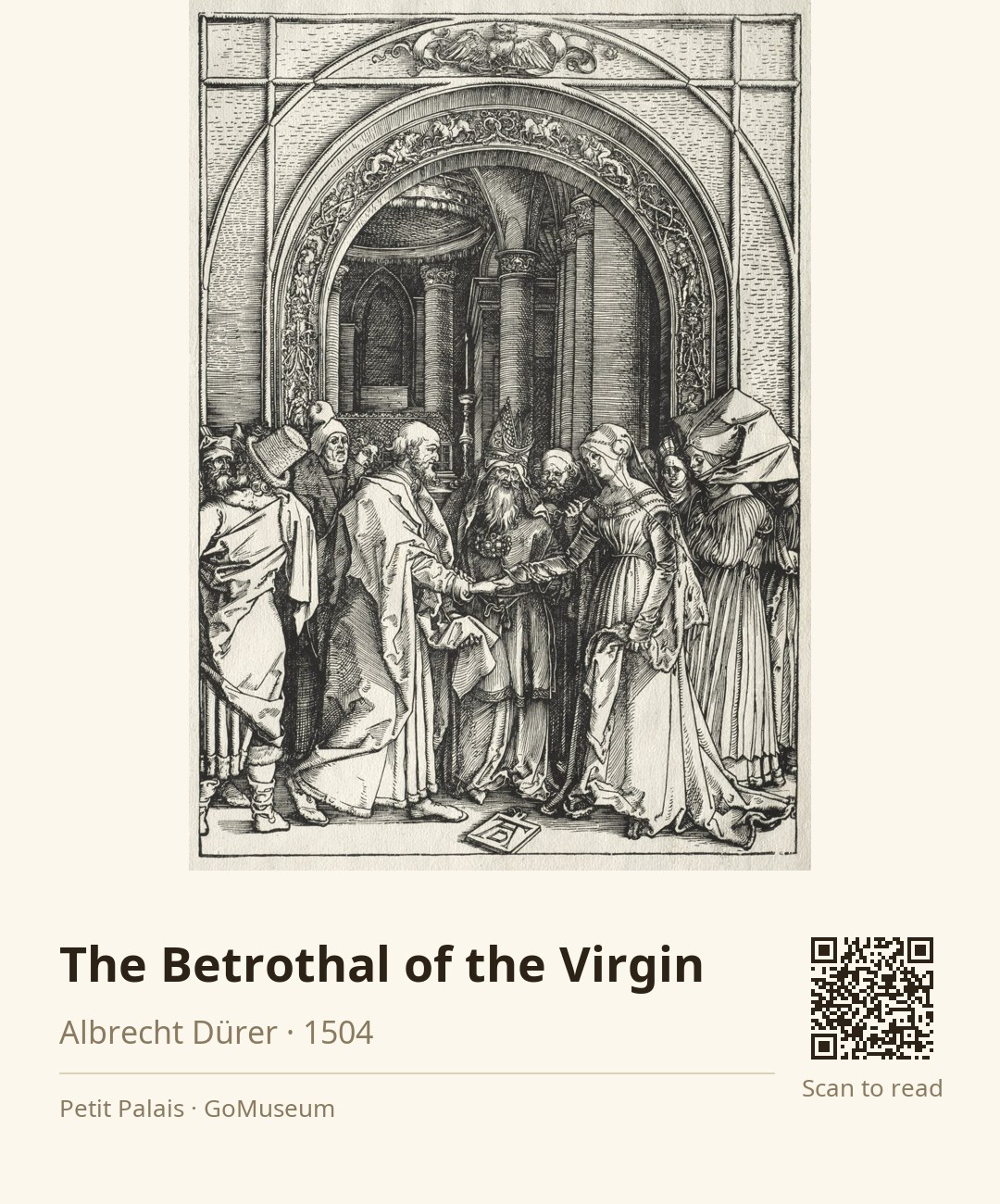
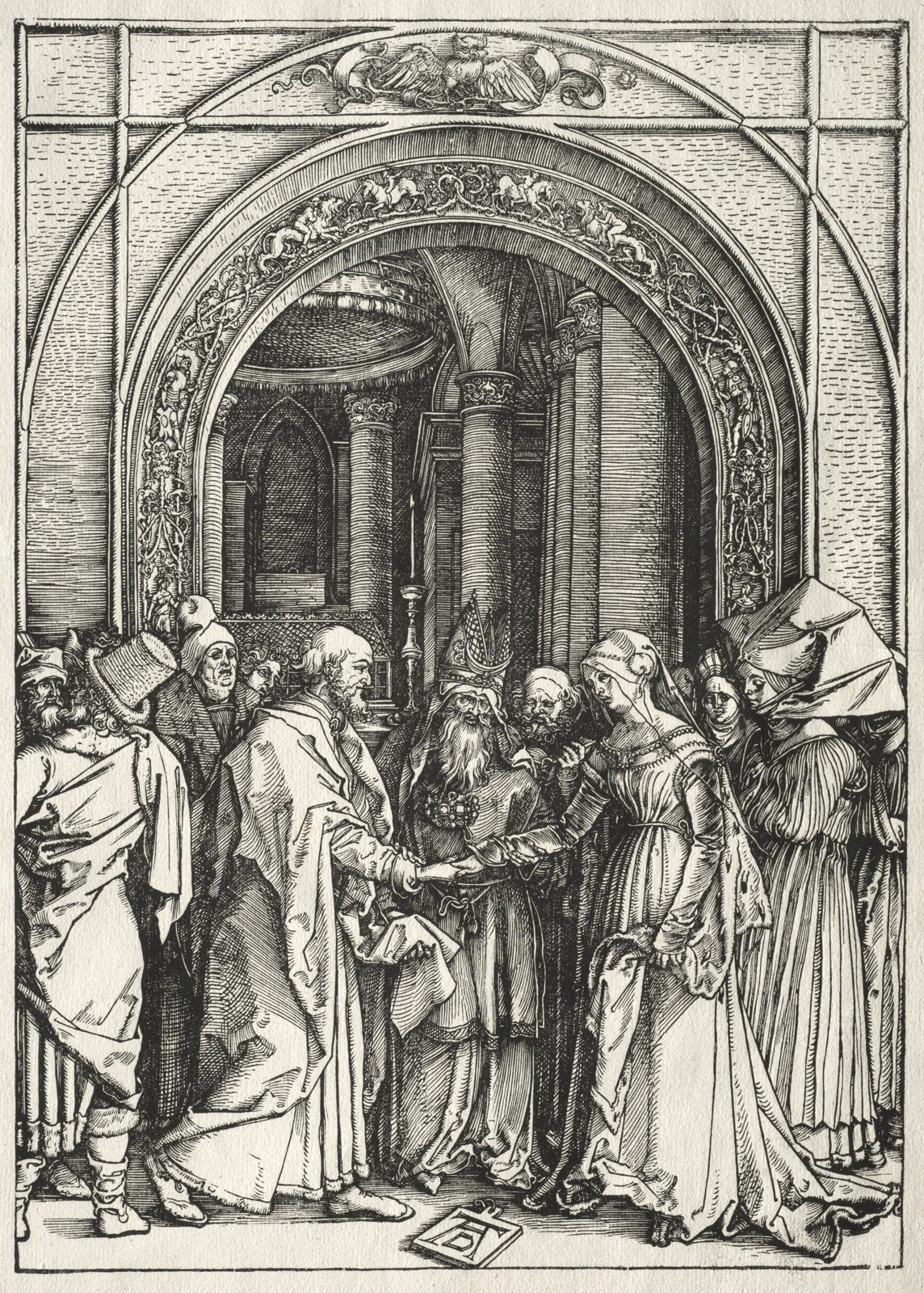
🎧 This work has audio narration — listen in the appThe ornate archway in Albrecht Dürer’s *The Betrothal of the Virgin* frames a moment of profound connection between a man and a woman, their hands clasped in a gesture that signifies unity. The man’s long robe contrasts with the flowing gown of the woman, both garments meticulously detailed, showcasing Dürer’s skill in rendering textures and patterns. Surrounding them, a bearded figure in a bishop's mitre hints at the religious significance of this union, suggesting a ceremonial context that elevates the scene beyond mere personal interaction.
This composition, created in 1504, reflects Dürer’s mastery of engraving, a technique he favored for its ability to capture intricate details and tonal variations. The monochromatic palette emphasizes the fine lines, drawing attention to the careful craftsmanship that characterizes his work. The architectural elements, with their columns and arches, not only provide depth but also evoke a sense of grandeur, reinforcing the importance of the event being depicted. Dürer’s engagement with classical motifs and humanist themes in this piece illustrates his role in bridging Northern and Southern Renaissance art traditions.
Dürer, born in Nuremberg in 1471, became one of the most influential figures of the Northern Renaissance, known for his innovative techniques and theoretical writings on art.
Albrecht Dürer, born on May 21, 1471, in Nuremberg, was a pivotal figure of the German Renaissance, renowned for his contributions as a painter, printmaker, and theorist. His artistic journey began early, showing exceptional talent in drawing, which led him to apprentice under Michael Wolgemut. By his twenties, Dürer gained recognition across Europe, particularly for his innovative woodcuts that transformed the medium. His engravings, characterized by meticulous detail and tonal range, further established his reputation.
Dürer's interactions with leading Italian artists, including Raphael and Leonardo da Vinci, enriched his work, allowing him to integrate classical motifs and the human form into Northern art. His theoretical writings on perspective and proportions reflect his deep engagement with the principles of mathematics in art. Dürer's legacy is marked by his ability to bridge the gap between Northern and Southern European artistic traditions, making him a central figure in art history. His works, including iconic pieces like "Melencolia I" and "Knight, Death, and the Devil," continue to influence artists and captivate audiences today. Dürer passed away on April 6, 1528, leaving behind a vast and impactful body of work.
Dürer’s technique in *The Betrothal of the Virgin* showcases his mastery of engraving, particularly through the use of fine lines and tonal variations. This attention to detail creates a lifelike quality that draws the viewer into the scene. The monochromatic palette not only emphasizes the delicate lines but also enhances the emotional gravity of the moment. Dürer’s choice to incorporate architectural elements, like the ornate archway and columns, adds a sense of grandeur and depth, framing the intimate connection between the figures. The careful arrangement of the characters within this architectural space creates a dynamic composition that guides the viewer’s eye, making the scene feel both monumental and personal.
Interestingly, Dürer was one of the first artists to consistently sign his engravings with a monogram, a practice that became a hallmark of his work. This not only established his identity as an artist but also set a precedent for future artists to claim ownership of their creations. Dürer’s monogram, combining the letters 'A' and 'D', became a recognizable symbol of quality and craftsmanship, further enhancing his reputation across Europe.
Dürer had professional connections with major Italian artists, which likely influenced his artistic development and the techniques he employed in his own work.