Afternoon tea
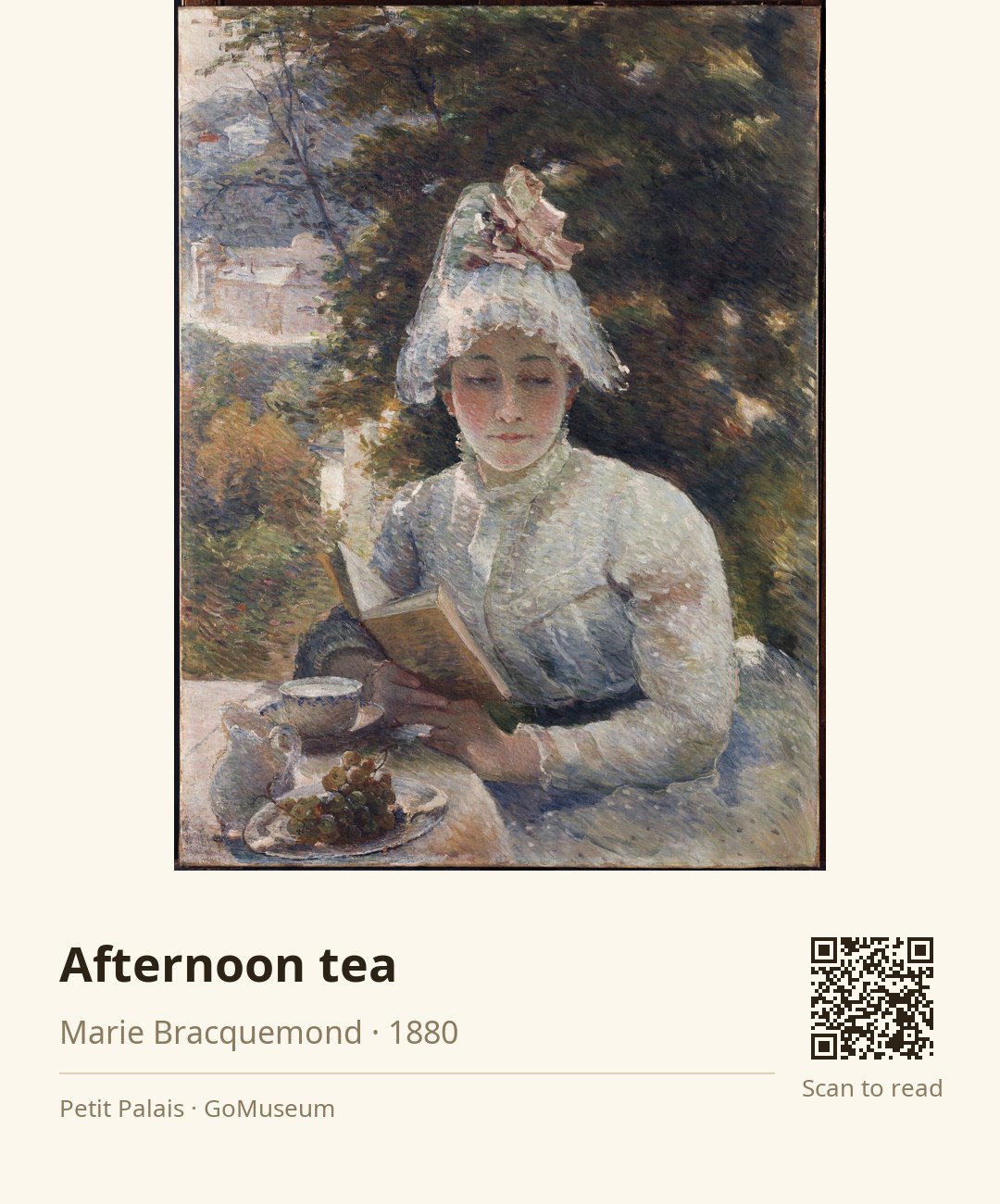
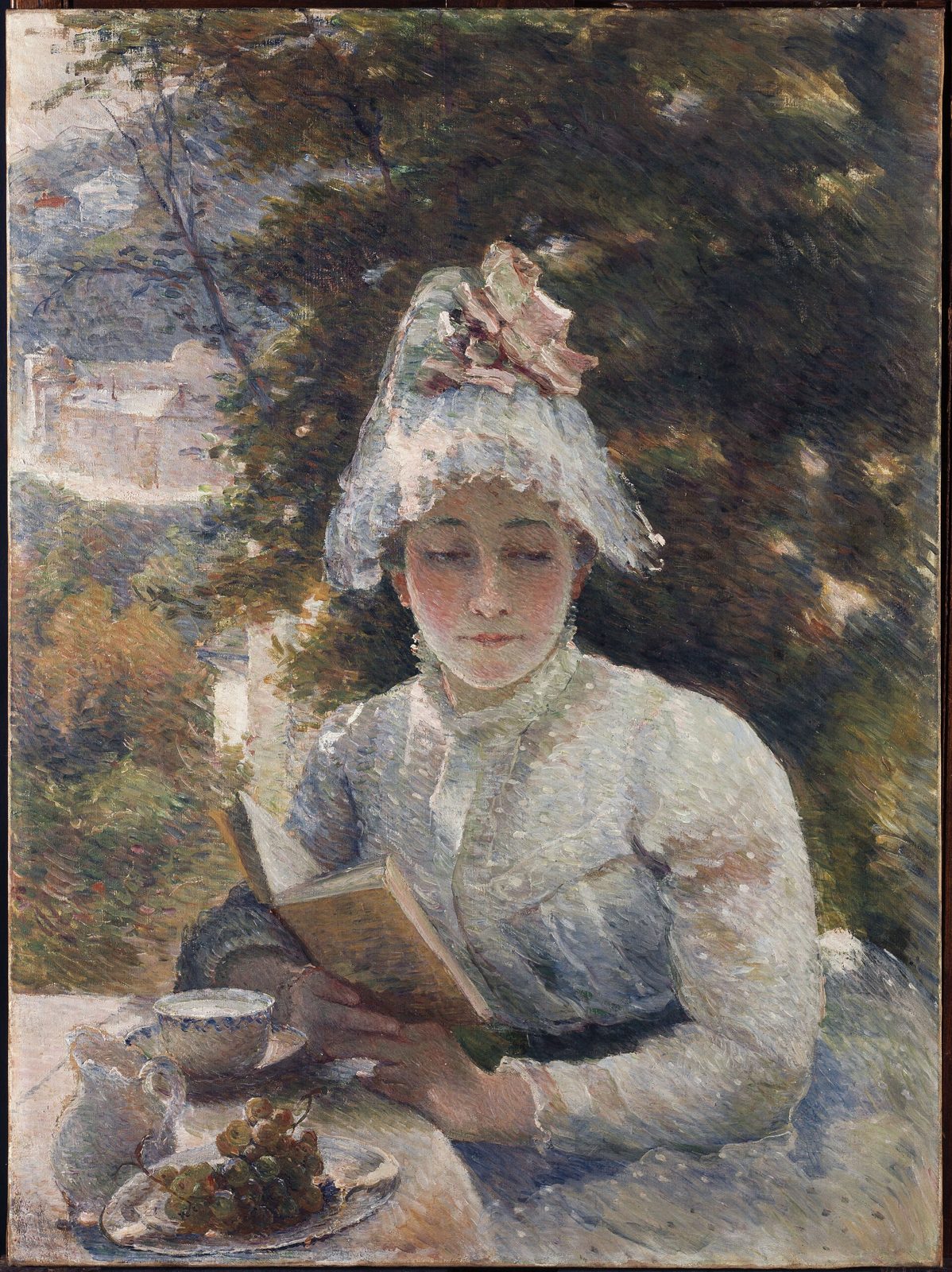
🎧 This work has audio narration — listen in the appA woman sits at a table in a sunlit garden, deeply absorbed in a book, her delicate lace-trimmed bonnet and high-collared white dress hinting at a leisurely afternoon. The table is adorned with a cup and saucer, a small pitcher, and a plate of grapes, all set against a backdrop of lush greenery that suggests a tranquil escape from the bustle of life.
This scene captures a moment of quiet contemplation, reflecting the intellectual pursuits of women in the late 19th century. The choice of Louise Quivoron, the artist's half-sister, as the subject emphasizes the personal connection and intimacy of the setting, as well as the significance of women’s roles in both family and society. The soft pastels and earthy tones, combined with visible brushstrokes, evoke a sense of warmth and serenity, inviting viewers to share in this private moment.
Created in 1880, "Afternoon Tea" is one of the few works by Marie Bracquemond held in a public collection, highlighting her contributions to the Impressionist movement alongside her more famous contemporaries. The painting was later exhibited in 1919 and subsequently acquired by the French government from Bracquemond's son, Pierre.
Marie Anne Caroline Bracquemond, born on December 1, 1840, in Brittany, was a pioneering French Impressionist artist. Emerging from a challenging family background, she began her artistic journey at 17, studying under various mentors, including the renowned Ingres. Despite lacking formal training, her talent shone through early exhibitions at the Paris Salon.
Bracquemond married printmaker Félix Bracquemond, whose jealousy and disapproval of her work often overshadowed her achievements. She became a vital part of the Impressionist movement, participating in three major exhibitions and producing over 150 works, though many remain unaccounted for today. Her notable pieces include "The Lady in White" and "Afternoon Tea."
Despite her contributions, her legacy was often eclipsed by her husband's influence. After a brief but impactful career, she withdrew from the public eye in the early 1890s, largely due to health issues and familial constraints. Bracquemond's work is now increasingly recognized, solidifying her place among the great female artists of Impressionism. She passed away on January 17, 1916, leaving behind a rich, albeit underappreciated, artistic legacy.
Marie Bracquemond's 'Afternoon Tea' was painted in 1880, a time when the Impressionist movement was gaining momentum in France. This particular work was created at her home in Sèvres, where she often painted her half-sister, Louise Quivoron, who is the subject of this piece. The painting was later exhibited in 1919, drawing attention to Bracquemond's contributions to the art world, which had often been overshadowed by her male contemporaries. After her death, the painting was acquired by the French government from her son, Pierre, and is now housed in the Petit Palais, a testament to its enduring value.
In 'Afternoon Tea,' Bracquemond employs oil paint on canvas, a medium that allows for rich texture and depth. The visible brushstrokes create a lively surface, giving the painting an almost tactile quality. The soft pastels and earthy tones evoke a sense of warmth, while the way she captures light filtering through the foliage enhances the serene atmosphere. The composition is thoughtfully arranged, with the table set in the foreground drawing the viewer's eye to the woman engrossed in her book. This intimate portrayal is achieved through careful placement and scale, making the viewer feel as though they are part of this quiet moment. Bracquemond's technique reflects her Impressionist roots, emphasizing the beauty of everyday life and the subtleties of human experience.
In the background of 'Afternoon Tea,' hints of a building can be seen through the lush greenery, suggesting that the garden is part of a larger domestic space, which adds depth to the scene of leisure.
Bracquemond's relationship with her husband, Félix, who was both a supporter and a source of jealousy, significantly impacted her career; he often overshadowed her work and limited her public exposure, which may explain why many of her pieces are lesser-known.
The plate of grapes in 'Afternoon Tea' can symbolize abundance and the pleasures of life, aligning with the Impressionist focus on capturing everyday moments and the beauty found in simple, domestic settings.