Bust of Alexandre Dumas Jr.
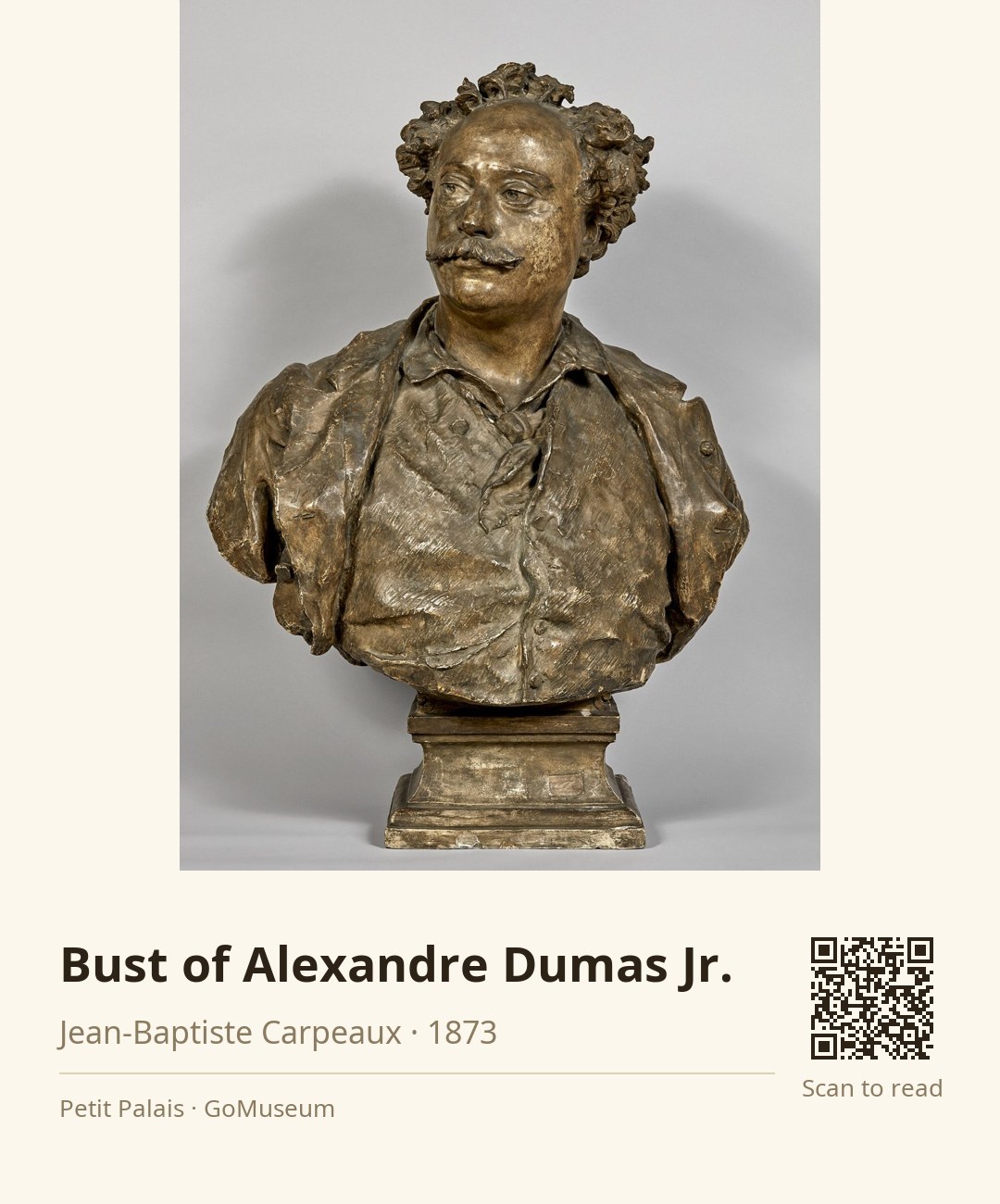
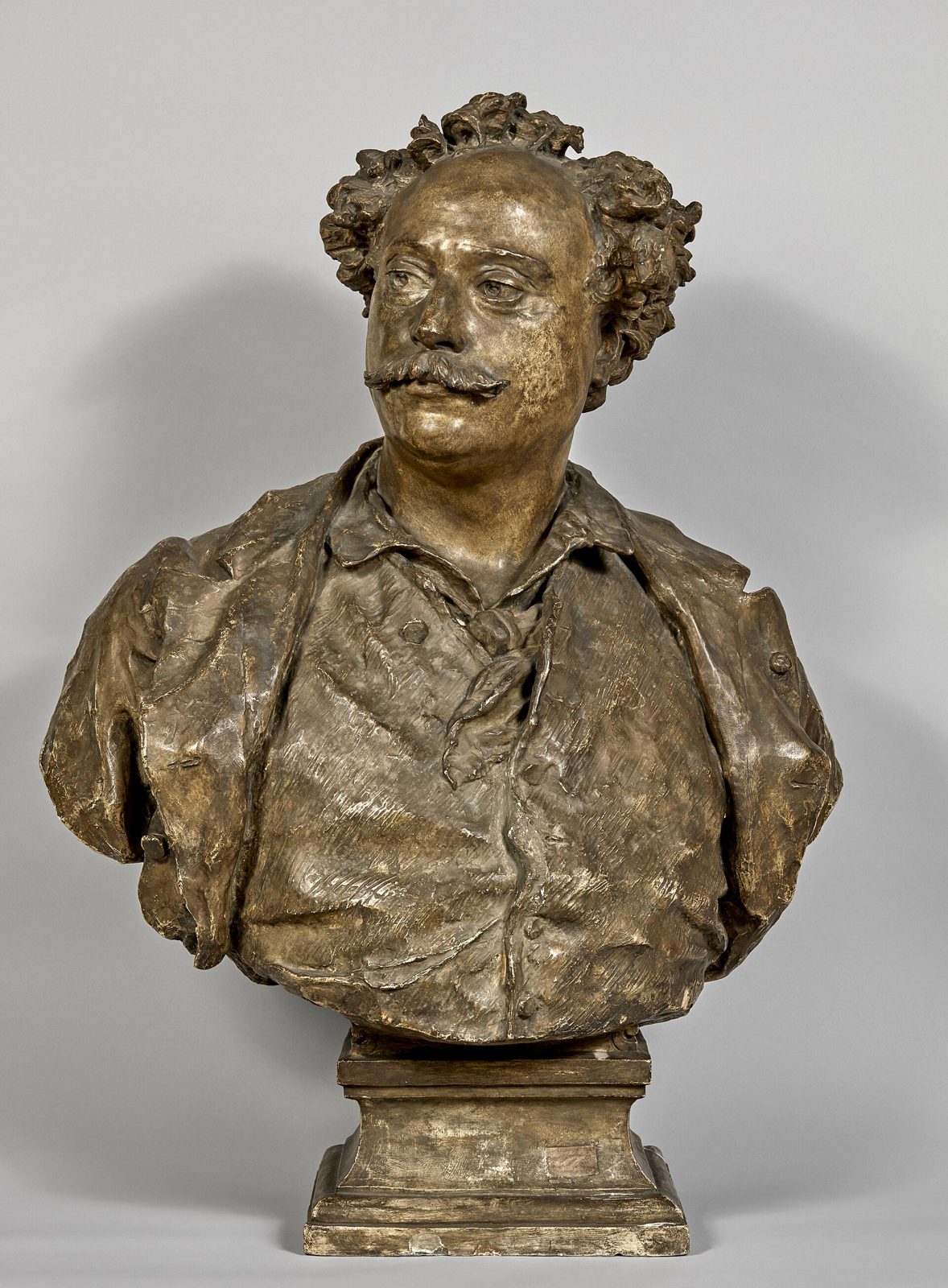
🎧 This work has audio narration — listen in the appThe striking bust of Alexandre Dumas Jr. reveals a man with a prominent mustache and lively curly hair, his head turned slightly to the side, suggesting a moment of thought or conversation. Dressed in a loose-fitting shirt and a scarf, with a jacket draped casually over his shoulders, the intricate folds of his clothing add depth and realism to the piece. The warm patina on the surface enhances the character of the sculpture, inviting you to connect with Dumas's presence.
Carpeaux's choice to depict Dumas in this relaxed yet expressive manner reflects the artist's fascination with capturing the essence of his subjects, moving away from rigid classical traditions. Born in 1827, Carpeaux was a pioneer of the Second Empire art movement, drawing inspiration from the spontaneity of life around him, particularly during his time in Rome. He sought to convey emotion and vitality in his sculptures, a quality evident in this work. Dumas, the son of the famed novelist Alexandre Dumas, was a prominent playwright and novelist in his own right, known for his contributions to French literature.
Created in 1873, this bust stands as a testament to Carpeaux's skill in portraying not just likeness, but also the spirit of his subjects. Jean-Baptiste Carpeaux passed away in 1875, leaving behind a legacy of dynamic and emotive sculptures that continue to resonate with viewers today.
Jean-Baptiste Carpeaux was a prominent French sculptor and painter born on May 11, 1827, in Valenciennes. Coming from a humble background as the son of a mason, he pursued his passion for art against his father's wishes, studying under François Rude at the École des Beaux-Arts. His artistic journey took him to Rome after winning the Prix de Rome in 1854, where he drew inspiration from the works of Michelangelo and Donatello, embracing a style that celebrated movement and spontaneity over classical tradition.
Carpeaux's career flourished during the Second Empire, where he became known for his dynamic sculptures, including the famous "Neapolitan Fisherboy" and the allegorical group "Ugolino and His Sons." His work often reflected a blend of realism and emotional depth, which resonated with the public and earned him numerous commissions, including from Emperor Napoleon III. He was not only a celebrated artist but also a savvy entrepreneur, producing variations of his works to reach a broader audience.
Despite his success, Carpeaux struggled with the constraints of academicism and sought to break free from traditional norms. His innovative spirit and dedication to capturing the essence of life left a lasting impact on the art world. He passed away on October 12, 1875, but his legacy endures through his influential works and the artists he mentored, securing his place in art history as a key figure of the 19th century.
Carpeaux's skill is evident in the way he has captured the folds of Dumas's clothing, with each crease and drape meticulously rendered to evoke a sense of realism. The warm patina applied to the surface enhances the lifelike quality of the piece, inviting viewers to appreciate the tactile nature of the sculpture. This choice of material not only showcases Carpeaux's craftsmanship but also reflects the artist's innovative approach to capturing human emotion and character in his work.
Created in 1873, this bust was commissioned during a vibrant period in French art, reflecting the cultural milieu of the Second Empire. Carpeaux, known for his dynamic and emotive style, was inspired by his time in Rome, where he absorbed the principles of movement and spontaneity. The bust was part of a growing trend of portraiture that sought to capture not just likeness but the very essence of its subjects. The provenance traces back to Clément-Carpeaux and Louise, indicating its significance within the artist's legacy. Carpeaux's untimely death in 1875 left this work as a testament to his innovative spirit.
Carpeaux was influenced by the spontaneity of life he observed, especially during his time in Rome, which shaped his dynamic and emotive style.
The clothing in the sculpture is rendered with meticulous detail, showcasing Carpeaux's skill in capturing realistic folds and drapes.