 Image: Dalou, Aimé-Jules (Paris, 31–12–1838 - Paris, 15–04–1902), sculpteur · Dalou, Aimé-Jules (Paris, 31–12–1838 - Paris, 15–04–1902), sculpteur
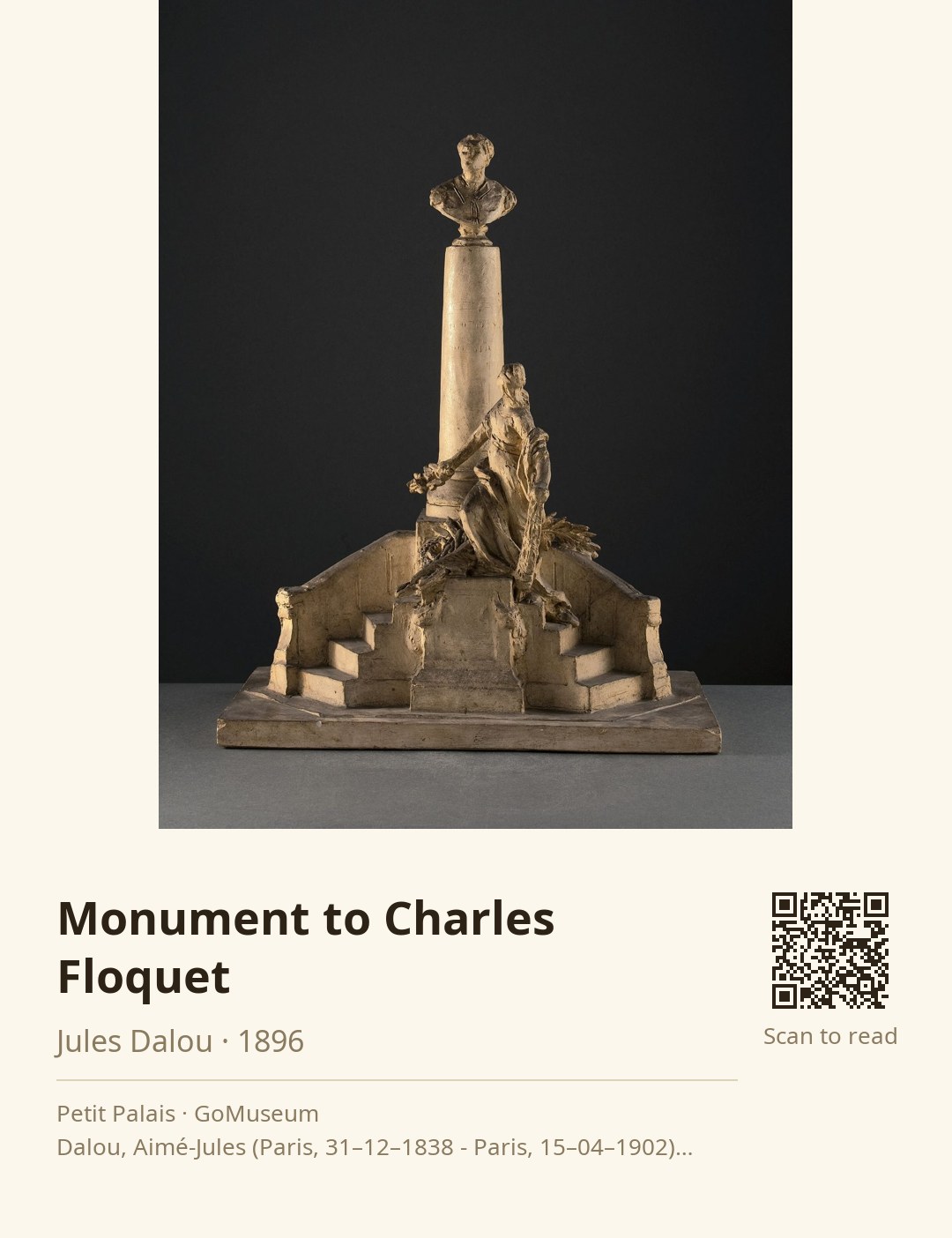
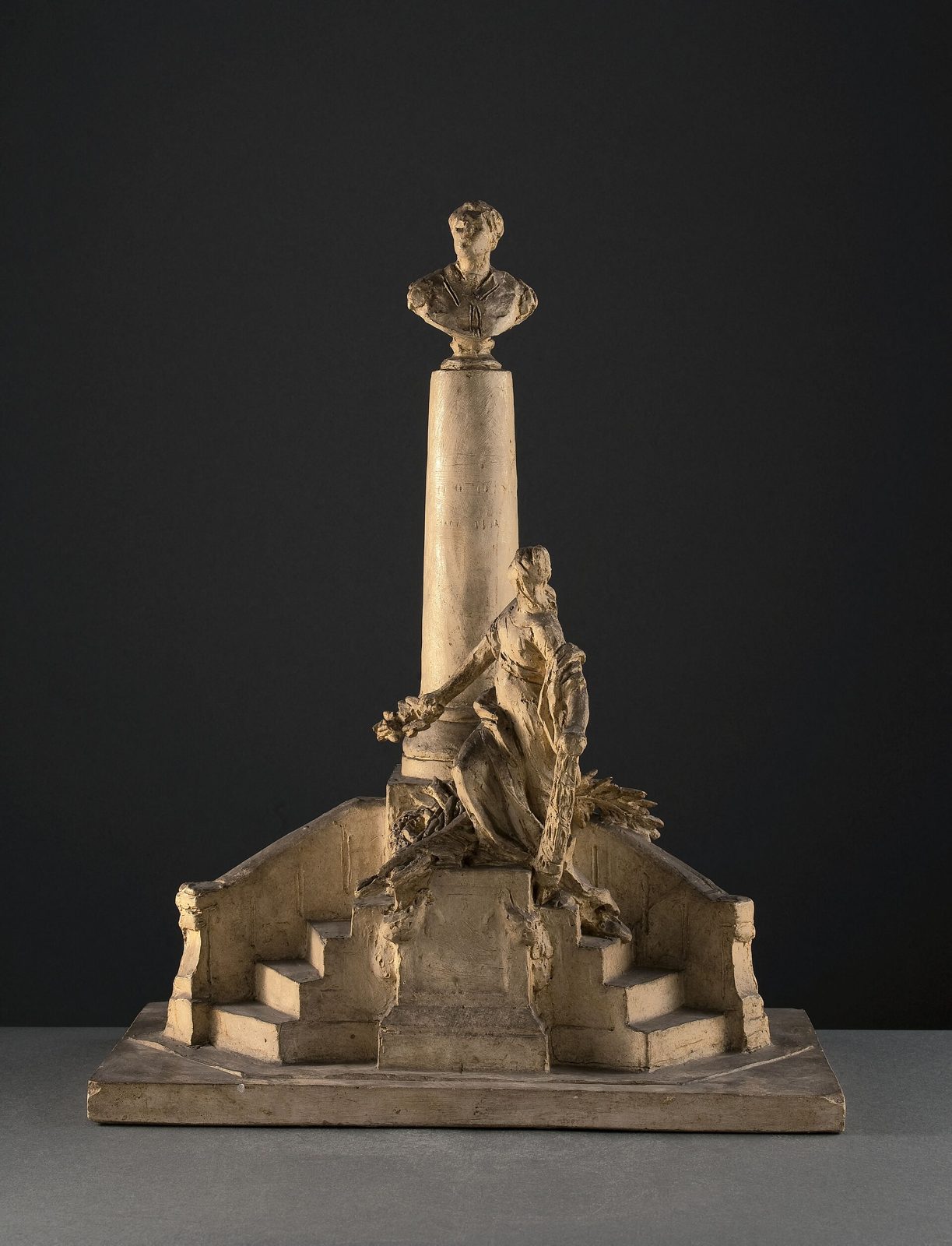
Monument to Charles Floquet
🎧 This work has audio narration — listen in the appBelow, the seated figure draped in flowing garments holds a wreath and a sheaf of wheat, symbolizing honor and abundance, while the stepped platform with symmetrical stairs enhances the monument's grandeur and invites admiration.
These elements reflect Dalou's mastery in sculpting not just likenesses, but also the ideals associated with the figures he portrayed. The wreath signifies victory and remembrance, while the wheat represents prosperity and the fruits of labor, tying Floquet's legacy to the growth and strength of the Republic he served. The textured surface of the sculpture showcases Dalou's skill in rendering intricate details, bringing life to the fabric and hair, which adds depth and realism to the work.
Dalou, a 19th-century French sculptor, created this piece in 1896, during a time when public monuments were increasingly celebrated for their artistic and historical significance. His work often reflected his political beliefs and commitment to realism, making him a key figure in the evolution of French sculpture. The Monument to Charles Floquet stands as a testament to his dedication to capturing the spirit of his subjects and the era in which he lived.
Aimé-Jules Dalou was a prominent French sculptor born in Paris on December 31, 1838, into a working-class Huguenot family. His upbringing in a secular and socialist environment shaped his character and artistic vision. A talented student, he studied under Jean-Baptiste Carpeaux and later at the École des Beaux-Arts, where he honed his skills in modeling and sculpture. Dalou's early career was marked by political activism, particularly during the Paris Commune, which led to his exile in England after the government's crackdown.
During his eight years in England, Dalou gained recognition for his terracotta works and public commissions, influencing the British New Sculpture movement. His return to France in 1879 marked a prolific period, producing masterpieces like The Triumph of the Republic, which showcased his ability to blend classical techniques with contemporary themes. Dalou's works are celebrated for their realism and emotional depth, earning him accolades, including the Grand Prix at the 1889 Exposition Universelle.
Dalou's legacy endures through his significant contributions to sculpture, his role in shaping modern French art, and his influence on future generations of artists. He passed away on April 15, 1902, leaving behind a rich body of work that reflects his commitment to both art and social ideals.
Dalou's Monument to Charles Floquet is crafted from plaster, a medium that allows for intricate detailing and a smooth finish. You can see how he skillfully manipulated the material to create lifelike textures, especially in the flowing garments of the seated figure and the finely rendered facial features of Floquet's bust. The patina applied to the surface adds depth, enhancing the visual impact and giving the sculpture a timeless quality.
Interestingly, Dalou's dedication to his craft extended beyond mere aesthetics; he was deeply committed to social issues. His daughter, Georgette, who had a mental handicap, profoundly influenced his life and work. To ensure her care after his passing, Dalou bequeathed his studio's funds to an orphanage for artists, demonstrating his desire to support those in need while also leaving a lasting legacy that intertwined his personal life with his artistic endeavors.
Dalou's daughter Georgette, who had a mental handicap, significantly impacted his life and work, inspiring his commitment to social issues and his decision to bequeath his studio's funds to support an orphanage for artists.
During the Paris Commune, Dalou was convicted in absentia by the French government for his participation and was sentenced to life in prison, which forced him into exile in England.