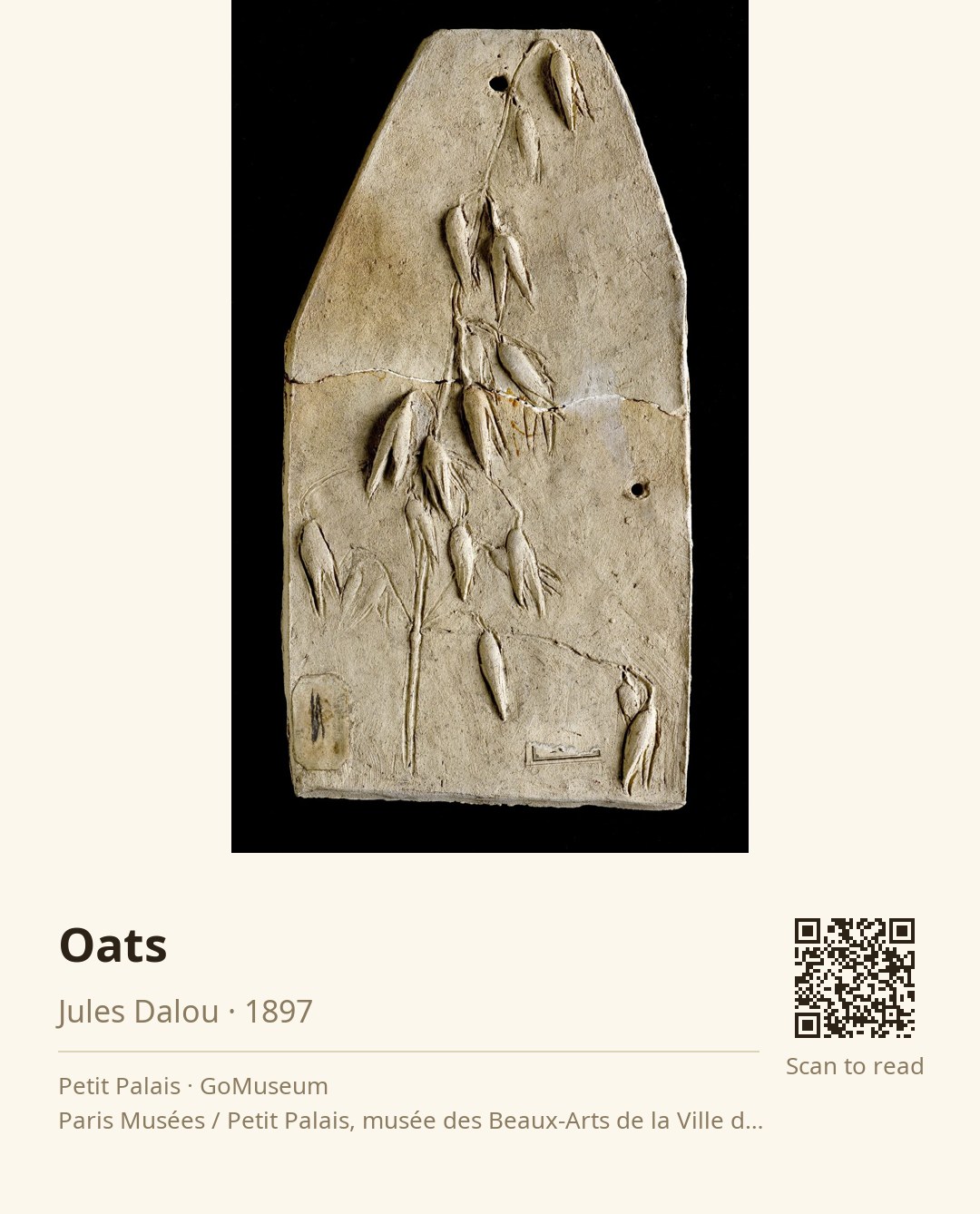
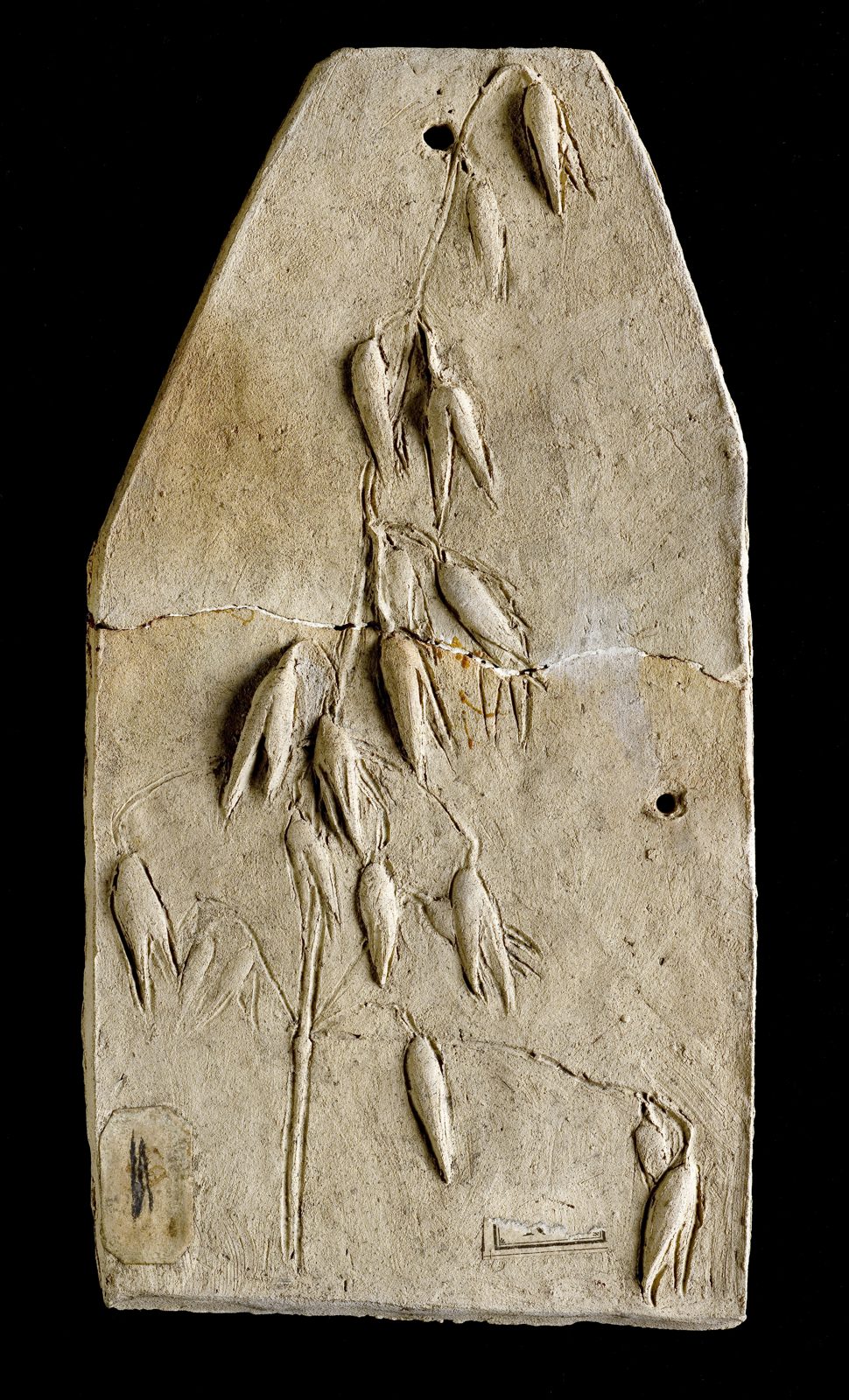
 Image: Paris Musées / Petit Palais, musée des Beaux-Arts de la Ville de Paris
Avoine, a terracotta sculpture by Jules Dalou, captures a moment of serene simplicity, showcasing a farmer gently cradling a sheaf of oats. The figure’s relaxed posture and the delicate details of the grain evoke a sense of connection to the earth and the labor that sustains life.
Dalou’s choice of terracotta not only highlights his skill in modeling but also reflects the humble origins of the subject matter, emphasizing the dignity of rural work. The smooth surface contrasts with the textured oats, drawing attention to the natural beauty found in everyday tasks.
Dalou, who faced political exile due to his involvement in the Paris Commune, returned to France in 1879 and continued to create significant works that celebrated the human spirit and labor. His legacy includes not only this sculpture but also a range of public monuments that reflect his commitment to social themes and the lives of ordinary people.
Aimé-Jules Dalou was a prominent French sculptor born in Paris on December 31, 1838, into a working-class Huguenot family. His upbringing in a secular and socialist environment shaped his character and artistic vision. A talented student, he studied under Jean-Baptiste Carpeaux and later at the École des Beaux-Arts, where he honed his skills in modeling and sculpture. Dalou's early career was marked by political activism, particularly during the Paris Commune, which led to his exile in England after the government's crackdown.
During his eight years in England, Dalou gained recognition for his terracotta works and public commissions, influencing the British New Sculpture movement. His return to France in 1879 marked a prolific period, producing masterpieces like The Triumph of the Republic, which showcased his ability to blend classical techniques with contemporary themes. Dalou's works are celebrated for their realism and emotional depth, earning him accolades, including the Grand Prix at the 1889 Exposition Universelle.
Dalou's legacy endures through his significant contributions to sculpture, his role in shaping modern French art, and his influence on future generations of artists. He passed away on April 15, 1902, leaving behind a rich body of work that reflects his commitment to both art and social ideals.
Dalou's Avoine is crafted from terracotta, a medium that allows for both fine detail and a warm, earthy texture. You can see how he skillfully modeled the figure, capturing the softness of the farmer's clothing and the intricate strands of the sheaf of oats. The smoothness of the figure contrasts beautifully with the textured oats, showcasing Dalou's mastery in manipulating this clay-like material. The choice of terracotta not only reflects the humble roots of the subject but also speaks to Dalou's ability to elevate everyday scenes into art through meticulous craftsmanship.
Created in 1897, Avoine emerged during a pivotal time in Dalou's life. After returning from his political exile in England, he was reintegrating into the French art scene, which was buzzing with new ideas. This piece was part of a broader movement that celebrated the dignity of labor, resonating with the public who had witnessed the struggles of the working class. The reception was generally positive, reflecting a growing appreciation for art that honored everyday people. Dalou's works often found homes in public spaces, further solidifying his reputation as a sculptor dedicated to social themes.
Dalou was convicted in absentia for his role in the Paris Commune and sentenced to life in prison.