Wounded Love
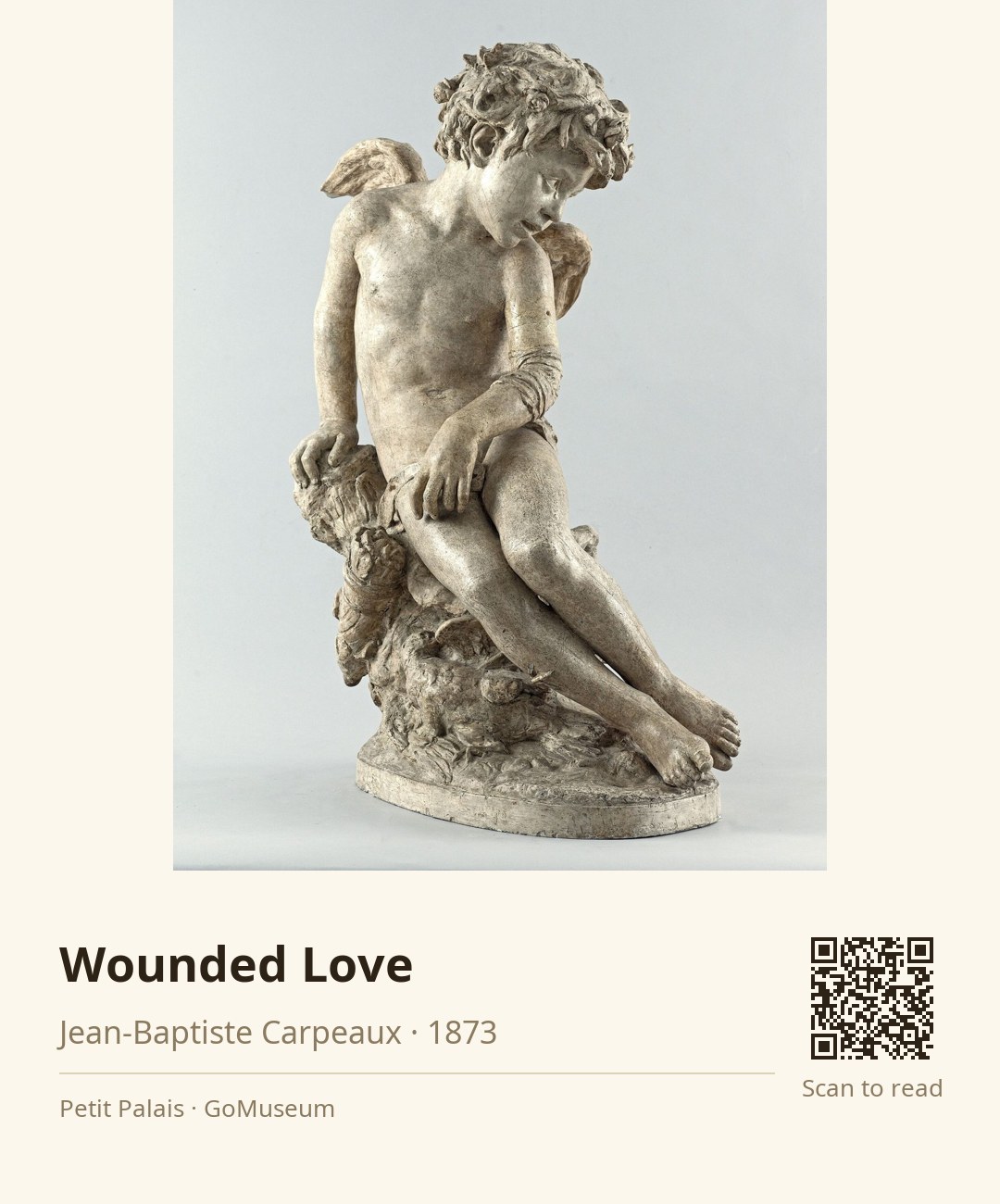
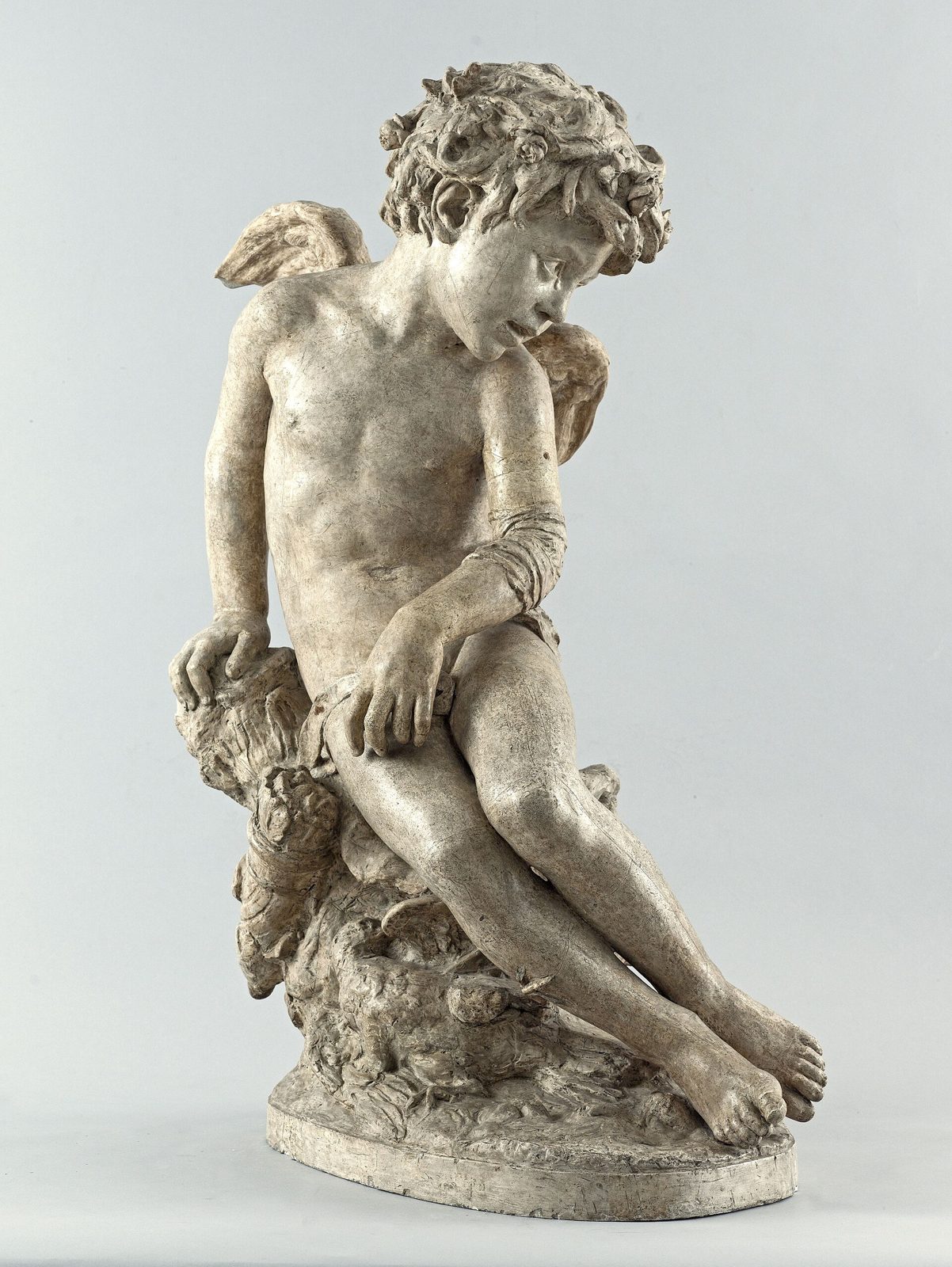
🎧 This work has audio narration — listen in the appThe young, winged figure in "Wounded Love" embodies a poignant blend of vulnerability and beauty, seated gracefully on a textured base that mimics natural rock. Draped cloth accentuates the figure's form, while the delicate feathering of the small wings hints at both fragility and the potential for flight. The downward tilt of the head, with eyes cast toward the ground, evokes a deep sense of contemplation, inviting viewers to ponder the nature of love and loss.
Carpeaux's choice of a nude figure, combined with the intricate detailing of the hair and anatomical features, reflects his mastery of capturing human emotion and physicality. This sculpture, created in 1873, showcases not just technical skill but also a departure from classical traditions, favoring a more spontaneous and lifelike representation. The irregular base contrasts with the smoothness of the figure, enhancing the sense of realism and grounding the ethereal qualities of the wings.
Jean-Baptiste Carpeaux, a prominent French sculptor of the 19th century, was known for his ability to infuse life into stone, drawing inspiration from both classical and contemporary sources. His works often explored themes of emotion and human experience, as seen in "Wounded Love," which stands as a testament to his innovative approach to sculpture. Carpeaux passed away in 1875, leaving behind a legacy that continues to influence artists today.
Jean-Baptiste Carpeaux was a prominent French sculptor and painter born on May 11, 1827, in Valenciennes. Coming from a humble background as the son of a mason, he pursued his passion for art against his father's wishes, studying under François Rude at the École des Beaux-Arts. His artistic journey took him to Rome after winning the Prix de Rome in 1854, where he drew inspiration from the works of Michelangelo and Donatello, embracing a style that celebrated movement and spontaneity over classical tradition.
Carpeaux's career flourished during the Second Empire, where he became known for his dynamic sculptures, including the famous "Neapolitan Fisherboy" and the allegorical group "Ugolino and His Sons." His work often reflected a blend of realism and emotional depth, which resonated with the public and earned him numerous commissions, including from Emperor Napoleon III. He was not only a celebrated artist but also a savvy entrepreneur, producing variations of his works to reach a broader audience.
Despite his success, Carpeaux struggled with the constraints of academicism and sought to break free from traditional norms. His innovative spirit and dedication to capturing the essence of life left a lasting impact on the art world. He passed away on October 12, 1875, but his legacy endures through his influential works and the artists he mentored, securing his place in art history as a key figure of the 19th century.
Carpeaux crafted 'Wounded Love' using plaster, a medium that allows for intricate detailing and a smooth finish. The delicate feathering of the wings showcases his skill in manipulating the material to achieve lifelike textures. The draped cloth over the figure's arm and lap adds a layer of complexity, contrasting with the nude form and emphasizing the human body's contours. The textured base, resembling natural rock, grounds the ethereal figure, creating a dynamic tension between the smoothness of the body and the roughness of its surroundings. This choice of materials and techniques reflects Carpeaux's desire to capture both beauty and emotion in his work.
Created in 1873, 'Wounded Love' was a product of Jean-Baptiste Carpeaux's innovative spirit during a time when the art world was shifting away from classical traditions. Carpeaux, who had won the prestigious Prix de Rome, was deeply influenced by his studies in Italy, where he embraced spontaneity in his sculptures. The piece was part of his broader exploration of human emotion and experience.