Bust of Madame Cécile Demarcay
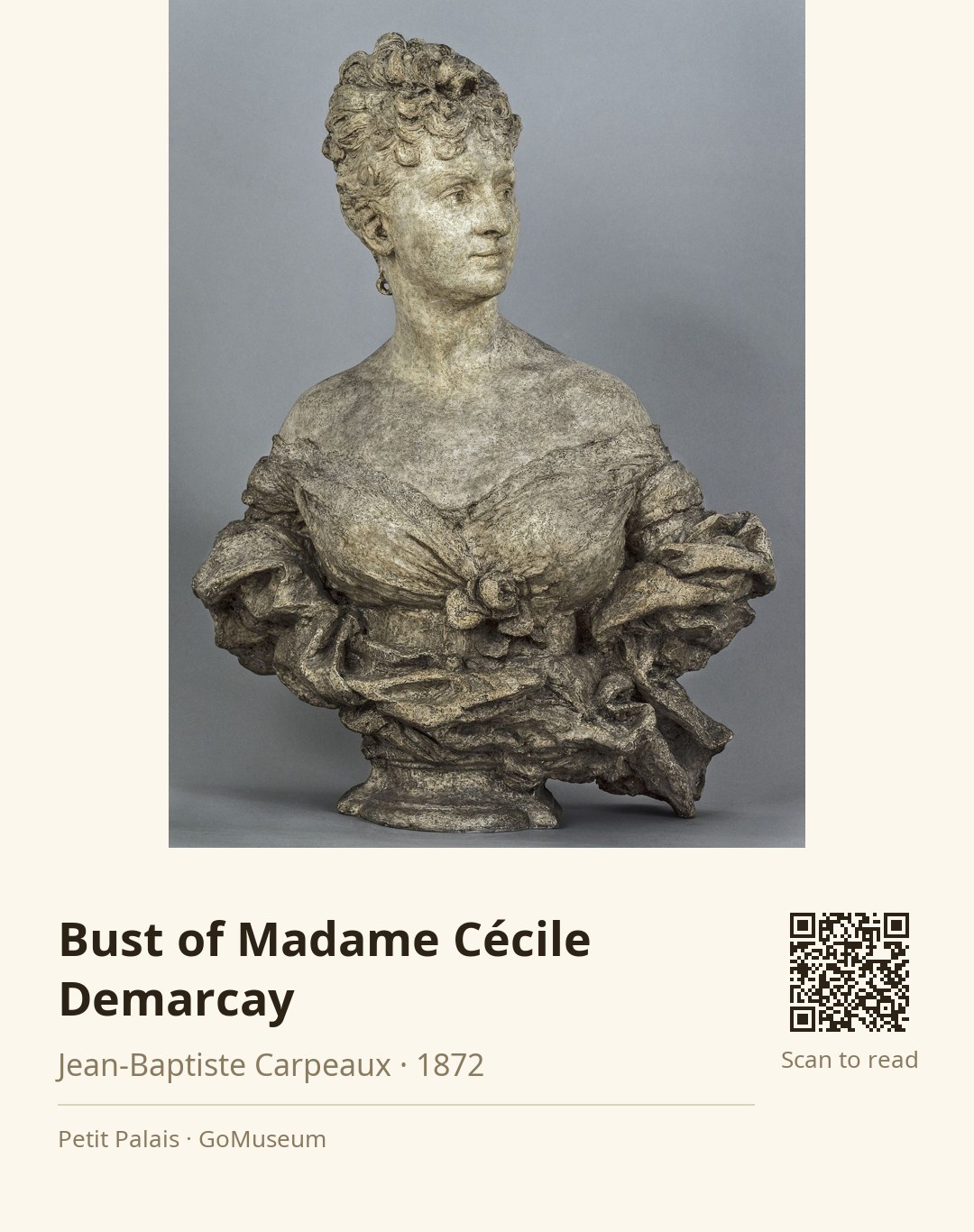
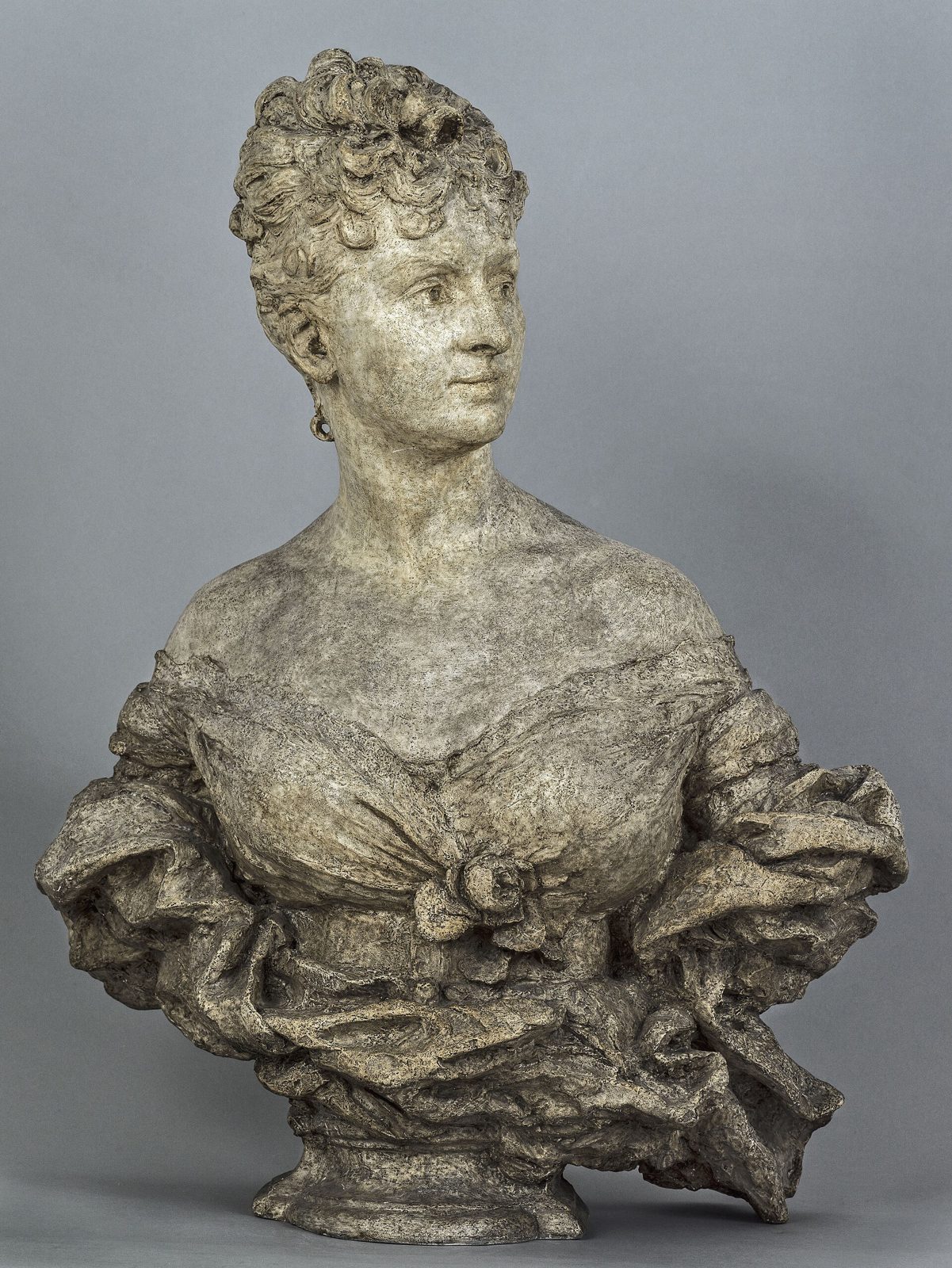
🎧 This work has audio narration — listen in the appMadame Cécile Demarcay's serene gaze is captured in this exquisite bust by Jean-Baptiste Carpeaux, created in 1872. Her elaborate hairstyle, with soft curls and waves, frames her composed expression, while the textured garment, adorned with a floral motif, drapes elegantly over her shoulders. The muted gray of the sculpture enhances its timeless quality, inviting you to ponder the character behind the likeness.
Carpeaux's choice of a rough texture gives the bust a weathered appearance, suggesting a connection to both the passage of time and the enduring nature of beauty. This work exemplifies Carpeaux's ability to blend realism with a sense of emotional depth, a hallmark of his style that broke away from the rigid traditions of academic sculpture. His time in Rome, where he studied the great masters, instilled in him a passion for movement and spontaneity, which is evident in the lifelike quality of Madame Demarcay’s pose.
Carpeaux, born in 1827, became a prominent figure in the French art scene during the Second Empire, known for his ability to capture the essence of his subjects. His works, including this bust, reflect a blend of classical influence and modern sensibility, showcasing his innovative approach to sculpture. He passed away in 1875, leaving behind a legacy that continues to resonate in the world of art.
Jean-Baptiste Carpeaux was a prominent French sculptor and painter born on May 11, 1827, in Valenciennes. Coming from a humble background as the son of a mason, he pursued his passion for art against his father's wishes, studying under François Rude at the École des Beaux-Arts. His artistic journey took him to Rome after winning the Prix de Rome in 1854, where he drew inspiration from the works of Michelangelo and Donatello, embracing a style that celebrated movement and spontaneity over classical tradition.
Carpeaux's career flourished during the Second Empire, where he became known for his dynamic sculptures, including the famous "Neapolitan Fisherboy" and the allegorical group "Ugolino and His Sons." His work often reflected a blend of realism and emotional depth, which resonated with the public and earned him numerous commissions, including from Emperor Napoleon III. He was not only a celebrated artist but also a savvy entrepreneur, producing variations of his works to reach a broader audience.
Despite his success, Carpeaux struggled with the constraints of academicism and sought to break free from traditional norms. His innovative spirit and dedication to capturing the essence of life left a lasting impact on the art world. He passed away on October 12, 1875, but his legacy endures through his influential works and the artists he mentored, securing his place in art history as a key figure of the 19th century.
Carpeaux crafted this bust using plaster, a medium that allows for intricate detailing and texture. The rough surface gives the piece a weathered look, enhancing its emotional depth. You can see how he meticulously shaped Madame Demarcay's elaborate hairstyle, with soft curls and waves that seem to flow naturally. The garment draping over her shoulders is not just a simple covering; its textured surface and floral motifs suggest a careful consideration of fabric and movement, making it feel almost alive. The dimensions—81 cm high and 65 cm wide—add to its imposing presence, inviting you to appreciate the craftsmanship up close.
Interestingly, Carpeaux was not just a sculptor but also a painter and draftsman, showcasing his versatility. He even created a cake named after him, the 'Carpeaux,' which features butter cream and candied chestnuts between two oval macaroons, a sweet tribute to his artistic legacy!
In addition to being a sculptor, Carpeaux was also a painter and draftsman, demonstrating his versatility in the arts.