Monument to Henri Regnault
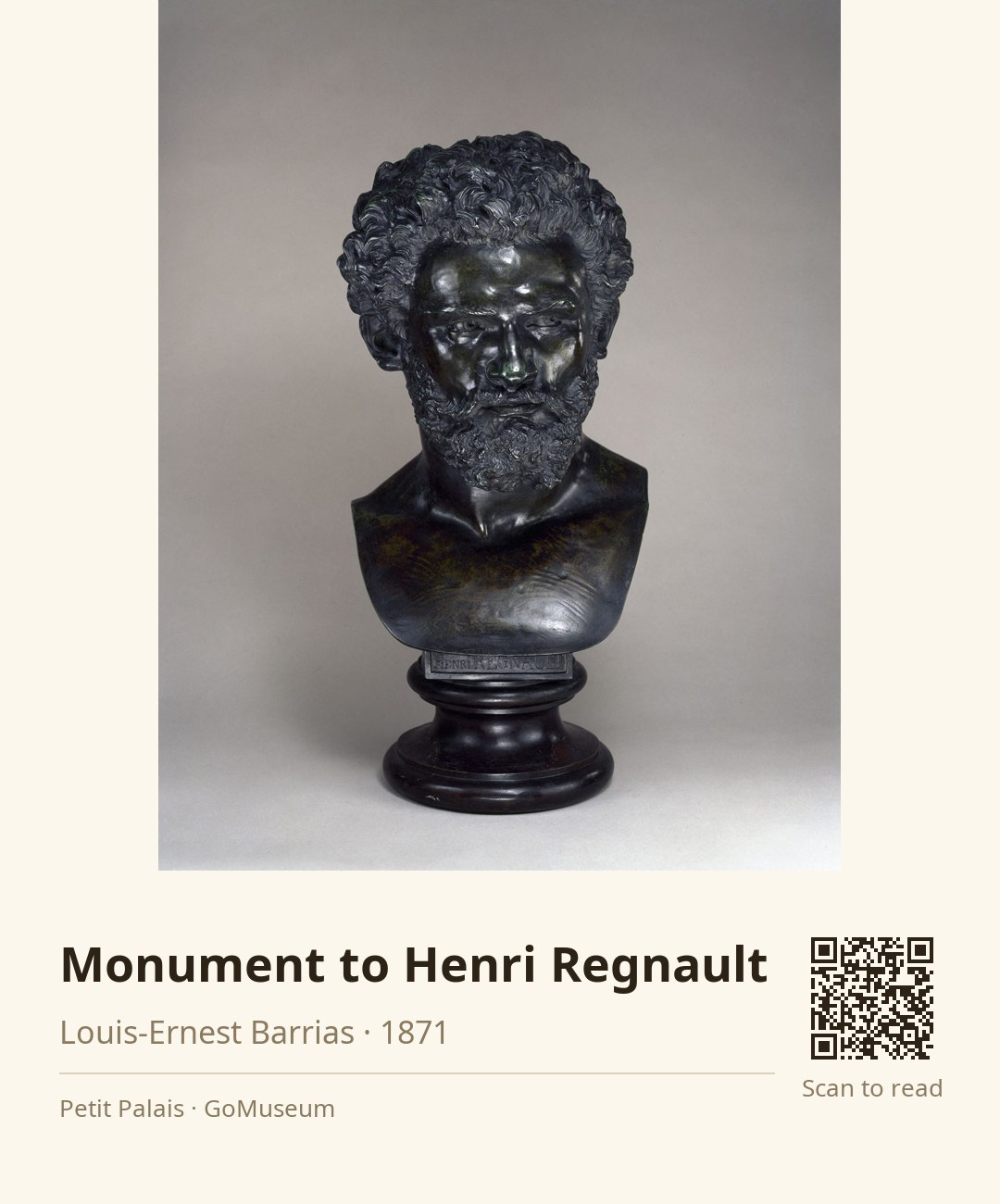
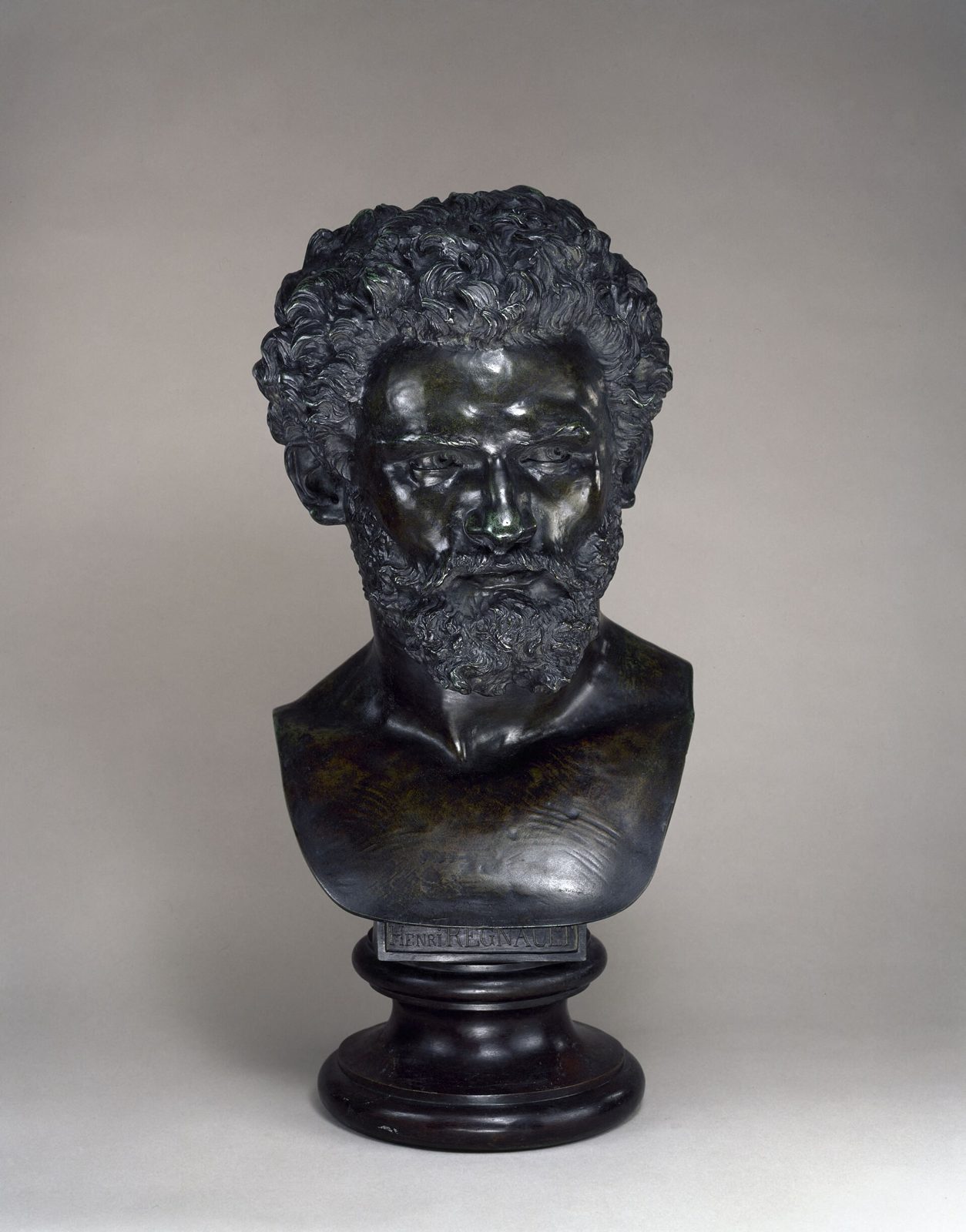
🎧 This work has audio narration — listen in the appHenri Regnault's likeness is captured in this striking bronze bust by Louis-Ernest Barrias, created in 1871. The intense gaze of Regnault, a promising painter who tragically died at a young age, is immortalized here, with every detail of his facial features meticulously rendered. The way the light plays across the surface of the bronze highlights the contours of his cheekbones and the subtle furrow of his brow, suggesting both the weight of his artistic ambition and the sorrow of his untimely death.
Barrias, a prominent figure in the Beaux-Arts movement, was known for his Romantic realist style, which often drew on classical influences. This bust exemplifies his skill in conveying emotion through sculpture, as Regnault’s expression reflects a blend of introspection and determination. The choice of bronze not only adds a sense of permanence but also connects to the tradition of commemorating artists and their legacies in durable materials, ensuring their contributions are remembered.
Barrias himself was a well-respected artist, having won the Prix de Rome and contributed to significant public works in Paris. His career flourished during a time when the art world was evolving, and he became a key figure in the transition towards more modern forms of sculpture. The bust of Henri Regnault stands as a testament to both the artist's skill and the enduring impact of Regnault's brief but influential career in the art world.
Louis-Ernest Barrias was a prominent French sculptor born on April 13, 1841, in Paris, into a family of artists. His father painted porcelain, and his brother was a recognized painter, which influenced his artistic journey. Initially a painter, Barrias shifted to sculpture under the guidance of Pierre-Jules Cavelier and later studied at the École nationale supérieure des Beaux-Arts. He gained significant recognition after winning the Prix de Rome in 1865, allowing him to study at the French Academy in Rome.
Barrias's work, characterized by a Romantic realist style, often drew inspiration from nature and literature, reflecting the Art Nouveau movement of his time. Notable pieces include "Nature Unveiling Herself Before Science" and "The Oath of Spartacus." His contributions to public art include decorations for the Paris Opéra and the Hôtel de la Païva. He was honored with the Legion of Honour and served as a professor at the École des Beaux-Arts, mentoring future artists.
Barrias's legacy endures in his dynamic sculptures that blend emotion and form, securing his place in the history of French sculpture. He passed away on February 4, 1905, leaving behind a rich body of work celebrated in various public collections.
This bust of Henri Regnault is crafted from bronze, a material that not only offers durability but also allows for intricate detailing. Barrias skillfully employed the lost-wax casting technique, a method that dates back thousands of years. This process involves creating a wax model, which is then encased in a mold. Once the mold is heated, the wax melts away, leaving a hollow space into which molten bronze is poured. The result is a sculpture that captures the fine nuances of Regnault's features, from the sharpness of his jawline to the delicate texture of his hair. The surface of the bronze is polished to a rich sheen, enhancing the emotional depth of the piece and inviting viewers to connect with Regnault's intense expression.
This work exemplifies the shift towards more personal and emotive representations, moving away from idealized forms to capture the essence of an individual. It paved the way for future artists to explore the emotional weight of their subjects, emphasizing the human experience in their work. The bust also stands as a testament to the Beaux-Arts movement's legacy, showcasing the blend of classical techniques with Romantic ideals, which would resonate throughout the late 19th and early 20th centuries.
Interestingly, Barrias was not only a sculptor but also a teacher who influenced a generation of artists. Among his students was the renowned sculptor Charles Despiau, who would go on to create his own impactful works. This connection highlights how Barrias's legacy extends beyond his own creations, shaping the future of sculpture in France.
Among his students were renowned sculptors such as Charles Despiau, Josep Clarà, and Henri Bouchard, indicating his significant impact on the next generation of artists.
The Art Nouveau movement inspired Barrias to incorporate voluptuous figures and themes of nature and eroticism in many of his sculptures, reflecting the style's characteristics.