In You Rejoices
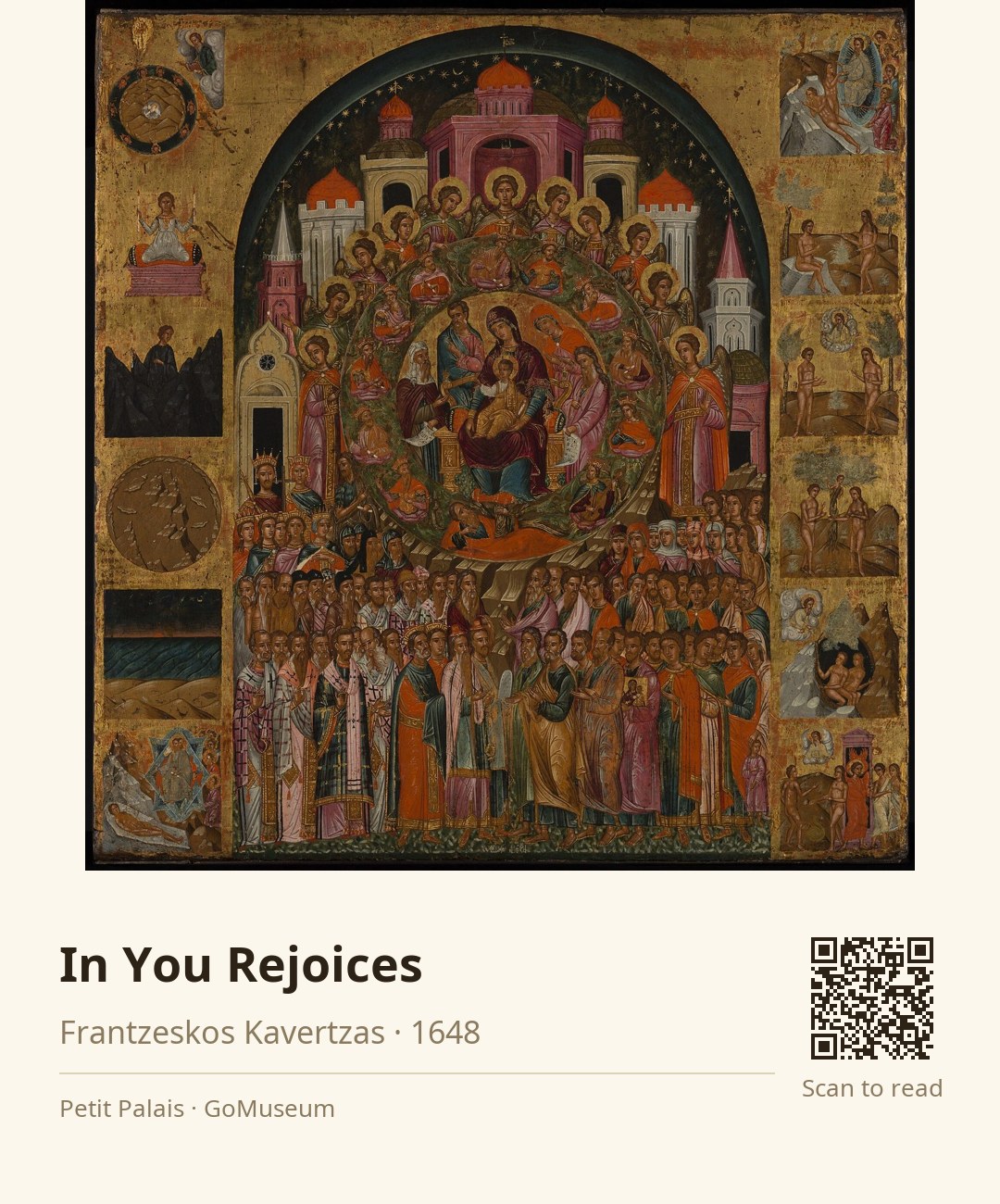
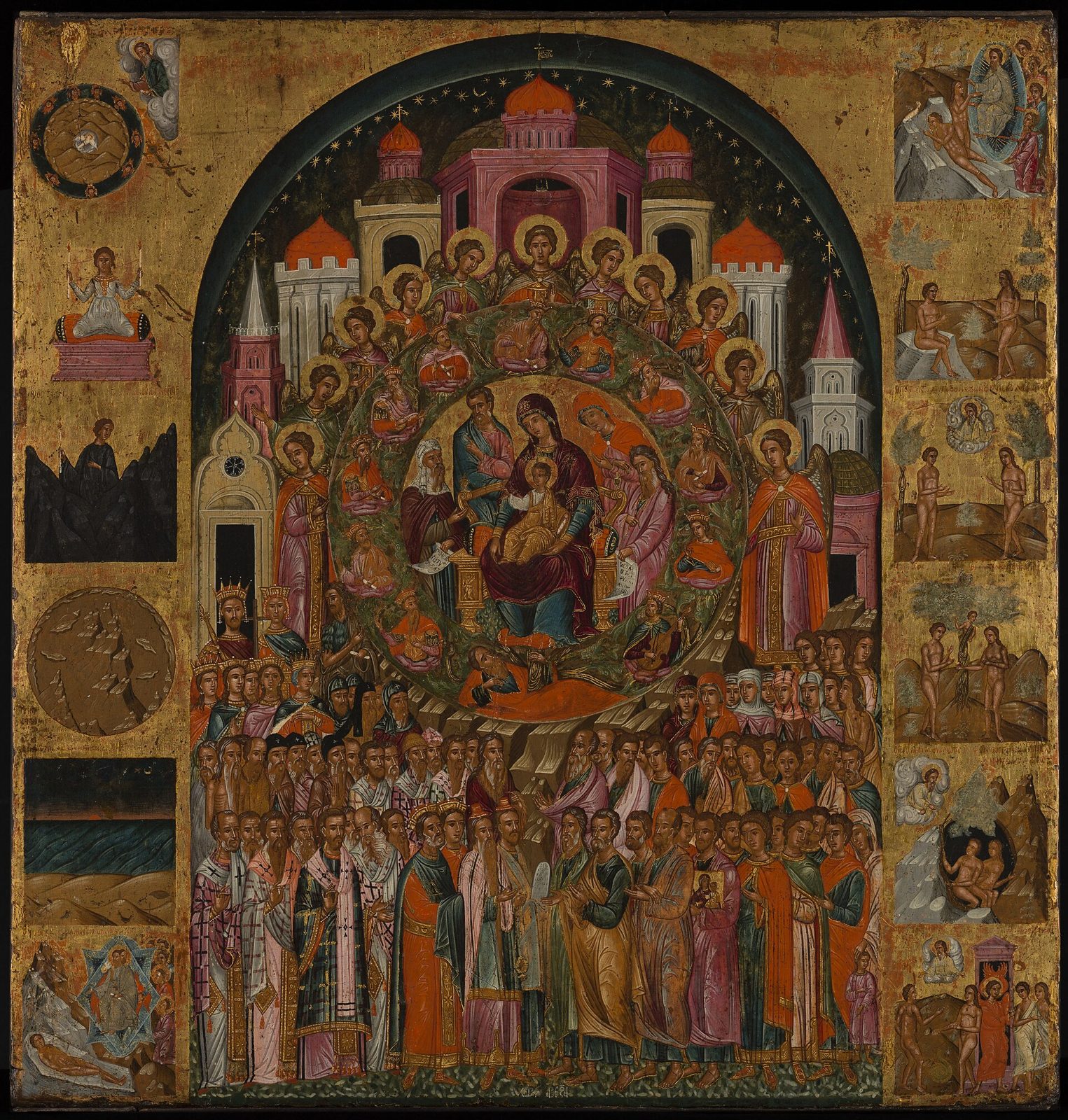
🎧 This work has audio narration — listen in the appThe seated figure of the Virgin Mary cradling the Christ Child takes center stage in Frantzeskos Kavertzas's "In You Rejoices," surrounded by a vibrant assembly of angels and saints. The circular composition draws your eye to the intricate details of their ornate robes, each fold and embellishment meticulously painted in gold and earthy tones, reflecting the reverence of the scene.
This gathering of figures, including crowned saints and clergy, signifies a heavenly celebration, embodying the theme of divine joy that resonates throughout the painting. The architectural elements in the background, with their pink and white domes, create a celestial atmosphere, enhancing the spiritual significance of the Virgin Mary as a central figure in Christian iconography. The smaller scenes flanking the main composition depict biblical narratives, such as the creation of the world, which further enrich the storytelling aspect of the work.
Kavertzas, active in Crete during the early 17th century, was part of the late Cretan School, a movement that blended Byzantine traditions with Western influences. His style reflects the cangiante technique, where color shifts create depth and vibrancy, a hallmark of his artistic approach.
Frantzeskos Kavertzas, a Greek painter active in the early 17th century, was born in Heraklion around 1590-1600. His artistic style is rooted in the late Cretan school, showcasing influences from prominent figures like Georgios Klontzas and Michael Damaskinos. Kavertzas is noted for his iconic works, including "Last Judgement" and "In You Rejoiceth," which reflect a blend of Byzantine tradition and Venetian aesthetics. He maintained a successful workshop in Crete, producing religious icons for both Greek and Italian patrons, and his art significantly impacted contemporaries like Leos Moskos.
Kavertzas's life was marked by personal and professional ties, including a marriage to the sister of Manea Sophianou and fathering three sons, one of whom followed in his artistic footsteps. His legacy is evident in the thematic and stylistic choices of later artists, as he navigated the cultural shifts of his time, particularly during the Ottoman conquest of Crete. His works, characterized by clarity and narrative focus, continue to resonate in the history of Greek art, bridging the gap between the Byzantine and Baroque periods.
Kavertzas employed a meticulous technique in 'In You Rejoices,' using egg tempera and gold leaf on wood panel to create a luminous effect. The cangiante style, which he mastered, allows for vibrant color shifts that bring the figures to life. The circular composition draws the viewer into the scene, with the Virgin Mary and Christ Child at the heart, surrounded by eleven crowned figures and a host of angels. Each figure is adorned in richly detailed robes, with folds that seem to ripple with movement. The background architecture, painted in soft pinks and whites, adds depth and a celestial quality, while the smaller biblical scenes flanking the main composition are framed against a shimmering gold backdrop, enhancing their narrative significance. The use of shadow techniques creates a sense of realism, allowing the viewer to feel the weight of the figures and the gravity of the moment.
Kavertzas's approach influenced contemporaries like Theodore Poulakis, who created his own interpretations of the Virgin Mary theme. The painting's popularity helped solidify the iconography of the Virgin Mary in religious art, making it a staple in the artistic repertoire of the 17th century. This work not only reflects the spiritual devotion of its time but also showcases the evolution of Cretan art as it navigated the influences of both Byzantine and Western styles, marking a significant chapter in art history.
Frantzeskos Kavertzas was born in Heraklion, Crete.
Kavertzas married the sister of Manea Sophianou.
Kavertzas engaged in a barter with a nun named Evgenia Trapezontiopoulla, who owed him money for his Last Judgment painting.
Kavertzas's workshop was very successful in Crete until the region fell to the Ottomans.