The Wedding Procession
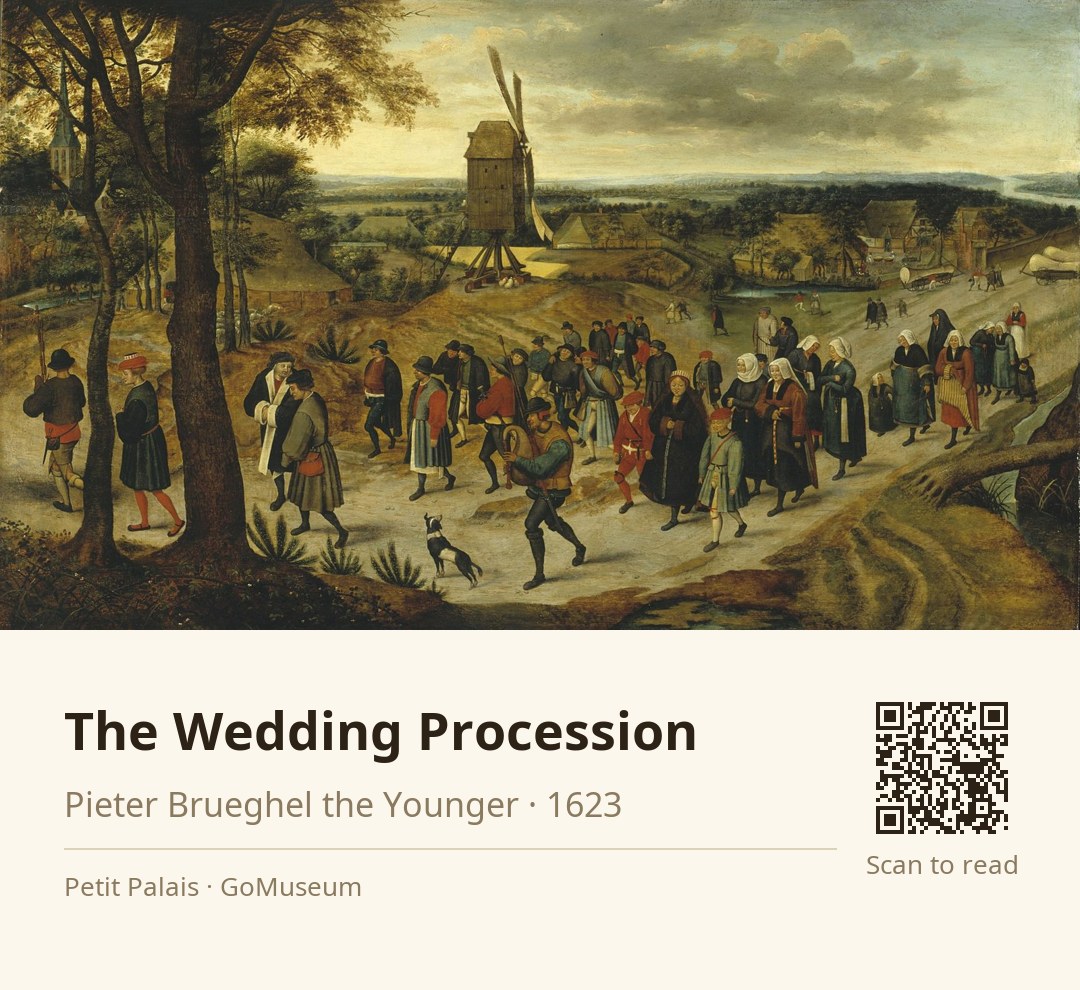
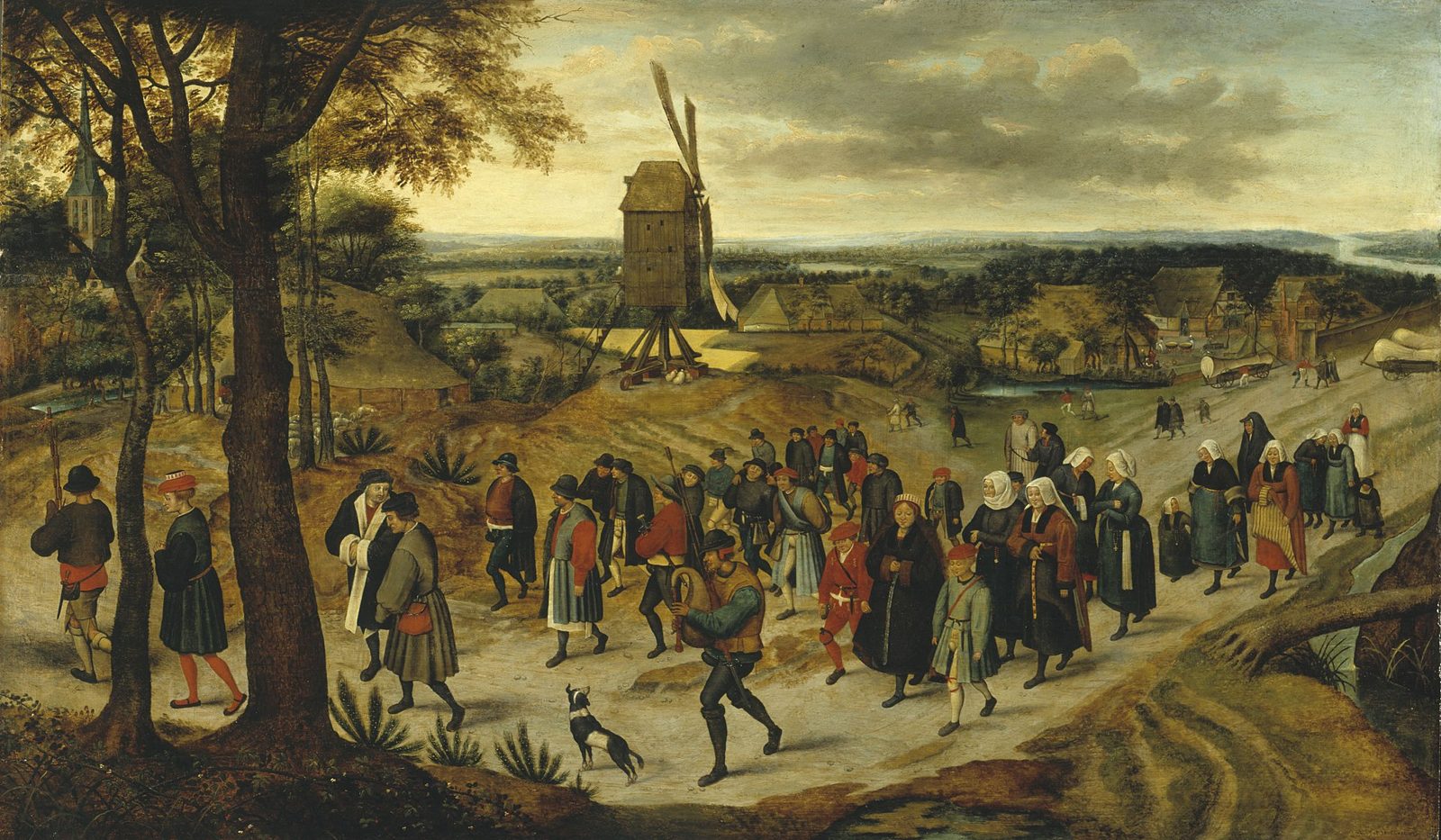
🎧 This work has audio narration — listen in the appA lively procession unfolds in front of you, with villagers making their way along a winding path, their faces animated with joy. Women in traditional dresses and men wearing hats walk together, while a musician plays a bagpipe, setting the festive tone. In the middle distance, a windmill stands on a hill, surrounded by trees and quaint houses, creating a picturesque backdrop that enhances the sense of community and celebration.
The earthy palette of greens, browns, and grays not only grounds the painting in reality but also evokes the natural beauty of the Flemish countryside. Brueghel's detailed brushwork brings the textures of the landscape and the clothing to life, inviting you to immerse yourself in the atmosphere of the celebration. The overcast sky adds a muted light, suggesting a moment caught between the ordinary and the festive, where everyday life blends seamlessly with the joyous occasion of a wedding.
Pieter Brueghel the Younger, who created this work in 1623, was known for his ability to depict the vibrancy of peasant life, often drawing inspiration from his father, Pieter Bruegel the Elder. His prolific output, including numerous copies of his father's works, helped to preserve and spread the rich visual language of Flemish art across Europe.
Pieter Brueghel the Younger, born in Brussels between May and October 1564, was a prominent Flemish painter known for his prolific output and for creating numerous copies of his father’s works, Pieter Bruegel the Elder. Following his father’s death when he was just five, and his mother’s passing in 1578, he was raised by his grandmother, an accomplished artist. Brueghel trained in Antwerp and became a master in the Guild of Saint Luke by 1585. He established a successful studio, producing around 1,400 works, including original compositions and pastiches that helped disseminate his father's imagery across Europe.
Often referred to as "Hellish Brueghel" due to his fascination with fire and grotesque themes, his style remained rooted in Flemish realism throughout his life. His works frequently depicted rural scenes, reflecting the everyday life of peasants. Brueghel's legacy is marked by his ability to blend imitation with originality, ensuring that many of his father’s lost pieces are known today through his copies. He passed away between March and May 1638, leaving behind a significant impact on the art world, particularly in the realm of genre painting.
Brueghel's technique in 'The Wedding Procession' is a masterclass in detail and texture. The earthy palette of greens, browns, and grays not only grounds the scene in the Flemish countryside but also evokes a sense of warmth and familiarity. His brushwork is meticulous, capturing the intricate details of the villagers' clothing and the landscape's natural elements. The composition is dynamic, with the winding path leading the viewer's eye through the procession, creating a sense of movement and life. The overcast sky adds a layer of depth, allowing the muted light to soften the colors, enhancing the overall atmosphere of celebration. This careful handling of light and color, combined with the lively depiction of figures, draws you into the scene, making you feel as if you are part of the joyous occasion.