 Image: Didier Descouens
The card players
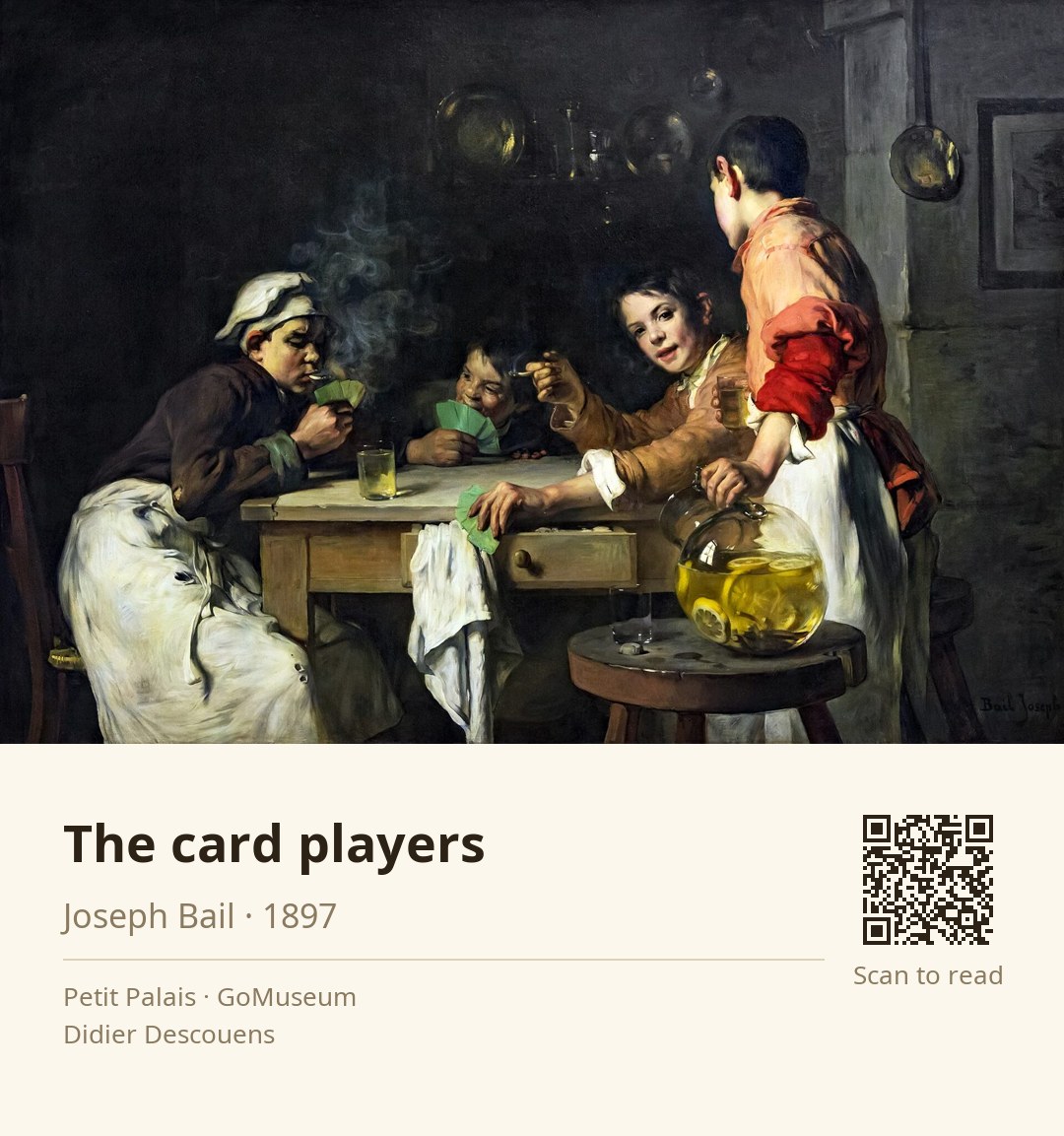
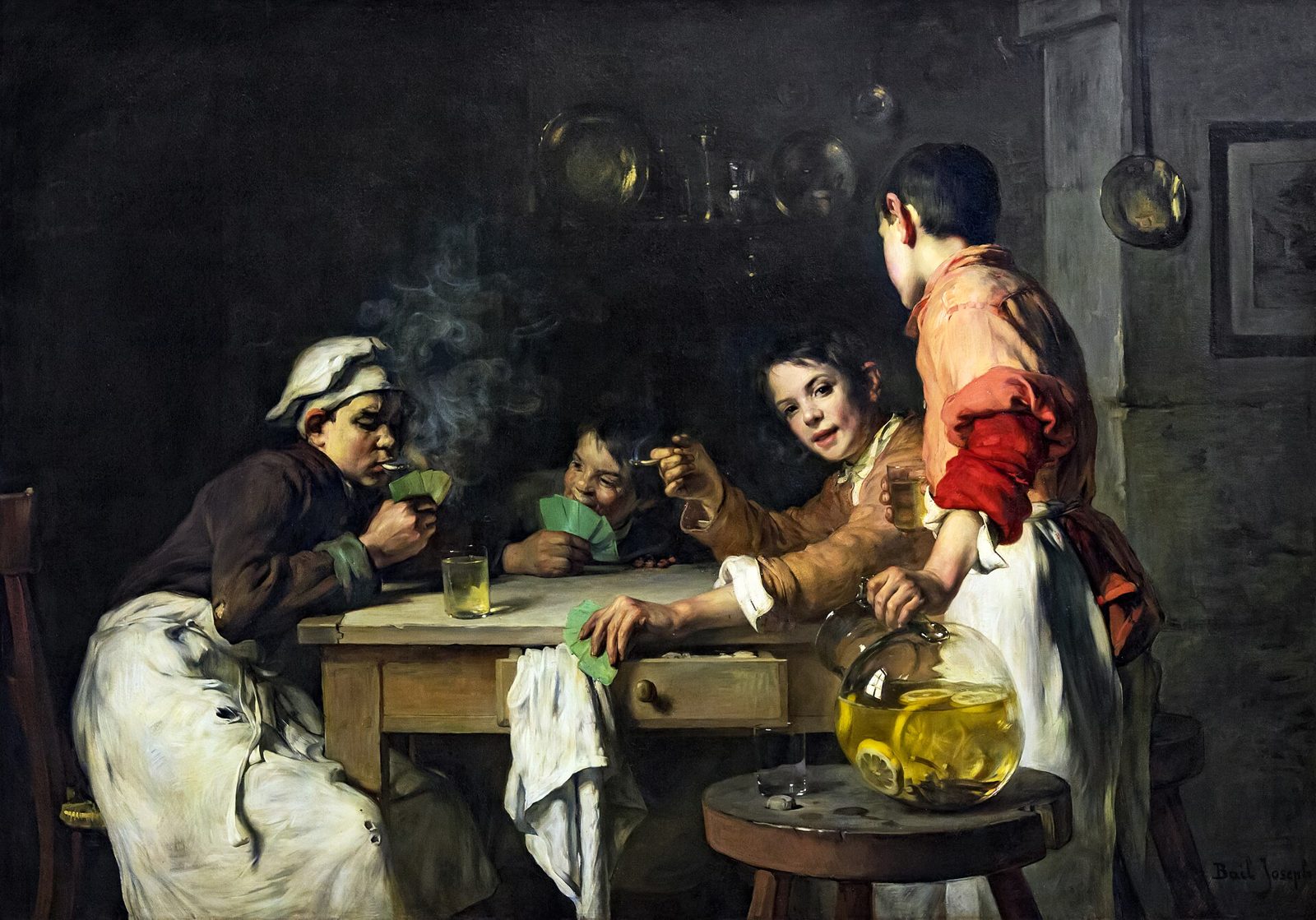
🎧 This work has audio narration — listen in the appFour players huddle around a wooden table, deeply engrossed in their card game. The figure on the left, a smoker, has a glass of yellow liquid in front of them, while the central player, grinning, holds a cigarette and a drink, suggesting a lively atmosphere. A large glass jug filled with a similar yellow liquid and lemon slices adds a touch of warmth to the scene, contrasting with the dimly lit background where hanging pots and pans hint at a domestic setting.
This intimate gathering captures a moment of camaraderie and leisure, reflecting the social fabric of late 19th-century France. The earthy palette and detailed brushwork highlight the textures of their clothing and the glass, creating a sense of realism that draws you into their world. Joseph Bail, known for his naturalistic style, often painted scenes that celebrated everyday life, focusing on the interplay of light and shadow to evoke emotion. His ability to render the glint of glass and the softness of fabric showcases his technical skill and keen observation of domesticity.
Bail, who was born in 1862 and died in 1921, became recognized for his contributions to genre painting, particularly in capturing the subtleties of light in interior scenes. "The Card Players," created in 1897, exemplifies his dedication to portraying the nuances of human interaction within familiar settings.
Joseph Bail, born on January 22, 1862, in Limonest, was a notable French naturalist painter who left a significant mark on the art world before his death on November 28, 1921, in Neuilly-sur-Seine. The younger brother of painter Franck Bail, Joseph received his initial training from his father, Antoine Jean Bail, and later honed his skills under the tutelage of Jean-Léon Gérôme and Carolus-Duran. He began creating still lifes as a teenager and quickly gained recognition, earning medals for his works at the Salon des artistes français.
Bail's passion for gastronomy is evident in his paintings, where he depicted both food and the cooks who prepared it. His works often featured intimate scenes, showcasing his ability to manipulate light and detail, reminiscent of Dutch and Flemish styles. Critics noted his skill in capturing the glow of copper and the interplay of sunlight in domestic settings. His later works, inspired by a visit to the hospices of Beaune, reflected a growing interest in the lives of hospital nuns.
Throughout his career, Bail's art was characterized by a meticulous arrangement of elements and a refined color palette. He was celebrated for his ability to create vibrant light effects, earning praise for his technical virtuosity. While he remained rooted in traditional techniques, his work contributed to the broader narrative of realism in the late 19th and early 20th centuries, positioning him as a distinctive voice in an era of artistic transition. His legacy endures, celebrated for its originality and harmony.
Joseph Bail's 'The Card Players' was created in 1897 and showcased at the Salon de la Société des Artistes Français, a prestigious venue for contemporary art in France. This painting was part of a significant period in Bail's career, where he was gaining recognition for his naturalistic style. The reception of the work was positive, with critics noting the effortless execution and the engaging depiction of everyday life. Bail, who had a strong familial connection to the art world, was influenced by his father and prominent artists like Jean-Léon Gérôme. His works often reflected a dedication to genre painting, capturing the subtleties of human interaction. Over the years, 'The Card Players' has remained a part of his legacy, illustrating the charm of late 19th-century social gatherings.
In 'The Card Players,' Bail employs oil on canvas to create a rich, textured scene that draws you into the intimate world of his subjects. The brushwork is meticulous, with each stroke contributing to the lifelike quality of the figures and their surroundings. The earthy palette enhances the warmth of the gathering, while the careful placement of highlights on the characters' faces and clothing adds depth and dimension. Bail's skillful handling of light is evident; he captures the soft glow of the yellow liquid in the glasses and jug, contrasting beautifully with the darker background. This technique not only emphasizes the camaraderie among the players but also invites viewers to feel the atmosphere of the moment. The composition, with the table as a central axis, creates a sense of balance, guiding your eye through the interaction and the details of the setting.
Interestingly, Joseph Bail was not only a painter but also had a deep passion for gastronomy, which often influenced his work. He frequently depicted culinary scenes and the people involved in food preparation, reflecting his love for the art of cooking. This fascination is evident in his other works, where he captures the essence of kitchens and dining experiences, showcasing a unique blend of art and culinary appreciation.
Bail's love for cooking is reflected in many of his works, where he often depicted culinary scenes and the people involved in food preparation.
Bail skillfully captured light by depicting the soft glow of the yellow liquid in the glasses and jug, which contrasts with the darker background, enhancing the atmosphere of the scene.