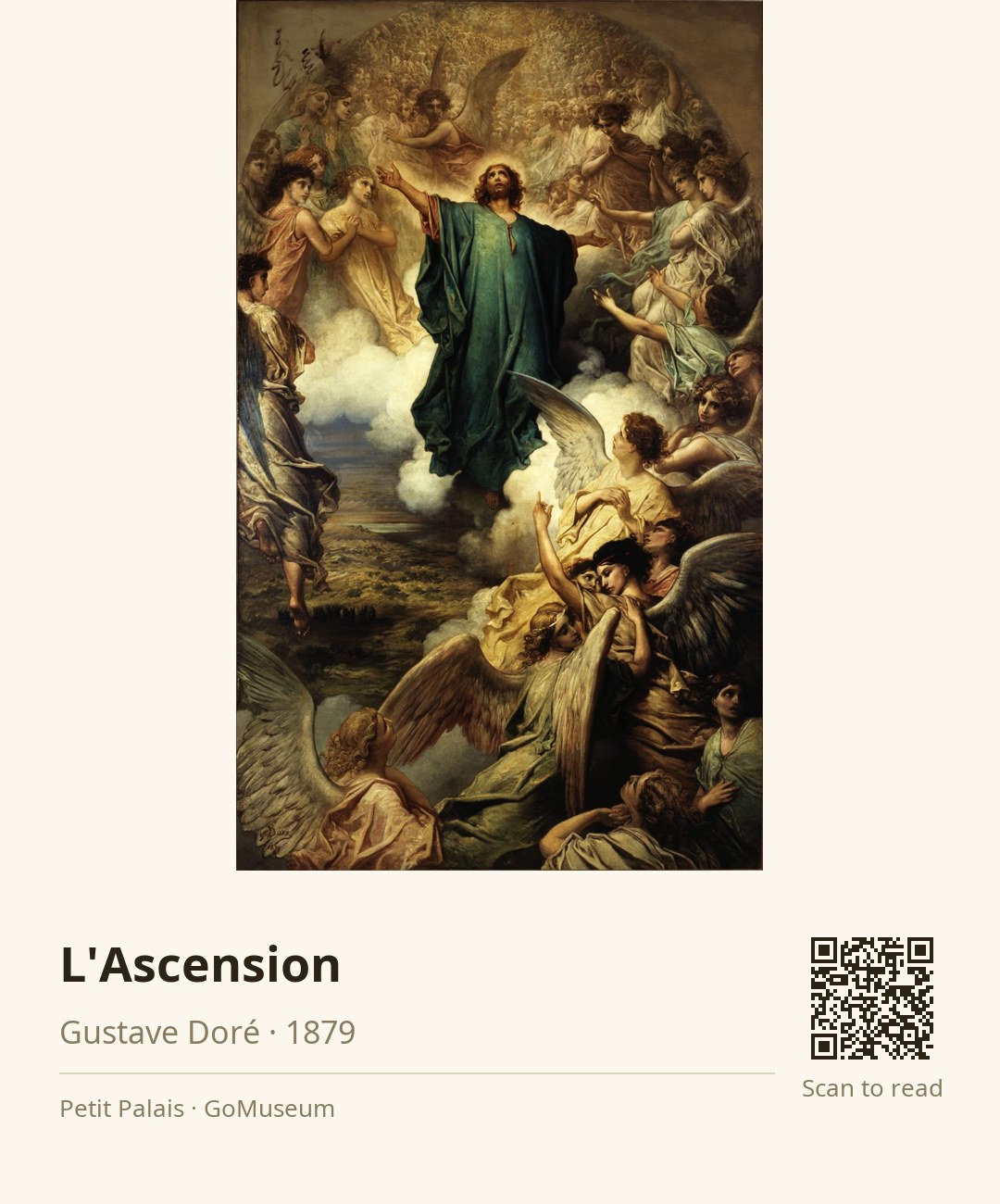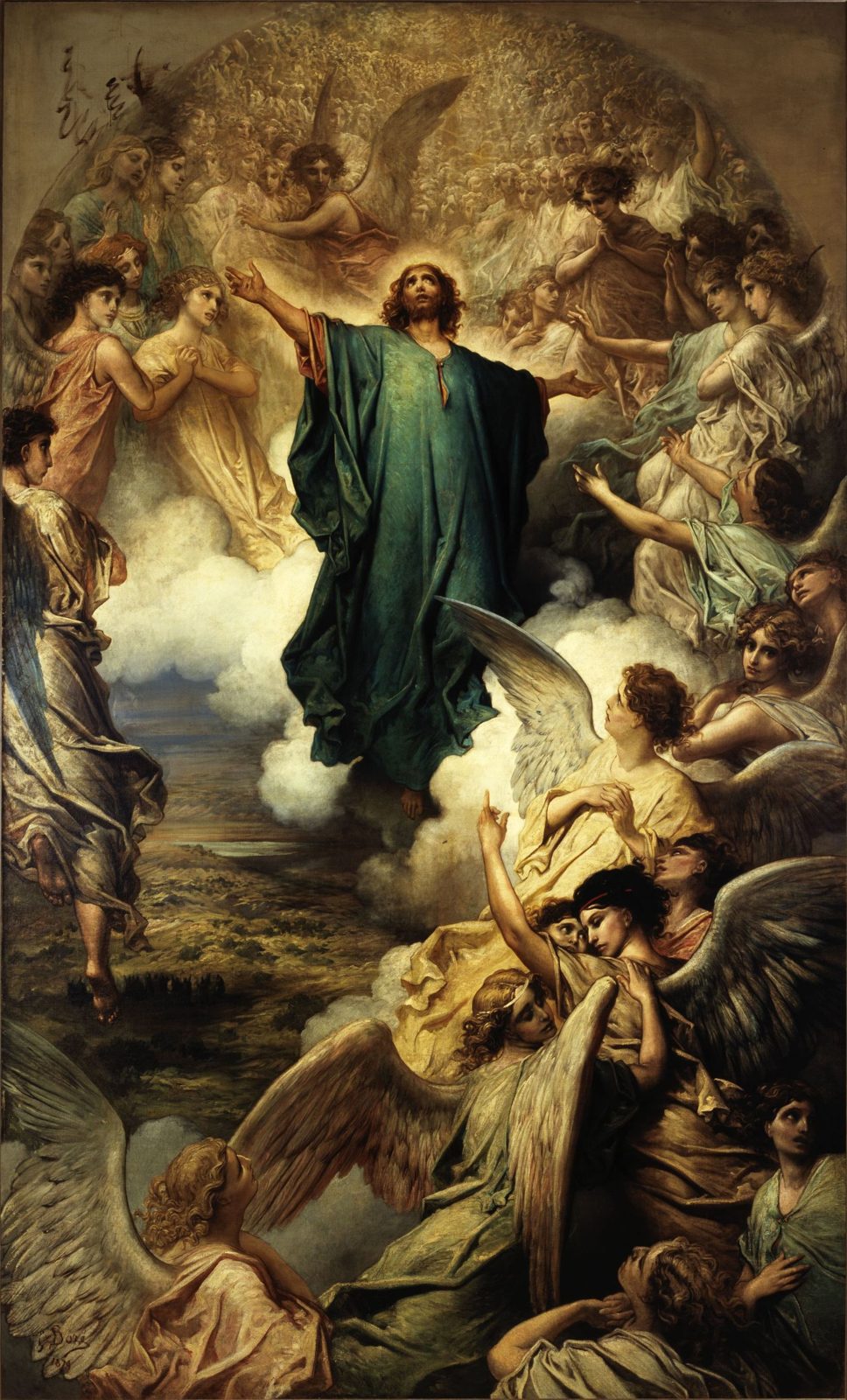
The figure in the flowing green robe, arms outstretched, rises amidst a swirl of clouds, surrounded by a host of angels. Each angel is captured in dynamic poses, some pointing upwards while others gaze in reverence, their wings rendered with meticulous detail. The earthy palette of greens, browns, and soft whites enhances the ethereal quality of the scene, drawing your eye toward the central figure illuminated by a soft glow.
This depiction of ascension is not merely a visual spectacle; it embodies a moment of divine elevation, inviting contemplation on the spiritual journey. The careful brushwork highlights the intricate folds of the garments and the delicate feathers of the wings, reflecting Doré's mastery in conveying movement and emotion. The composition balances the celestial and the earthly, creating a sense of depth that immerses the viewer in this transcendent moment.
Gustave Doré, born in Strasbourg in 1832, became renowned for his illustrations, particularly in literature, yet his painted works like this one also reveal his profound engagement with religious themes. "L'Ascension," created in 1879, stands as a testament to his ability to merge narrative and artistry, capturing the essence of spiritual ascent through visual storytelling.
Paul Gustave Doré was a prolific French artist born on January 6, 1832, in Strasbourg. He began his career as a caricaturist at the young age of 15, quickly establishing a reputation for his detailed wood engravings. Doré's illustrations for classic literature, including the Vulgate Bible and Dante's Divine Comedy, garnered international acclaim, leading to the employment of numerous block-cutters to bring his designs to life. His work, while popular among the public, faced mixed reviews from critics during his lifetime.
Doré's artistic journey included notable commissions for works by Cervantes, Rabelais, and Byron, and his illustrations for "Don Quixote" and "The Raven" became iconic. His 1872 publication "London: A Pilgrimage" showcased the city's stark realities, earning both commercial success and critical scrutiny. Despite the challenges he faced, including accusations of exaggeration in his portrayals, his unique vision and talent left a lasting impact on the art world.
Recognized for his contributions, Doré was made a Knight of the Legion of Honour in 1861. His legacy continued to grow posthumously, influencing artists like Vincent van Gogh and earning admiration from literary figures such as H. P. Lovecraft. Doré passed away on January 23, 1883, leaving behind a rich body of work that solidified his place in art history as a master illustrator and visionary.
In 'L'Ascension', Doré employs oil paint on canvas to create a vivid portrayal of spiritual elevation. His brushwork is both meticulous and expressive, capturing the delicate folds of the central figure's green robe and the intricate feathers of the angels' wings. The earthy palette of greens, browns, and soft whites not only enhances the ethereal quality but also evokes a sense of harmony and tranquility. Doré's choice to illuminate the central figure with a soft glow draws the viewer's eye upward, reinforcing the theme of ascension. The composition is dynamic, with angels in varied poses that suggest movement and reverence, creating a visual rhythm that guides the viewer through the scene. This careful handling of light and color, combined with the dramatic poses of the figures, immerses the audience in a moment of divine transcendence.
In 1867, Gustave Doré held a major exhibition in London that showcased his successful illustrations for the Bible from 1866.
While Gustave Doré was celebrated for his paintings during his lifetime, it was his wood-engravings that truly showcased his individual artistic vision and talent.
In 1861, Gustave Doré was made a Knight of the Legion of Honour by the French government.