Baigneuses à Perros-Guirec
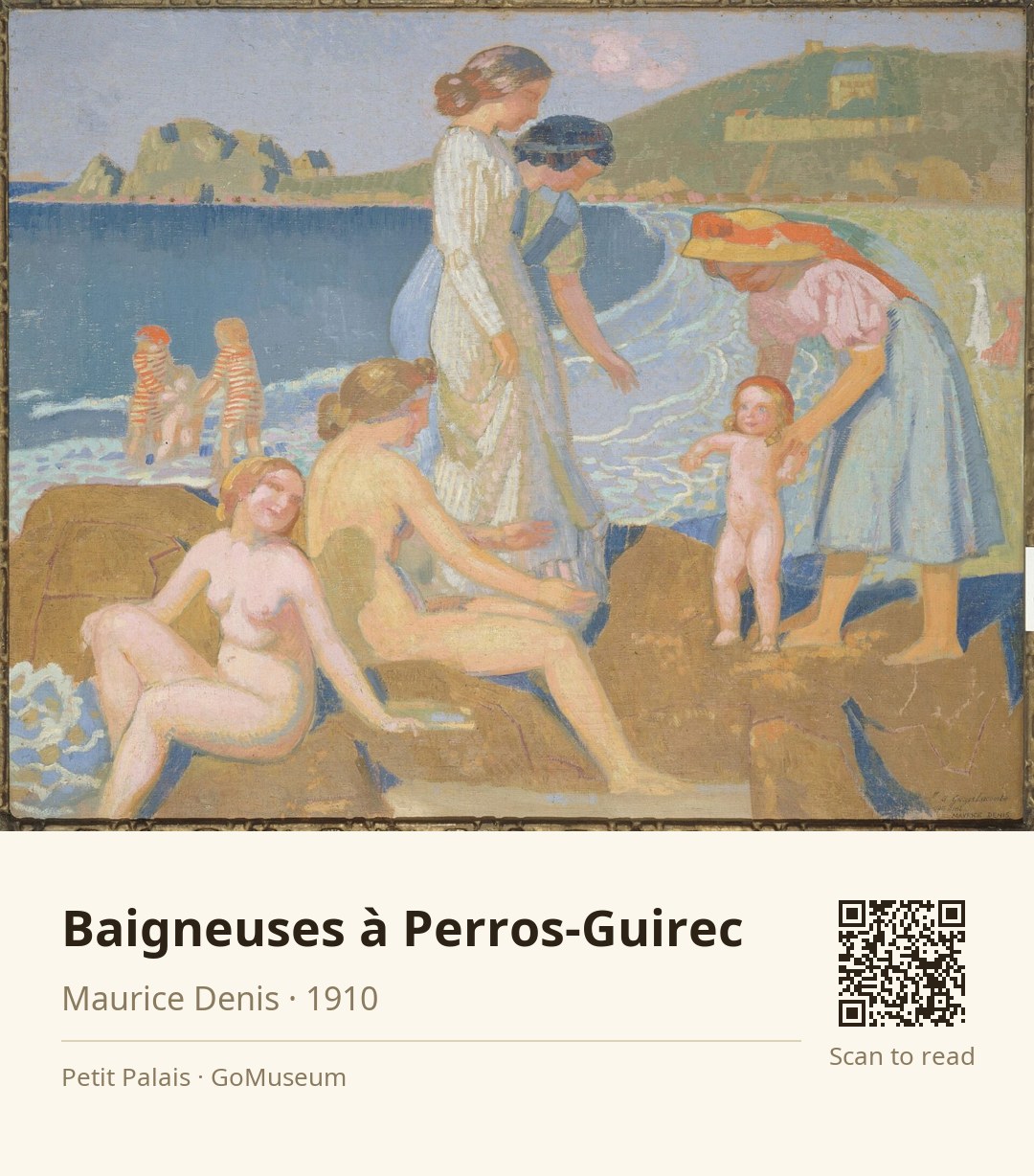
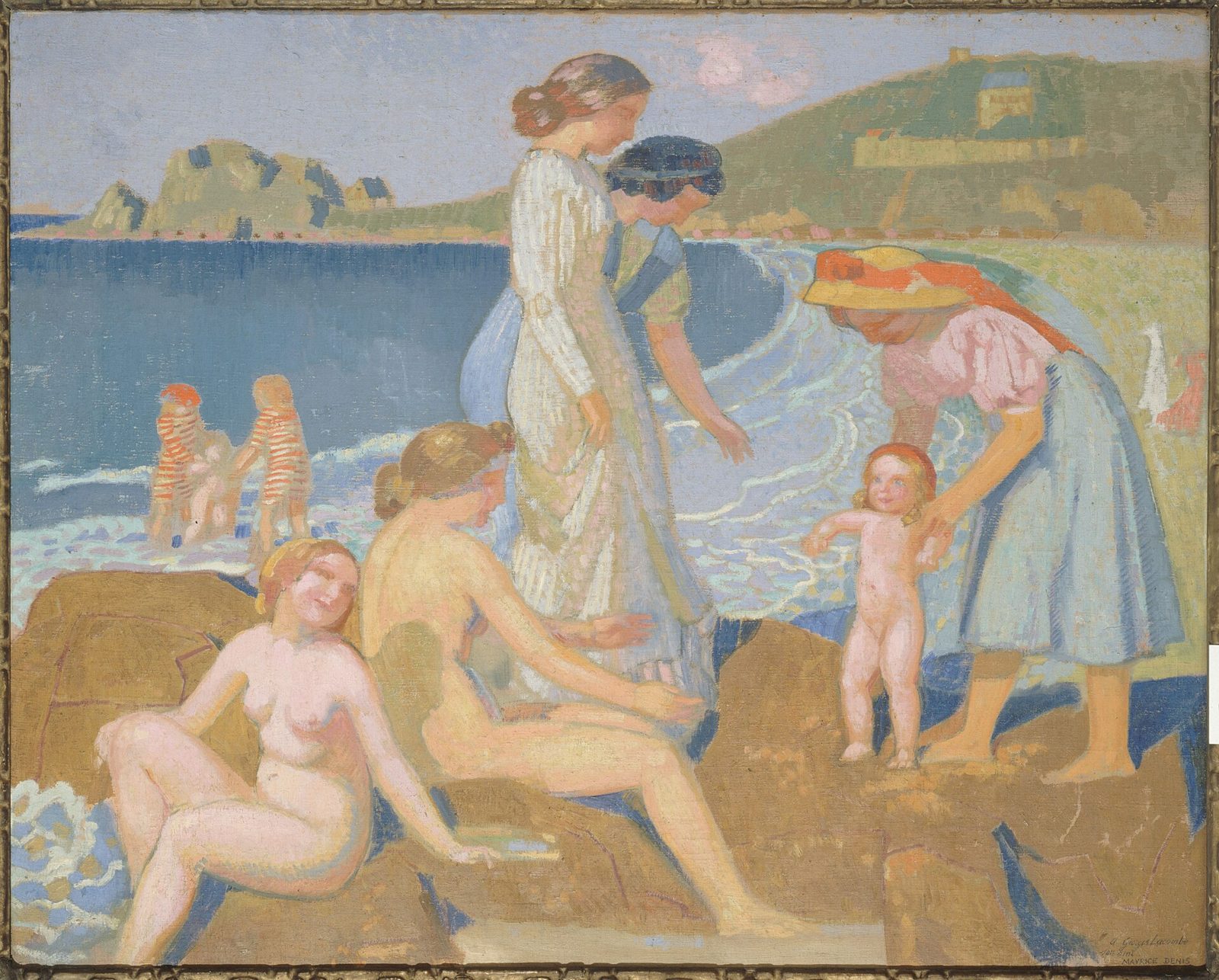
🎧 This work has audio narration — listen in the appTwo nude women recline on the rocks, their relaxed expressions contrasting with the lively scene around them in Maurice Denis's *Baigneuses à Perros-Guirec*. Nearby, a woman in a pink blouse helps a child stand, while two children in striped swimsuits play in the shallow water, adding a sense of joy and innocence to the beach setting. The soft pastel palette of blues, pinks, and earthy tones creates a serene atmosphere, inviting you to linger in this tranquil moment.
Denis, a key figure in the Nabis movement, was influenced by Symbolism and the decorative arts, which is evident in this work's smooth brushwork and harmonious composition. His approach to painting emphasized the emotional and spiritual aspects of art, moving away from mere representation of nature. The beach at Perros-Guirec, where he often painted, became a source of inspiration, allowing him to explore themes of leisure and femininity.
Created in 1910, this painting reflects the early 20th-century shift towards modernist aesthetics, where color and form took precedence over traditional narrative. Maurice Denis's exploration of these ideas contributed significantly to the evolution of modern art, marking a departure from the Impressionist style that dominated the previous decades.
Maurice Denis was a French painter, decorative artist, and writer born on November 25, 1870, in Granville, Normandy. He emerged as a significant figure in late 19th-century art, closely associated with the Nabis group, which sought to blend spirituality with artistic expression. Influenced by the works of Fra Angelico and Gauguin, Denis believed that art transcended mere representation, famously stating that a painting is fundamentally a flat surface covered with colors. His early life was marked by a deep passion for religion and art, leading him to pursue a career that celebrated Christian themes.
Denis's artistic journey began at the Académie Julian, where he formed connections with fellow artists like Paul Sérusier and Pierre Bonnard. Together, they founded Les Nabis, advocating for a more decorative and symbolic approach to painting. His work evolved through various influences, including Japanese art, which inspired his stylized compositions. After World War I, Denis shifted focus to sacred art, founding the Ateliers d'Art Sacré to revive religious themes in contemporary art.
Throughout his life, Denis's contributions laid foundational ideas for movements such as Cubism and Fauvism. His legacy endures as a bridge between traditional and modern art, reflecting a unique synthesis of spirituality and aesthetic innovation. He passed away on November 13, 1943, leaving behind a rich body of work that continues to inspire artists today.
Denis employed oil paint on canvas to create *Baigneuses à Perros-Guirec*, utilizing smooth brushwork that gives the figures a soft, almost ethereal quality. The palette is dominated by pastel hues, blending blues, pinks, and earthy tones to evoke a serene atmosphere. This choice of color not only enhances the tranquil beach scene but also reflects the emotional depth Denis sought to convey. The composition is structured with a foreground that draws your eye to the reclining women, while the background recedes into a calm sea and distant cliffs, creating a sense of depth. The placement of figures is intentional, guiding the viewer's gaze across the canvas, inviting contemplation of leisure and the beauty of the moment.
One intriguing aspect of *Baigneuses à Perros-Guirec* is that it was painted during a time when Denis was deeply influenced by Japanese art, which he admired for its decorative qualities and stylized forms. This influence is subtly reflected in the painting's composition and use of color, showcasing how cross-cultural inspirations can shape an artist's work in unexpected ways.
Denis admired Japanese art for its decorative qualities and stylized forms, which subtly influenced the composition and color choices in *Baigneuses à Perros-Guirec*.