The Golden Rain
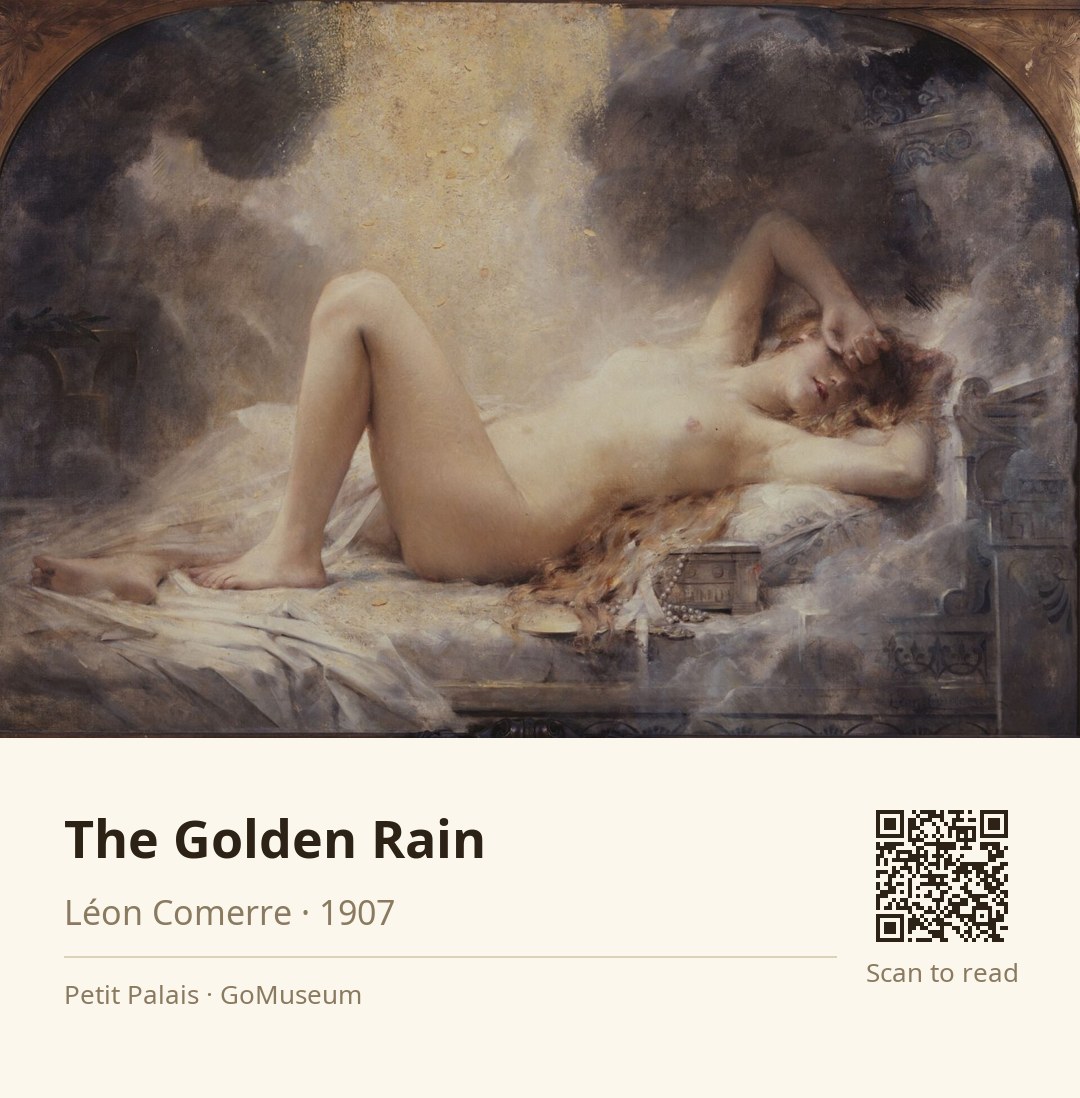
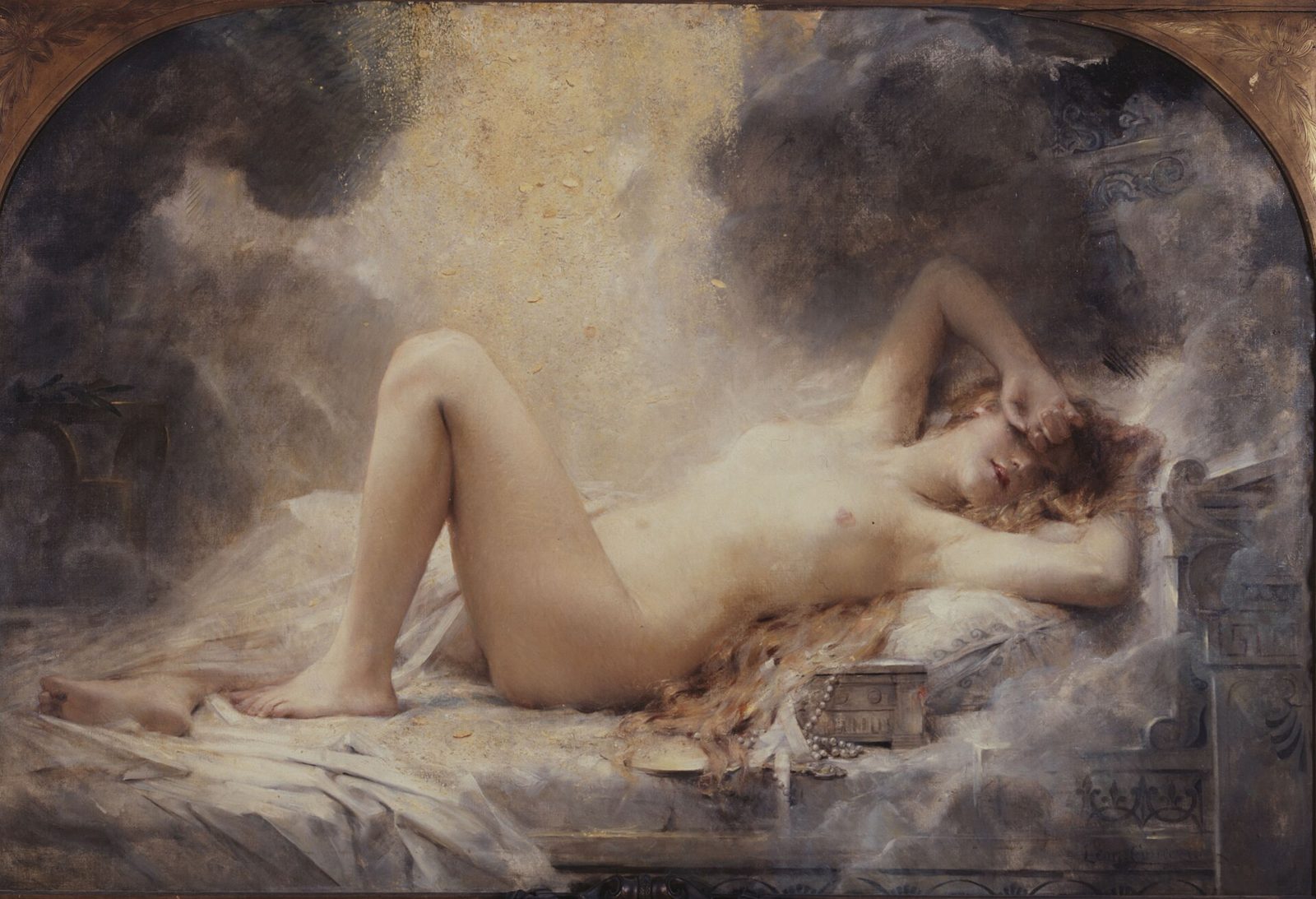
🎧 This work has audio narration — listen in the appThe reclining figure of Danaë, enveloped in flowing white fabric, draws your eye with her serene expression and relaxed pose. Long, cascading hair frames her face, while one arm rests gracefully above her head, creating an intimate connection with the viewer. To the right, an ornate box spills pearls, hinting at the opulence and allure of the mythological narrative.
This scene captures the moment when Danaë receives the golden rain, a symbol of divine intervention and transformation. The soft creams, golds, and grays in the color palette enhance the dreamlike quality of the composition, inviting contemplation of beauty and desire. The delicate architectural details in the background further emphasize the ethereal atmosphere, grounding the figure in a space that feels both luxurious and otherworldly.
Léon Comerre, a prominent French academic painter, created this work in 1907, showcasing his mastery in portraying mythological themes and the female form. His career flourished with accolades, including the Grand Prix de Rome, and he became known for his exquisite depictions of beautiful women.
Léon François Comerre was a prominent French academic painter born on October 10, 1850, in Trélon. He displayed artistic talent early on, studying under Alphonse Colas in Lille before moving to Paris to further his education at the École nationale supérieure des Beaux-Arts. Influenced by Orientalism, Comerre gained recognition for his exquisite portraits of women and mythological scenes. His career flourished after winning the Grand Prix de Rome in 1875, which allowed him to study in Italy for several years.
Comerre's works, characterized by their vibrant colors and meticulous detail, earned him numerous accolades, including medals at prestigious exhibitions in France and abroad. He became a Knight of the Legion of Honour in 1903 and exhibited widely, including at the Royal Academy in London. His legacy includes a rich body of work that reflects both his academic training and his fascination with the exotic. Comerre passed away on February 20, 1916, leaving behind a significant mark in the realm of academic and Orientalist art.
Léon Comerre's 'The Golden Rain' was completed in 1907 and first showcased at the Salon de la Société des Artistes Français, a prestigious venue for contemporary artists in Paris. This painting, depicting the mythological figure Danaë, quickly garnered attention for its exquisite portrayal of beauty and sensuality. Comerre, who had already established a reputation for his academic style and depictions of women, was celebrated for this work, which exemplified his mastery of the genre. The painting's provenance traces back to its exhibition at the Salon, where it contributed to Comerre's growing acclaim, ultimately leading to his recognition as a prominent figure in early 20th-century French art. The work remains a testament to his skill and the cultural milieu of the time, reflecting the fascination with mythological themes that captivated audiences during this period.
In 'The Golden Rain,' Comerre employs oil paint to create a rich, textured surface that enhances the painting's ethereal quality. His brushwork is meticulous, allowing for soft transitions between colors that evoke a dreamlike atmosphere. The palette, dominated by creams, golds, and grays, not only highlights Danaë's serene beauty but also infuses the scene with a sense of warmth and intimacy. The composition is carefully balanced, with Danaë centrally positioned, drawing the viewer's eye immediately to her relaxed form. The flowing white fabric draping her body contrasts beautifully with the ornate box of pearls, which spills into the foreground, adding a layer of opulence. Comerre's choice to blend the background softly into the figure creates a harmonious unity, making the viewer feel as if they are part of this enchanting moment.
Léon Comerre first showcased his work at the Paris Salon in 1871 and received recognition by winning prizes in 1875 and 1881.
Yes, Léon Comerre's wife, Jacqueline Comerre-Paton, was also a painter.