July 14, 1880, Inauguration of the Monument to the Republic
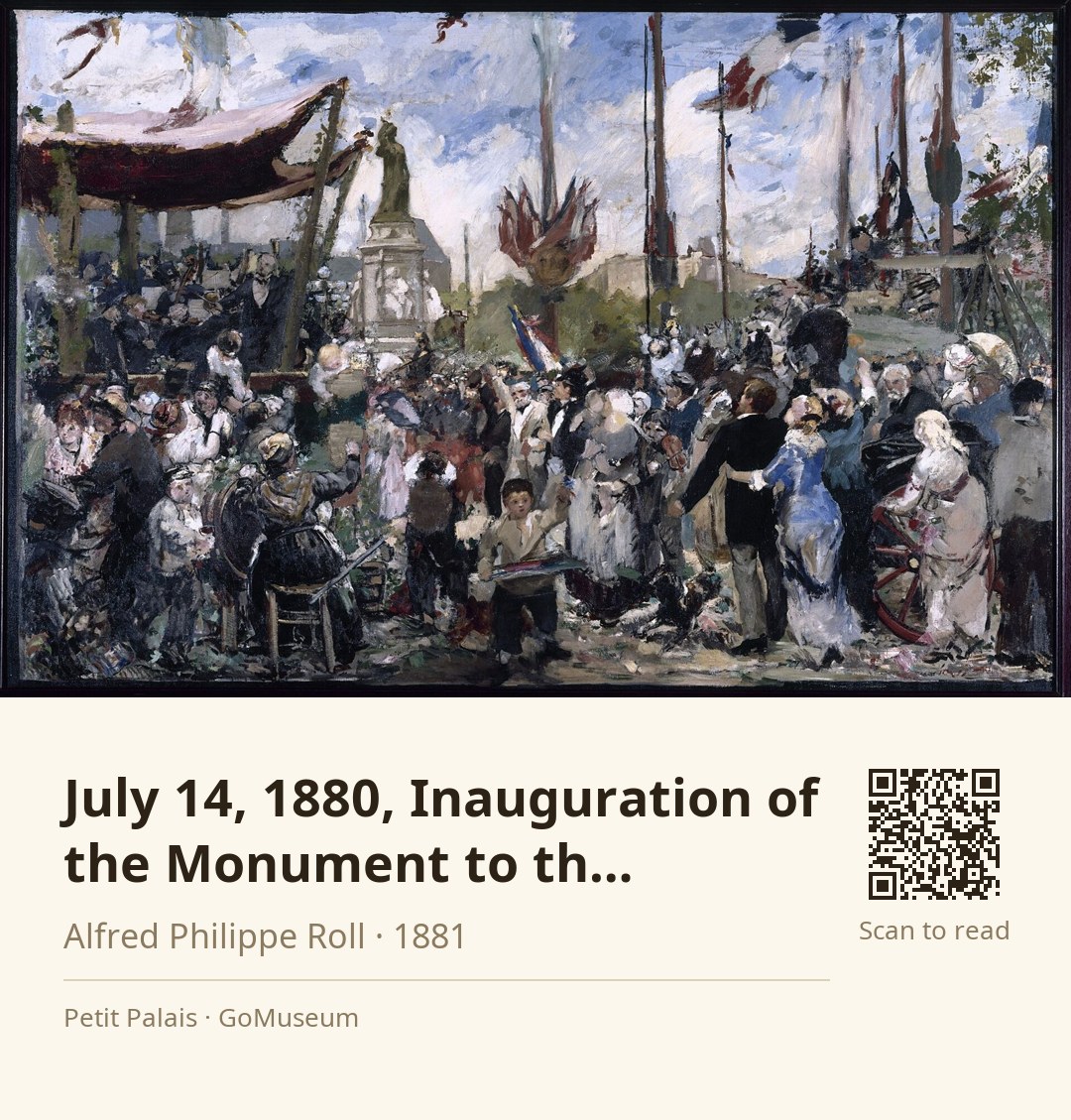
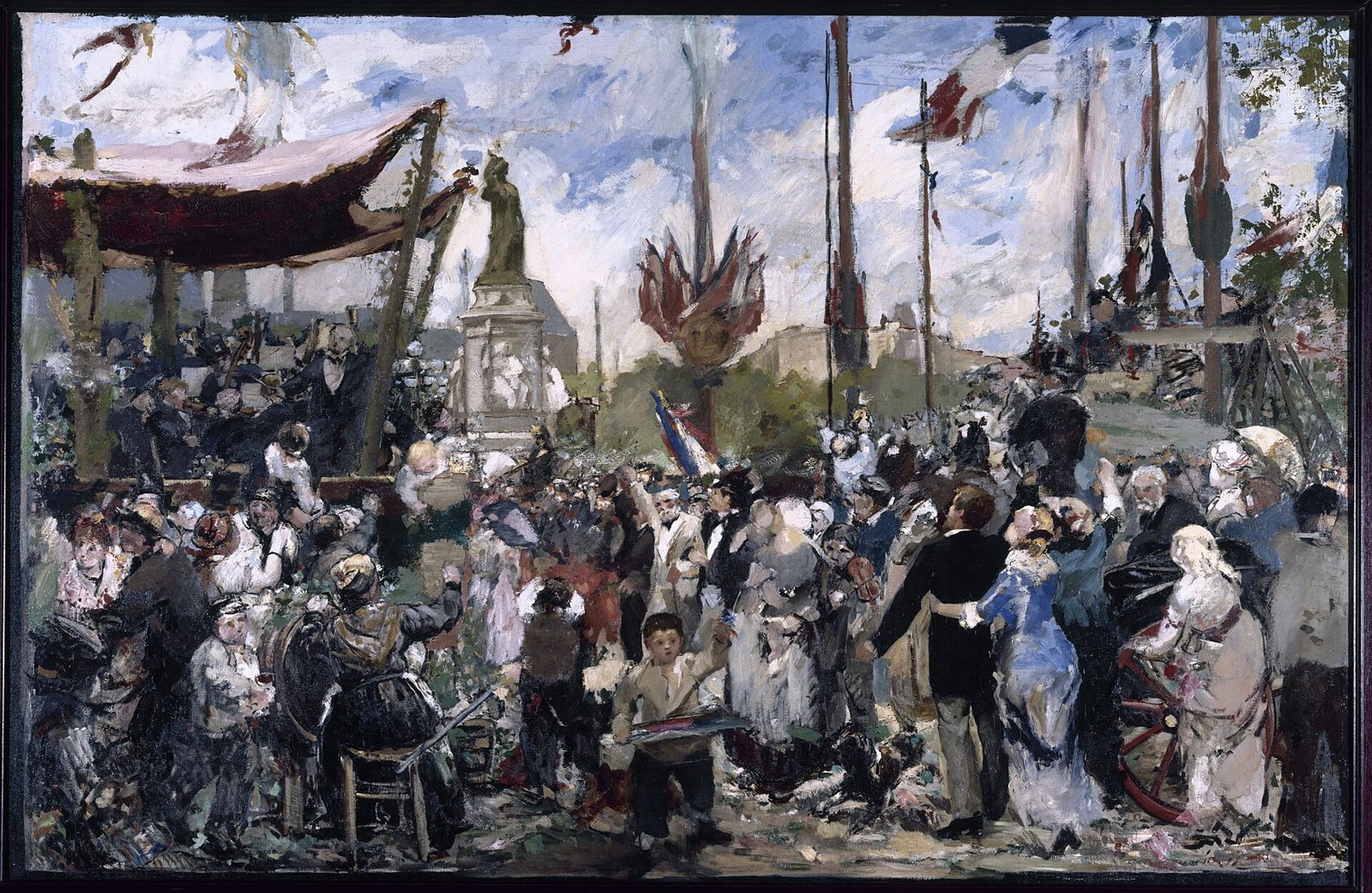
🎧 This work has audio narration — listen in the appSurrounding him, a diverse crowd engages in animated conversation, while musicians play under a colorful canopy to the left, adding to the festive atmosphere. The statue on a pedestal in the middle distance, adorned with flags and banners, symbolizes the significance of the event, as the bright sky and loose brushwork convey a sense of movement and energy.
This lively scene reflects the enthusiasm of the French people during the inauguration of the Monument to the Republic, a pivotal moment in the nation's history. Roll's choice to depict everyday life in a realistic style marks a departure from his earlier romantic influences, showcasing his commitment to capturing the essence of contemporary society. The painting not only celebrates a national event but also highlights the collective joy and unity of the people, emphasizing the importance of public gatherings in fostering community spirit.
Alfred Philippe Roll was a prominent French painter born on March 1, 1846, in Paris, where he also passed away on October 27, 1919. He studied at the École des Beaux-Arts under notable artists, including Jean-Léon Gérôme and Léon Bonnat. Roll initially embraced a romantic style, but his work evolved towards realism, focusing on everyday life and social themes. His breakthrough came with "The Flood at Toulouse" in 1875, which garnered significant attention and established his reputation.
Roll's career flourished as he became one of France's leading painters, known for his portraits and historical scenes. He received numerous state commissions, creating murals and significant works for public buildings, including the Palace of Versailles. His painting "Miner's Strike" in 1880 marked a turning point, solidifying his status as an official painter of the French Republic.
In 1905, he co-founded and became president of the Société Nationale des Beaux-Arts, influencing the art community. Roll's legacy includes a rich collection of works housed in various museums across France and Belgium. His contributions to the art world and his role in promoting fellow artists like Alfred Smith reflect his commitment to the artistic community. Roll's work remains celebrated for its blend of realism and social commentary, marking him as a significant figure in 19th-century French art history.
Alfred Philippe Roll completed this painting in 1881, a vibrant celebration of the inauguration of the Monument to the Republic on July 14, 1880. Commissioned during a time of national pride, the work was showcased at the Salon, where it garnered significant attention and acclaim. Roll, who had been influenced by both romantic and realist styles, was transitioning into a new phase of his career, focusing on capturing the essence of contemporary life. The painting's reception was enthusiastic, solidifying Roll's status as a leading figure in French art.
This painting bursts with life, thanks to Roll's masterful use of oil paint on canvas. The loose brushwork creates a dynamic sense of movement, as if the crowd might spill out of the frame at any moment. The vibrant colors, particularly the bright sky and the varied attire of the crowd, evoke the excitement of the celebration. Roll's choice of scale is impressive, with dimensions that draw you into the scene, making you feel part of the festivities. The composition is carefully balanced, with the young boy holding the flag anchoring the foreground, while the statue in the middle distance serves as a focal point, symbolizing the event's significance. This technique not only captures the energy of the moment but also reflects Roll's commitment to realism, moving away from his earlier romantic influences.
Roll served as a lieutenant of militia during the Franco-Prussian War.
After he began painting portraits, Roll gained significant recognition, especially with his 1880 painting 'Miner's Strike', which elevated him to one of France's top painters.