Old Man with a Stick
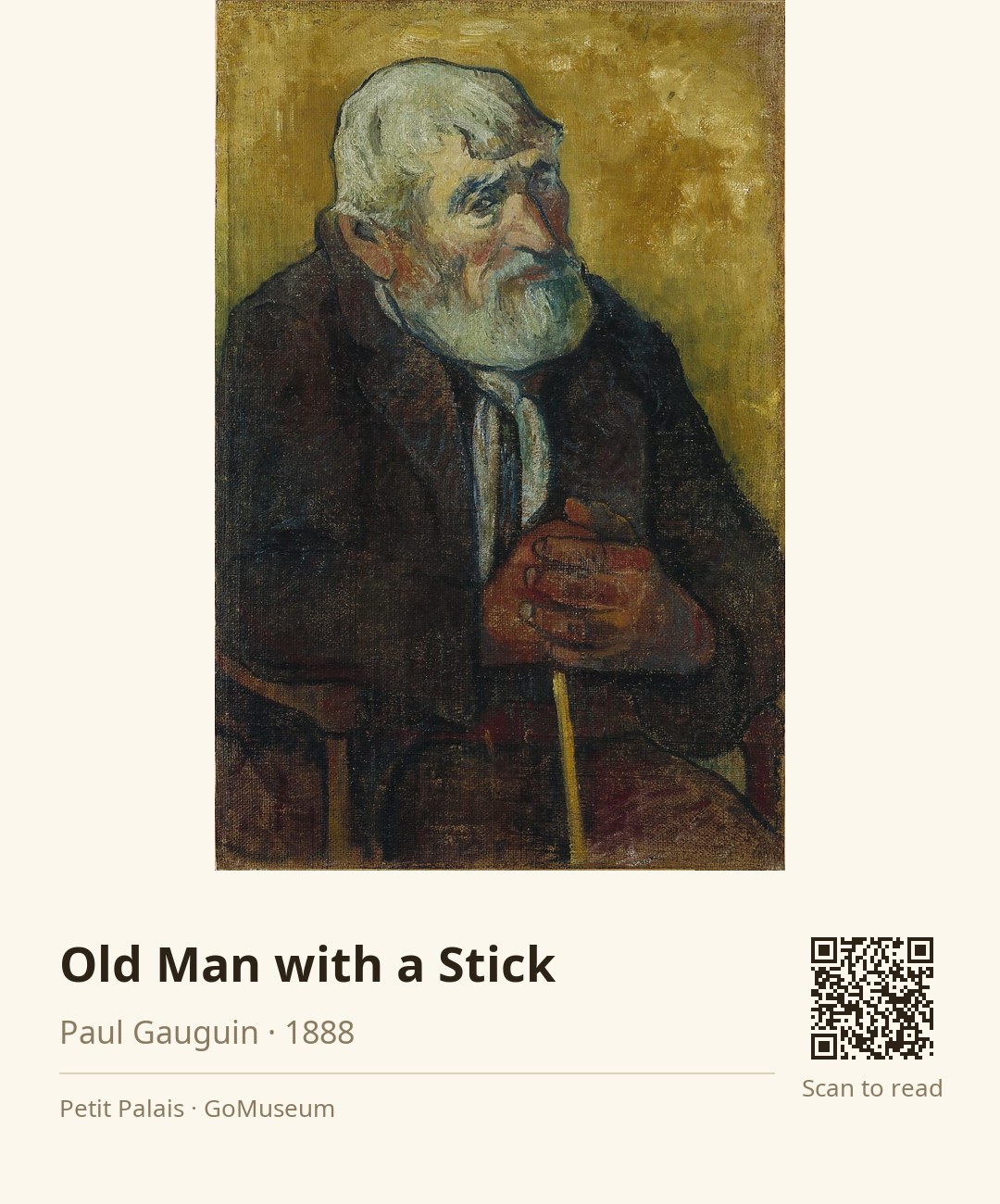
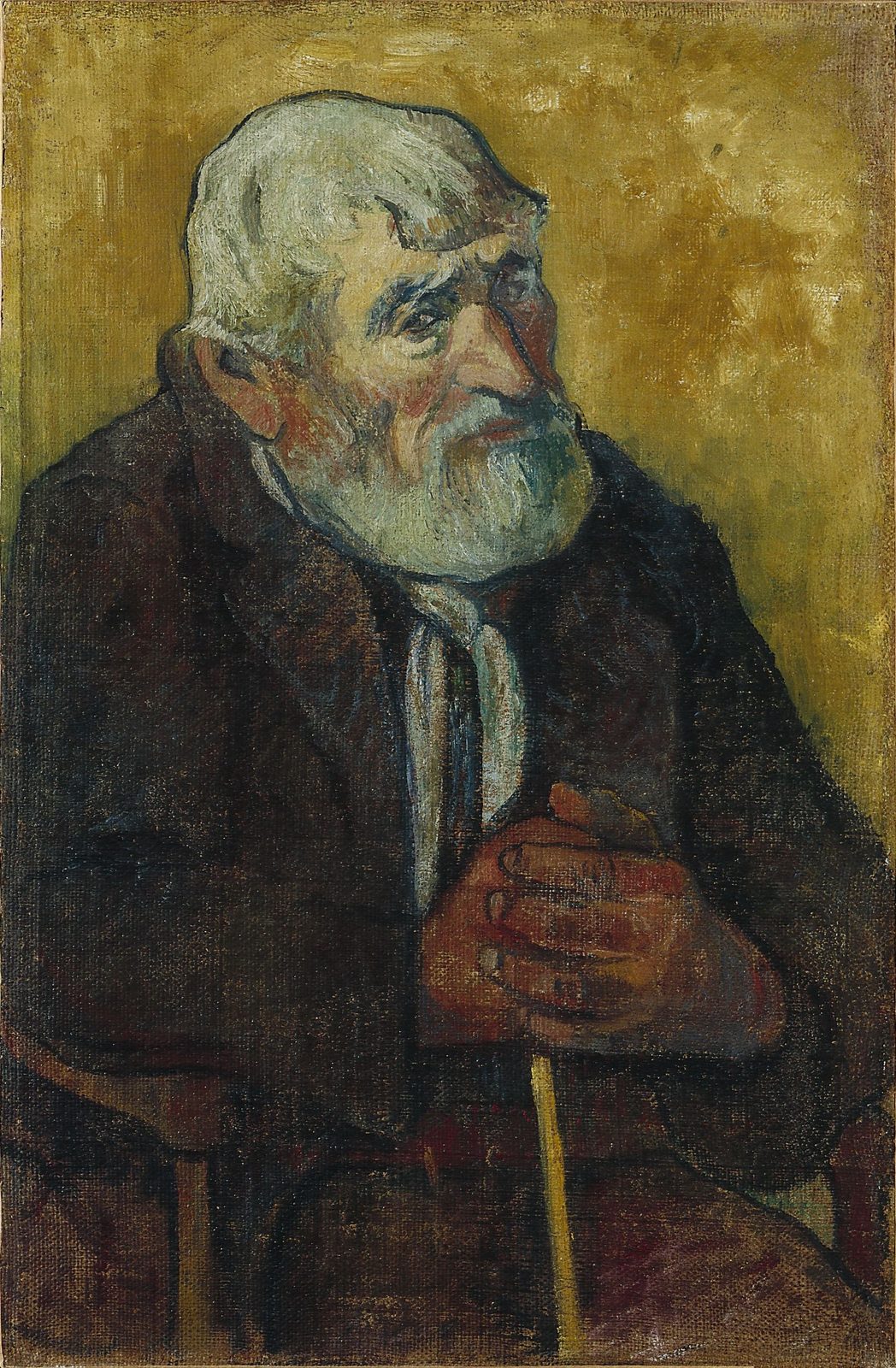
🎧 This work has audio narration — listen in the appThe elderly man in Paul Gauguin's "Old Man with a Stick" sits with a contemplative expression, his white beard and hair contrasting sharply against the warm yellow background. Dressed in a dark coat over a lighter shirt, his hands rest on a cane, emphasizing both his frailty and dignity. The visible brushwork captures the contours of his face and the folds of his clothing, drawing you into the depth of his character.
Gauguin's choice of a warm yellow backdrop not only highlights the cooler tones of the man's attire but also evokes a sense of introspection and solitude. The artist's expressive strokes bring life to the aged features, suggesting a narrative of wisdom and experience. This painting, created in December 1888 while Gauguin was staying at Vincent van Gogh's home in Arles, reflects the artist's exploration of human emotion and the passage of time, focusing on the quiet strength found in vulnerability.
"Old Man with a Stick" is a testament to Gauguin's evolving style, which sought to convey deeper meanings through color and form, moving away from the Impressionist techniques of his earlier works.
Eugène Henri Paul Gauguin was a French artist born on June 7, 1848, in Paris. His early life in Peru, where he experienced a privileged childhood, deeply influenced his artistic vision. Initially a stockbroker, Gauguin turned to painting full-time after a financial crisis in 1882. He was largely self-taught, drawing inspiration from his connections with artists like Camille Pissarro, who introduced him to Impressionism.
Gauguin's work evolved into a distinct style characterized by bold colors and symbolic themes, diverging from traditional Impressionism. His time in Brittany and later in Tahiti marked significant phases in his career, where he sought to capture the essence of native life and spirituality. Despite struggling with health and financial issues in his later years, his art gained recognition posthumously, largely due to the efforts of art dealer Ambroise Vollard.
Today, Gauguin is celebrated as a key figure in Post-Impressionism and a precursor to modern art, influencing artists like Picasso and Matisse. His exploration of color and form continues to resonate, securing his place in art history as a visionary who sought to transcend the confines of Western civilization.
Gauguin's technique in "Old Man with a Stick" showcases his distinctive brushwork, which is both expressive and deliberate. The visible strokes create a textured surface that adds depth to the elderly man's features, emphasizing the wisdom etched into his face. The warm yellow background serves not only as a contrast to the cooler tones of the man's attire but also as a psychological space that evokes introspection. Gauguin's choice of a vertical format draws the viewer's eye upward, focusing on the man's contemplative expression and the delicate interplay of light across his skin.
Gauguin's artistic education was primarily informal and self-directed, heavily influenced by his interactions with other artists rather than through formal academic channels.
Gauguin's posthumous popularity was significantly aided by art dealer Ambroise Vollard, who organized exhibitions of his work after Gauguin's death.