The Return of the Prodigal Son
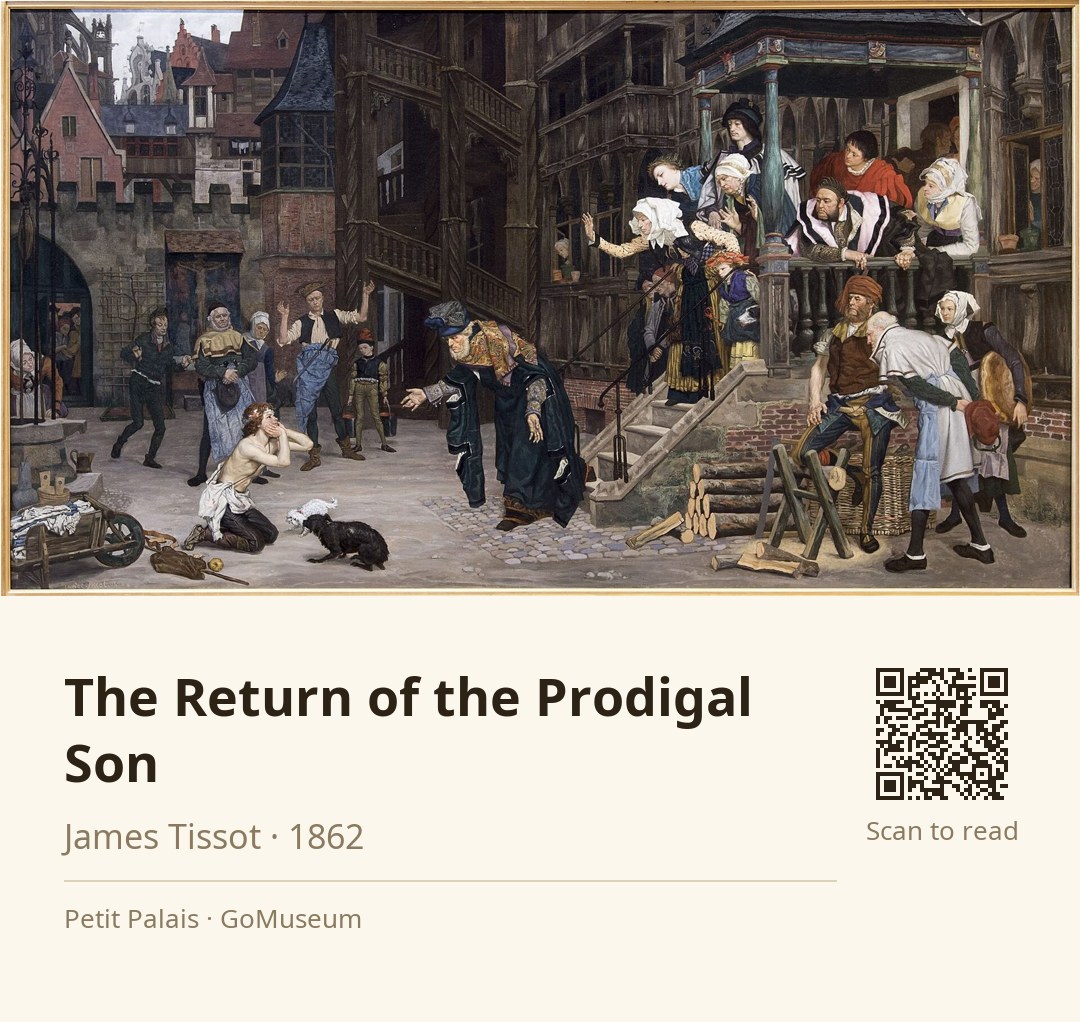
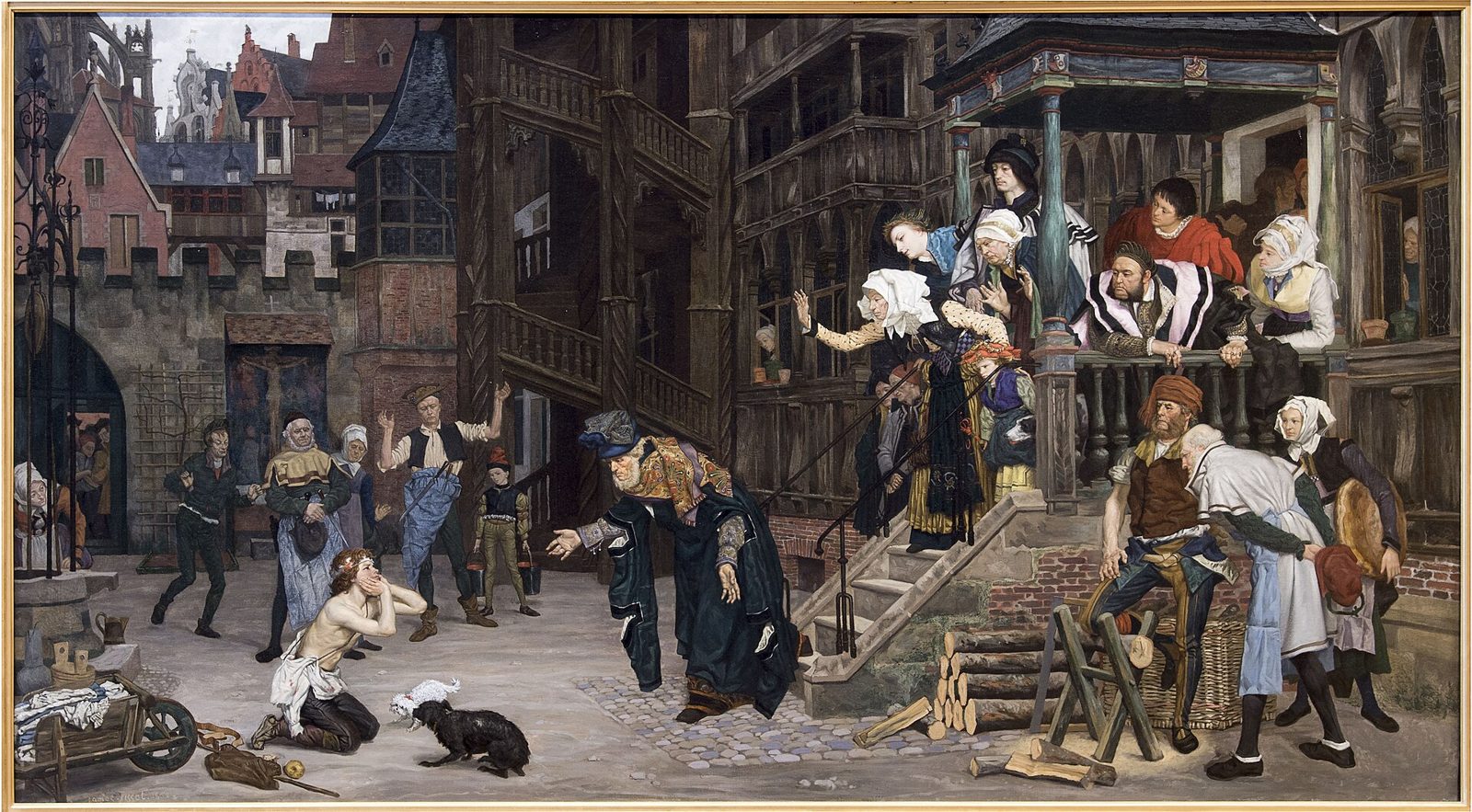
🎧 This work has audio narration — listen in the appA shirtless man kneels on the cobblestones, hands clasped in distress, while a small black dog stands by his side, creating a poignant focal point in this medieval street scene. To the right, a richly dressed figure leans forward, gesturing towards him, as a group of onlookers gathers on a staircase and balcony, their varied attire reflecting the social fabric of the time. The intricate details of the medieval buildings in the background, with their steep roofs and textured facades, add depth to the bustling atmosphere.
This moment captures a blend of human emotion and social interaction, showcasing Tissot's keen observation of life and the nuances of human experience. The earthy palette enhances the realism, drawing you into the scene as if you were part of the crowd witnessing this unfolding drama. Tissot, known for his meticulous attention to detail, often infused his works with a narrative quality that invites viewers to ponder the stories behind the figures.
In 1862, Tissot was exploring themes beyond his earlier medievalist styles, gradually shifting towards a focus on contemporary life and society. His ability to depict the intricacies of human emotion and social dynamics would later define his career, establishing him as a prominent figure in the art world.
James Tissot, born Jacques Joseph Tissot in Nantes in 1836, was a French painter and illustrator renowned for his depictions of Victorian high society and women's fashion during the Belle Époque. Initially trained at the École des Beaux-Arts in Paris, he embraced realism and impressionistic techniques, capturing the nuances of contemporary life. Tissot's early works focused on medieval themes, but after moving to London in 1871, he shifted to genre paintings that resonated with British audiences, earning acclaim for his photorealistic style.
His tumultuous life included service in the Franco-Prussian War and a close relationship with Kathleen Newton, who inspired many of his works until her untimely death. Tissot's social circle included notable figures like Edgar Degas and James Whistler, reflecting his integration into the artistic elite. Later in life, he experienced a religious awakening, leading him to create biblical subjects that garnered significant recognition. Tissot's legacy endures as a pivotal figure in 19th-century art, bridging traditional techniques with modern themes, ultimately earning him a place in art history. He passed away in 1902, leaving behind a rich tapestry of works that continue to captivate audiences.
Interestingly, Tissot's shift from medieval themes to contemporary life was partly influenced by his experiences during the Franco-Prussian War and the Paris Commune. These tumultuous events prompted him to reflect on the human condition and societal dynamics, leading to a more profound exploration of modern life in his art.
Growing up in Nantes, Tissot was exposed to maritime culture, which later inspired him to include shipping vessels and boats in many of his paintings.
Tissot had significant connections with prominent figures in the Impressionist movement, such as James Abbott Whistler and Edgar Degas, which influenced his artistic development.
Tissot's detailed portrayal of human emotions and social interactions became key characteristics of his work, helping him gain recognition and success in the art community.