Séjour de paix et de joie : méditation
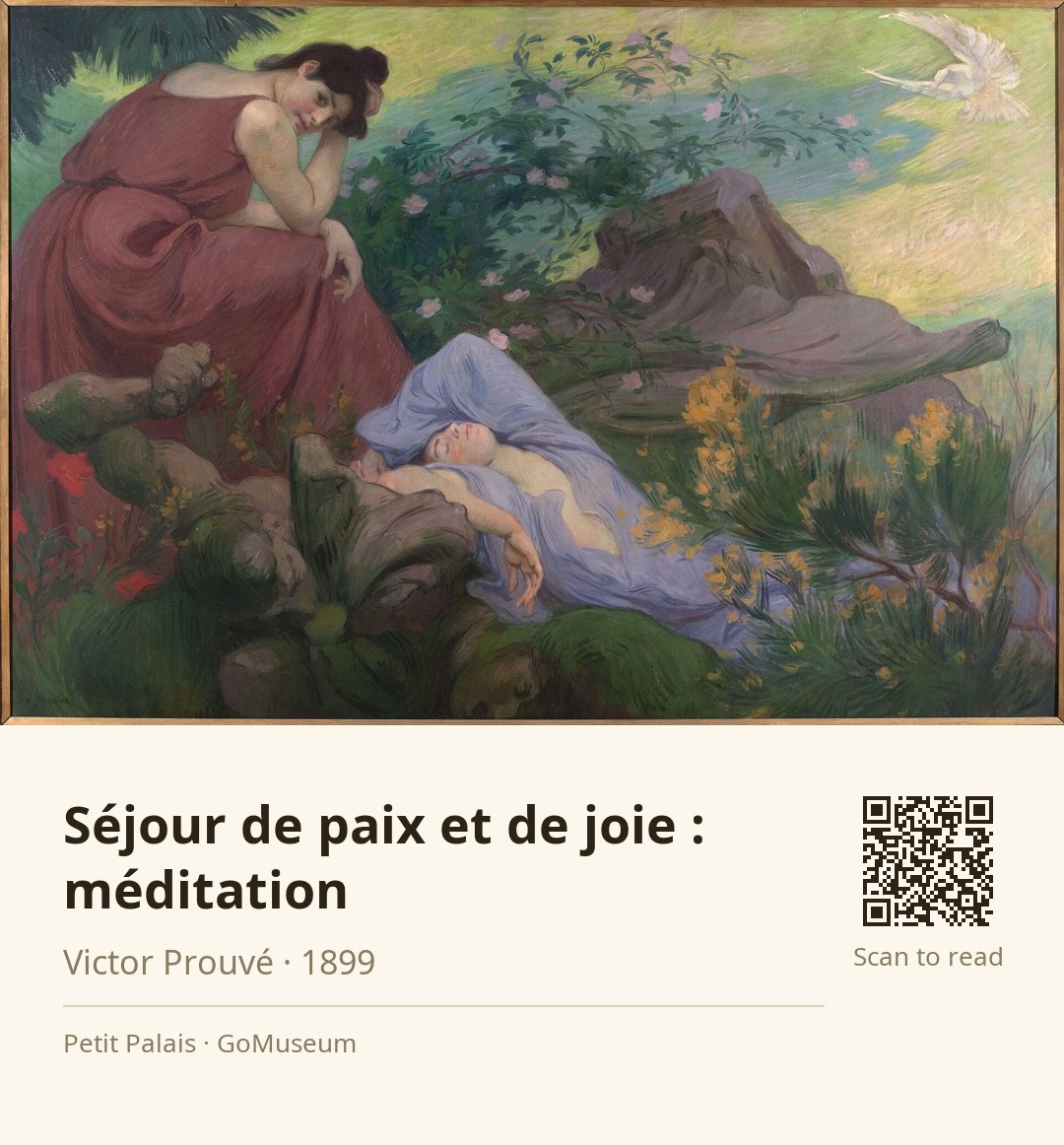
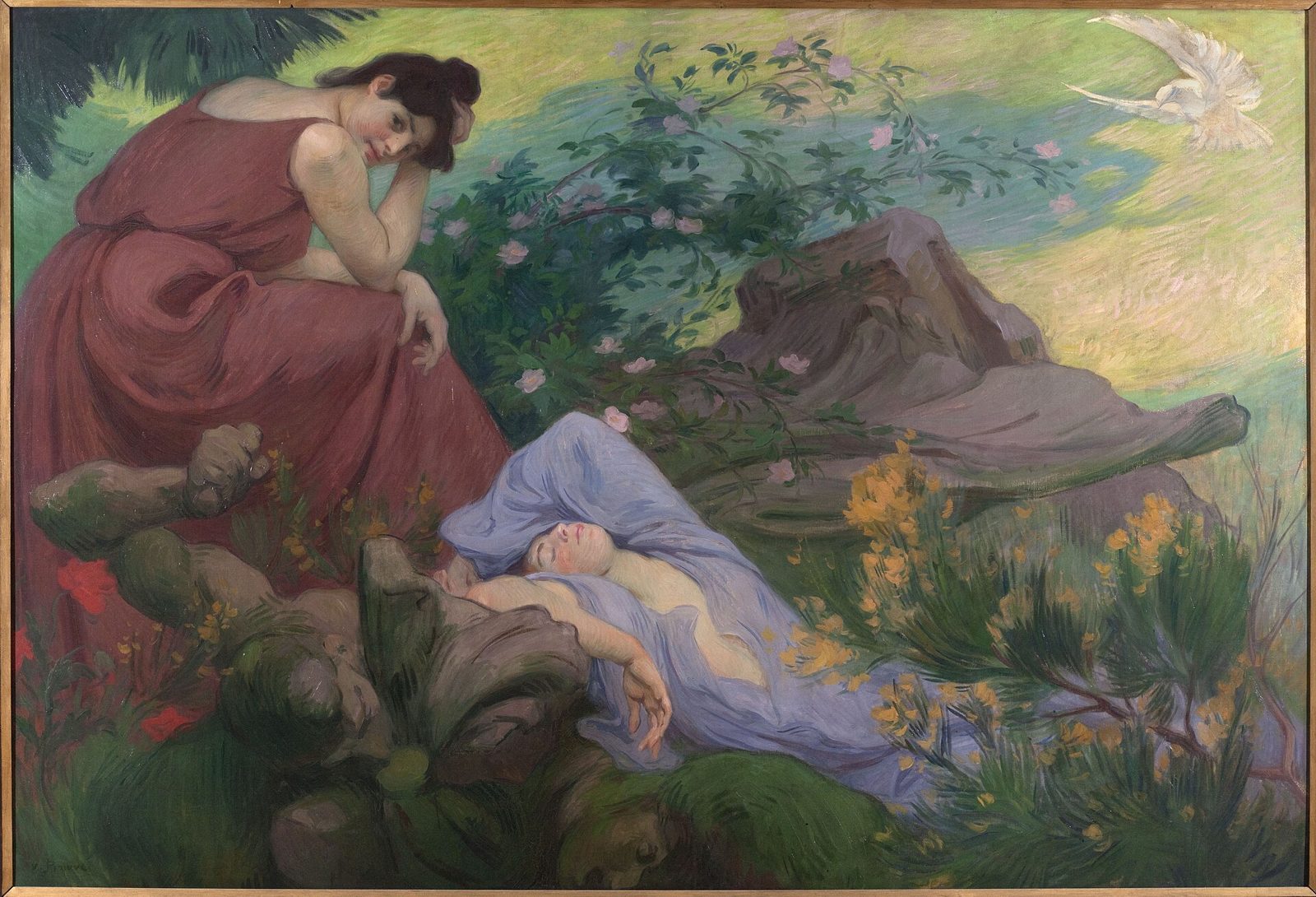
🎧 This work has audio narration — listen in the appA woman in a striking red dress leans thoughtfully against a rock, her gaze fixed on a companion draped in a flowing blue garment, peacefully asleep on the ground. Surrounding them, vibrant pink and yellow blossoms burst forth from lush greenery, while a white bird glides gracefully in the upper corner, enhancing the tranquil atmosphere of Victor Prouvé's "Séjour de paix et de joie : méditation."
This serene outdoor scene captures a moment of introspection and calm, inviting viewers to reflect on the bond between the two women. The smooth brushwork creates a dreamlike quality, emphasizing the harmony of nature and human emotion. The choice of colors, particularly the warm greens and soft yellows, evokes a sense of peace, suggesting a sanctuary away from the chaos of daily life.
Prouvé, a prominent figure in the Art Nouveau movement, was deeply influenced by his travels, particularly to Tunisia, which shaped his understanding of light and color. His work often reflects a blend of decorative arts and painting, showcasing his versatility as an artist. In 1899, he created this piece, which remains a testament to his ability to convey deep emotion through serene landscapes and intimate moments.
Victor Prouvé was a prominent French artist born on August 13, 1858, in Nancy, known for his contributions to painting, sculpture, and engraving within the Art Nouveau movement. His artistic journey began in the drawing school of Nancy and continued at the École des Beaux-Arts in Paris. Prouvé's early work included collaborations with notable figures like Émile Gallé, where he designed glassworks and furniture, showcasing his versatility across various artistic mediums.
A pivotal trip to Tunisia in 1888 profoundly influenced his use of light in painting. Prouvé became a key figure in the École de Nancy, serving as its second president after Gallé's death in 1904, and later directing the School of Fine Arts in Nancy from 1919 to 1940. His artistic legacy is preserved in major museums, including the Musée d'Orsay and the Metropolitan Museum of Art. Beyond his visual art, Prouvé also designed jewelry, emphasizing his innovative spirit. He passed away on February 15, 1943, in Sétif, Algeria, leaving behind a rich legacy that influenced both his contemporaries and future generations, including his son, architect Jean Prouvé.
Victor Prouvé's 'Séjour de paix et de joie : méditation' was created in 1899, a time when the Art Nouveau movement was flourishing in France. Over the years, the painting has been included in numerous collections, including the Musée des Beaux-Arts de Nancy, showcasing Prouvé's enduring legacy. As the second president of the École de Nancy, Prouvé's influence extended beyond this work, shaping the direction of Art Nouveau in the region and beyond.
In 'Séjour de paix et de joie : méditation', Prouvé employs smooth brushwork that creates a dreamlike quality, drawing you into the tranquil scene. The oil paint is applied with a delicate touch, allowing for soft transitions between colors, especially in the lush greens and warm yellows that envelop the figures. The composition is expansive, measuring 180 by 265 centimeters, which enhances the feeling of openness and serenity. Prouvé's choice of colors is intentional; the vibrant pinks and yellows of the blossoms contrast beautifully with the deep red of the woman's dress, creating a visual harmony that invites contemplation. The positioning of the two women—one awake and pensive, the other peacefully asleep—adds a narrative depth, encouraging viewers to ponder their relationship and the peacefulness of the moment.
An interesting tidbit about Victor Prouvé is that he was not just a painter but also ventured into jewelry design. He created sculptural pieces like waist belts and brooches, showcasing his artistic versatility. These jewelry designs, crafted with precision, reflect his distinctive approach to art, blending functionality with aesthetic beauty. This lesser-known aspect of his career highlights how he applied his artistic vision across various mediums, enriching the Art Nouveau movement.
Victor Prouvé also designed jewelry, creating sculptural pieces like waist belts and brooches, showcasing his versatility as an artist.
Victor Prouvé collaborated with prominent figures and companies such as Émile Gallé, Eugène Vallin, and the Daum Brothers, contributing to various decorative arts.