Portrait de Madame Dubernet
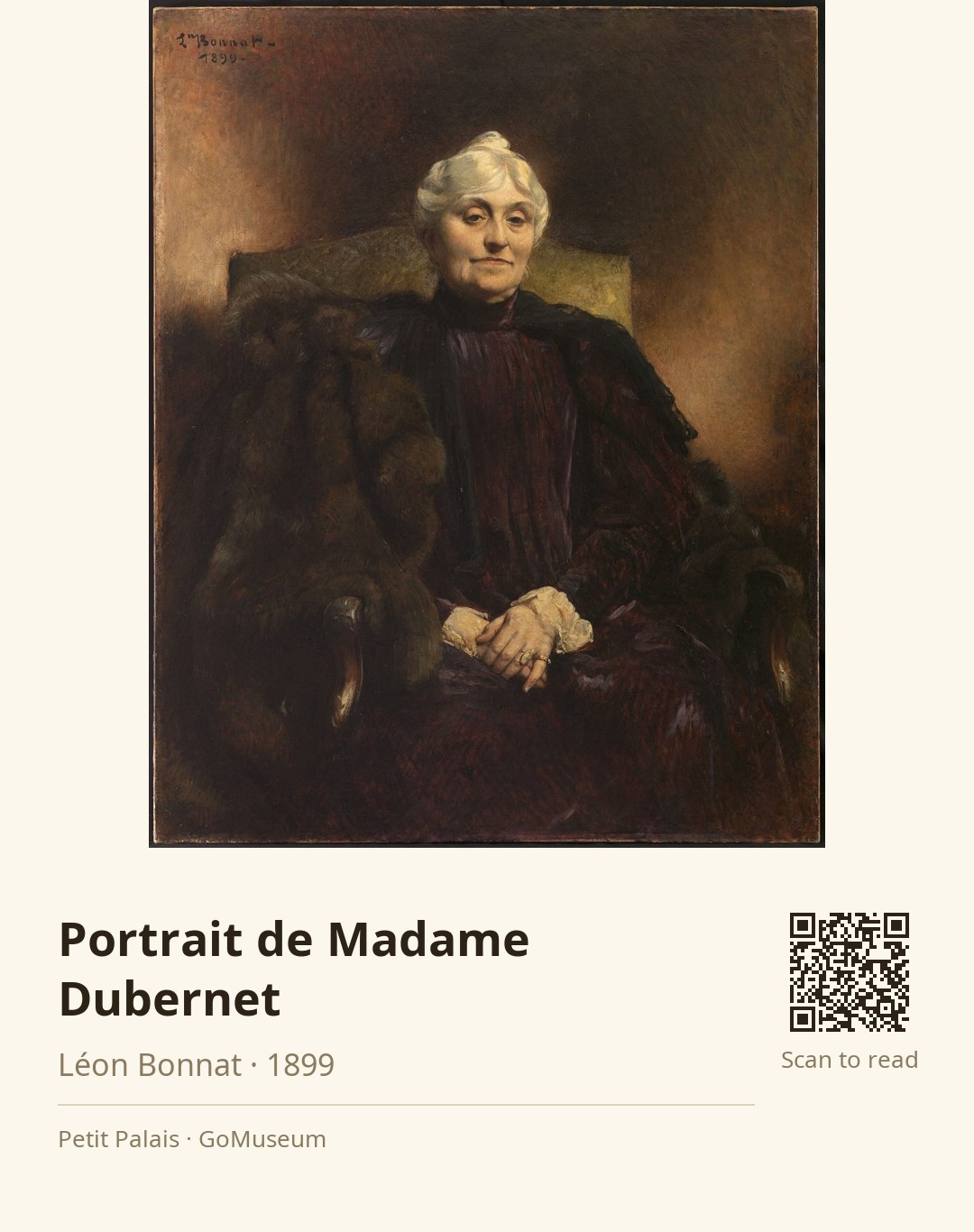
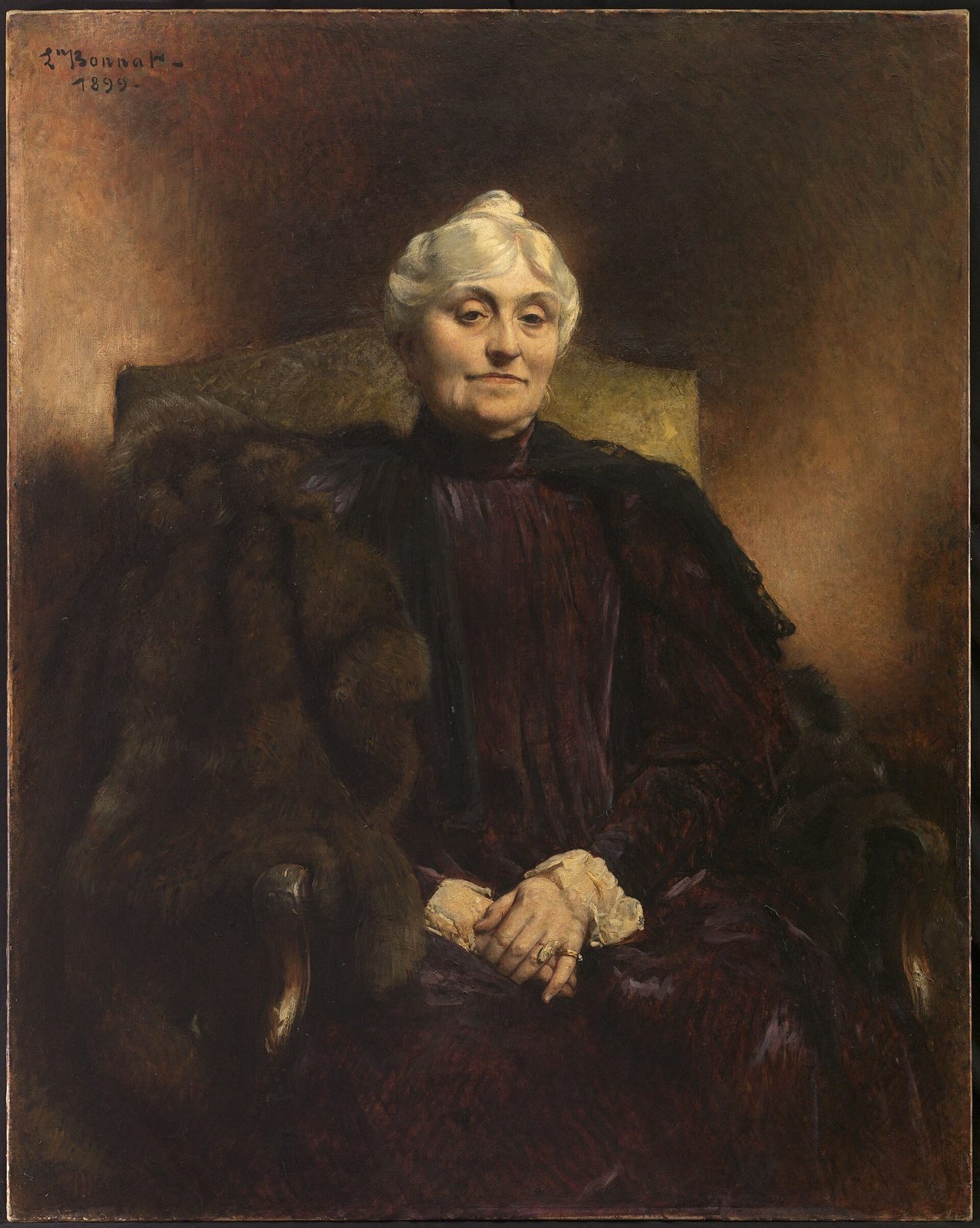
🎧 This work has audio narration — listen in the appMadame Dubernet sits elegantly in her armchair, her white hair contrasting with the rich, dark fabric of her high-collared dress. The fur stole draped around her shoulders adds a touch of luxury, while her clasped hands, adorned with rings, suggest both grace and authority. The warm, muted brown background envelops her, enhancing the dignified presence that Léon Bonnat masterfully captures in this portrait.
Bonnat's attention to detail, evident in the textures of the fabric and fur, reflects his skill as a leading portraitist of his time. The way he portrays Madame Dubernet not only highlights her status but also invites viewers to consider the character and life experience behind her serene expression. This painting, created in 1899, showcases Bonnat's ability to blend realism with an emotional depth that resonates with the viewer, making the subject feel both timeless and relatable.
Born in Bayonne in 1833, Bonnat became a prominent figure in the art world, known for his vivid portraits and powerful religious works. His career flourished in Paris, where he taught at the École des Beaux-Arts and influenced a generation of artists. He passed away in 1922, leaving behind a legacy of significant contributions to the art of portraiture and a collection of works that continue to be celebrated today.
Léon Joseph Florentin Bonnat, born on June 20, 1833, in Bayonne, was a prominent French painter and art educator known for his vivid portraits and powerful religious works. His early years in Madrid, where he honed his skills under José de Madrazo, ignited his passion for art, leading him to Paris, where he became a leading portraitist by the 1850s. Influenced by Spanish masters and the Old Masters, Bonnat's style combined rigorous drawing with a focus on overall effect, positioning him between academic painters and the emerging Impressionists.
Bonnat's career flourished as he won numerous accolades, including the Grand Officer of the Légion d'honneur and a professorship at the École des Beaux-Arts, where he inspired many notable artists, including Henri de Toulouse-Lautrec and John Singer Sargent. His portraits of contemporary figures, alongside significant religious paintings like "Christ on the Cross," showcased his ability to blend realism with emotional depth.
Despite facing criticism, Bonnat was recognized for his contributions to art, becoming an honorary member of the National Academy of Design in 1917. He passed away on September 8, 1922, leaving behind a rich legacy and a substantial collection of art that continues to influence the field.
The 'Portrait de Madame Dubernet' was painted by Léon Bonnat in 1899, a time when he was already a celebrated figure in the art world. Commissioned by Madame Dubernet herself, this portrait reflects not only her status but also Bonnat's reputation as a leading portraitist of the late 19th century. Over the years, it has passed through several hands, with provenance tracing back to Dupuy-Cottet, Madame Dubernet's family. This connection adds a layer of personal history to the artwork, grounding it in the lives of real people who appreciated Bonnat's talent. The reception of Bonnat's work was mixed; while he had staunch supporters like Émile Zola, he also faced criticism for his stark realism, which some found jarring compared to the more idealized forms of his contemporaries.
Bonnat's technique in 'Portrait de Madame Dubernet' showcases his mastery of oil paint, with meticulous brushwork that captures the rich textures of fabric and fur. The deep, muted colors create a warm atmosphere, enveloping Madame Dubernet in a dignified aura. His choice of a centered composition draws your attention directly to her poised figure, emphasizing her authority and grace. The layering of paint reveals Bonnat's skill in building depth; he uses a combination of fine detail for the rings on her hands and broader strokes for the background, creating a contrast that highlights her presence. This deliberate handling of materials not only brings the subject to life but also invites viewers to feel the weight of her character and experience.
Interestingly, Bonnat was known for his liberal teaching style, which encouraged students to express their individuality. He famously recommended that they visit the Prado Museum in Madrid to study the works of Spanish masters, a suggestion that significantly influenced the direction of French painting at the time. This emphasis on the Spanish style not only enriched his own work but also left a lasting mark on his students, who would carry these lessons into their own artistic practices.
Léon Bonnat lived in Madrid from 1846 to 1853, where his father owned a bookshop.
Bonnat's ability to speak multiple languages, including English, made him quite popular among American students in Paris.
Notable supporters of Bonnat included Émile Zola, while he faced criticism from some who found his stark realism jarring.