 Image: Bastenbas
The Tapestry
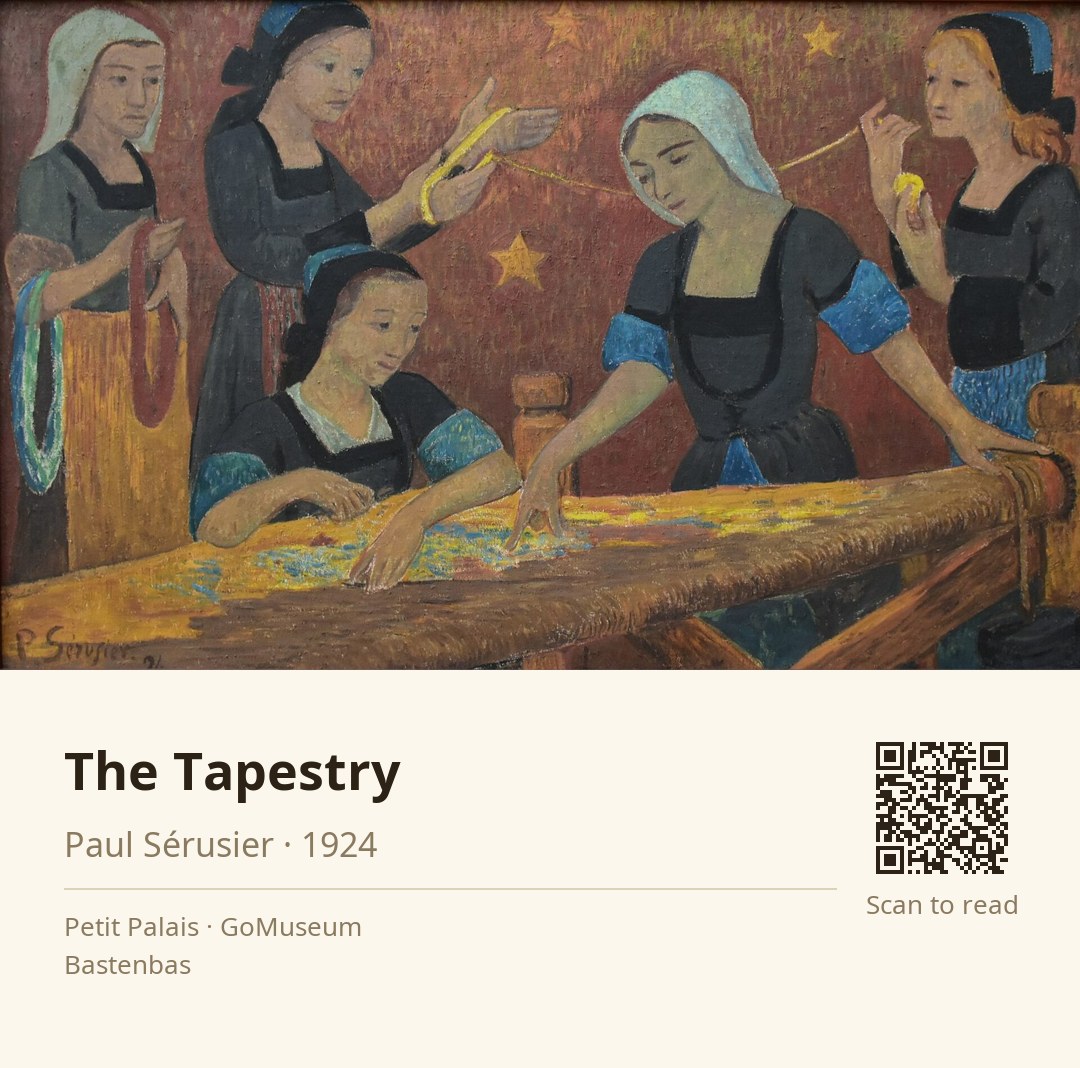
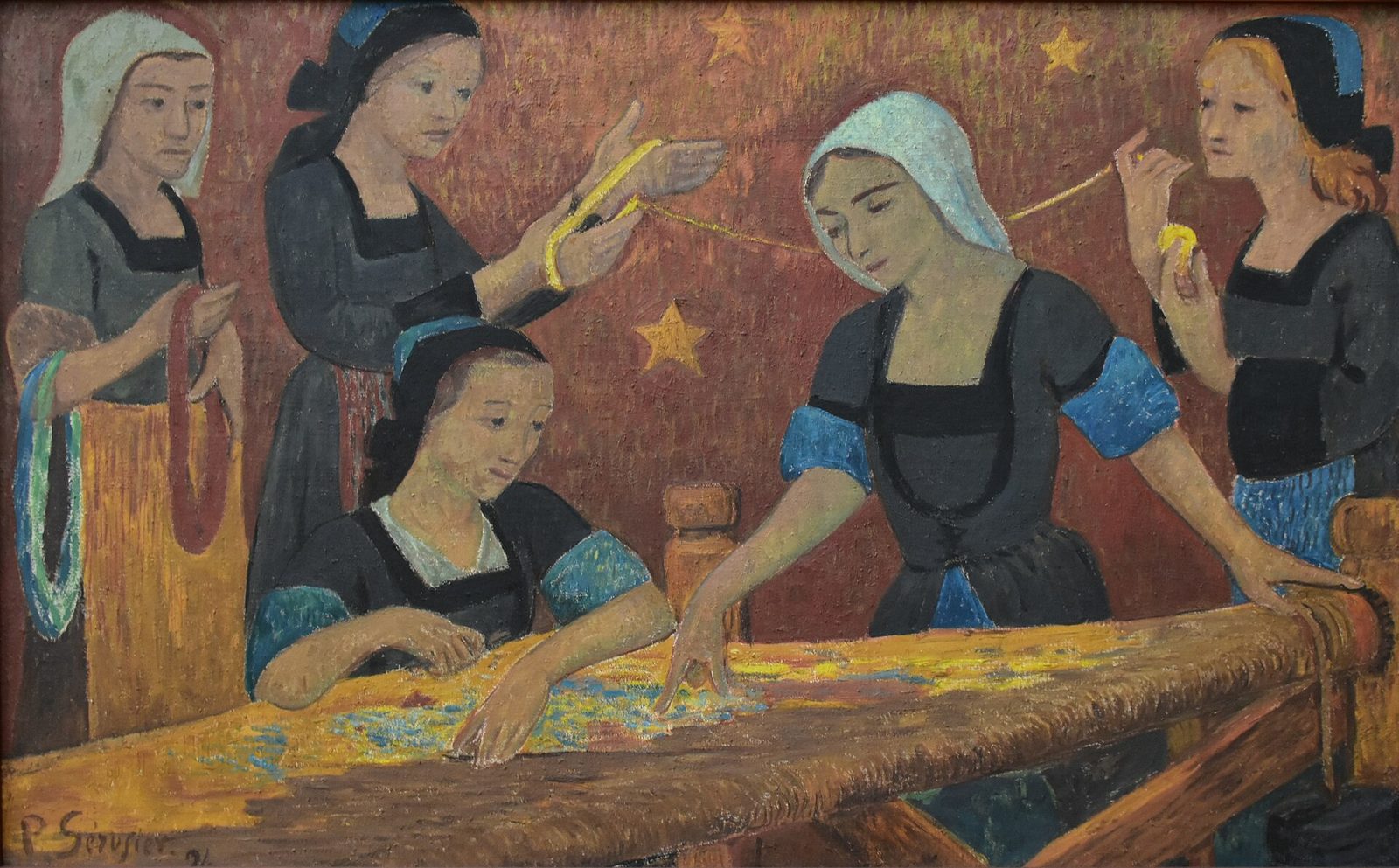
🎧 This work has audio narration — listen in the appFive women weave together in a tapestry of collaboration, each dressed in dark clothing accented with blue, their hands skillfully working with threads and yarns. The central figure leans over the loom, her delicate touch evident as she engages with the fabric, while the warm, textured red background, dotted with yellow stars, adds a vibrant contrast that enhances the intimacy of the scene.
This focus on the act of weaving highlights the importance of community and shared labor, reflecting a moment of connection among the women. The brushwork is expressive, lending texture to both the fabric and the garments, which suggests a celebration of craftsmanship and the artistry involved in textile creation. Sérusier captures not just a task, but a ritual of togetherness, emphasizing the beauty found in everyday labor.
Created in 1924, "The Tapestry" is part of Sérusier's later works, where he often depicted Breton women engaged in textile arts, showcasing a deep appreciation for their cultural significance.
Paul Sérusier was a French painter born on November 9, 1864, in Paris, who became a pivotal figure in the evolution of abstract art. A student at the Académie Julian, he was influenced by Paul Gauguin during his time at the Pont-Aven artist colony, where he created "The Talisman," a work that exemplified Cloisonnism and hinted at pure abstraction. Sérusier was a founding member of the Nabis group, which sought to express deeper meanings through color and form, moving beyond mere representation. His character was marked by a friendly disposition and a collaborative spirit, fostering connections with fellow artists like Pierre Bonnard and Édouard Vuillard.
Throughout his career, Sérusier engaged in teaching and writing, publishing "ABC de la peinture" in 1921, which reflected his artistic philosophy. He spent his later years in Brittany, where he continued to explore themes of spirituality and symbolism in his work. Sérusier's contributions to the Nabis movement and his innovative approaches to color and composition solidified his place in art history as a precursor to modern abstraction, influencing generations of artists who followed. He passed away on October 7, 1927, leaving behind a legacy that bridged the gap between Impressionism and the avant-garde.
Sérusier's technique in 'The Tapestry' showcases his mastery of color and texture. The brushwork is both expressive and deliberate, creating a tactile quality that invites viewers to feel the fabric's weight and the women's garments. The earthy palette, punctuated by the striking blues and yellows, enhances the warmth of the scene while drawing attention to the figures' hands as they weave. The composition is intimate, with the central figure leaning over the loom, suggesting a moment of focus and dedication. Sérusier's choice to depict the background in a textured red, adorned with yellow stars, not only adds vibrancy but also evokes a sense of place and tradition, grounding the scene in the cultural practices of Brittany.
Sérusier portrays the act of weaving as a significant ritual, highlighting the beauty and importance of everyday labor and the connections it fosters among people.
Marguerite Sérusier, the artist's widow, donated 'The Tapestry' to the Petit Palais in Paris in 1948.