In the Evening - Madame Pascal Blanchard
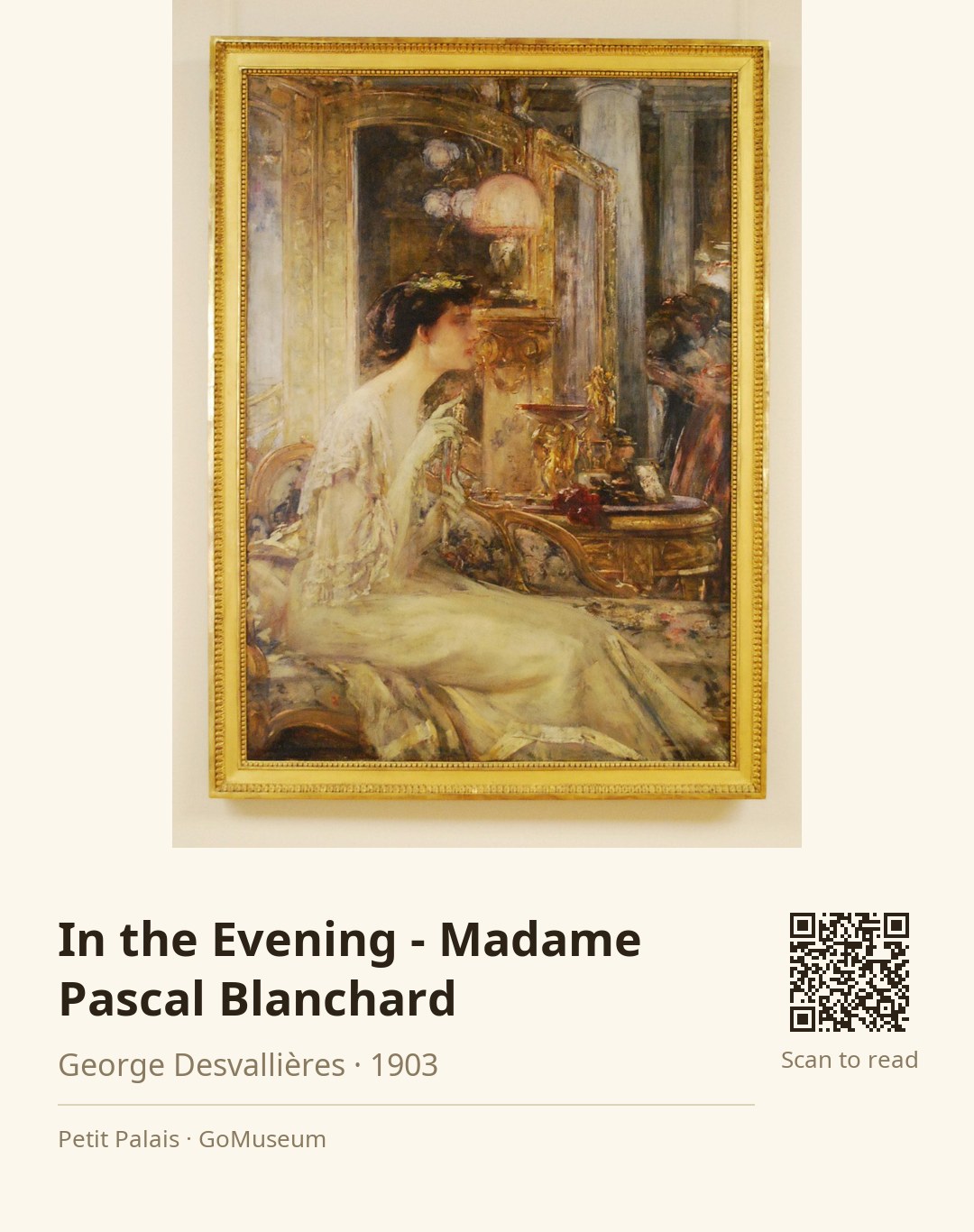
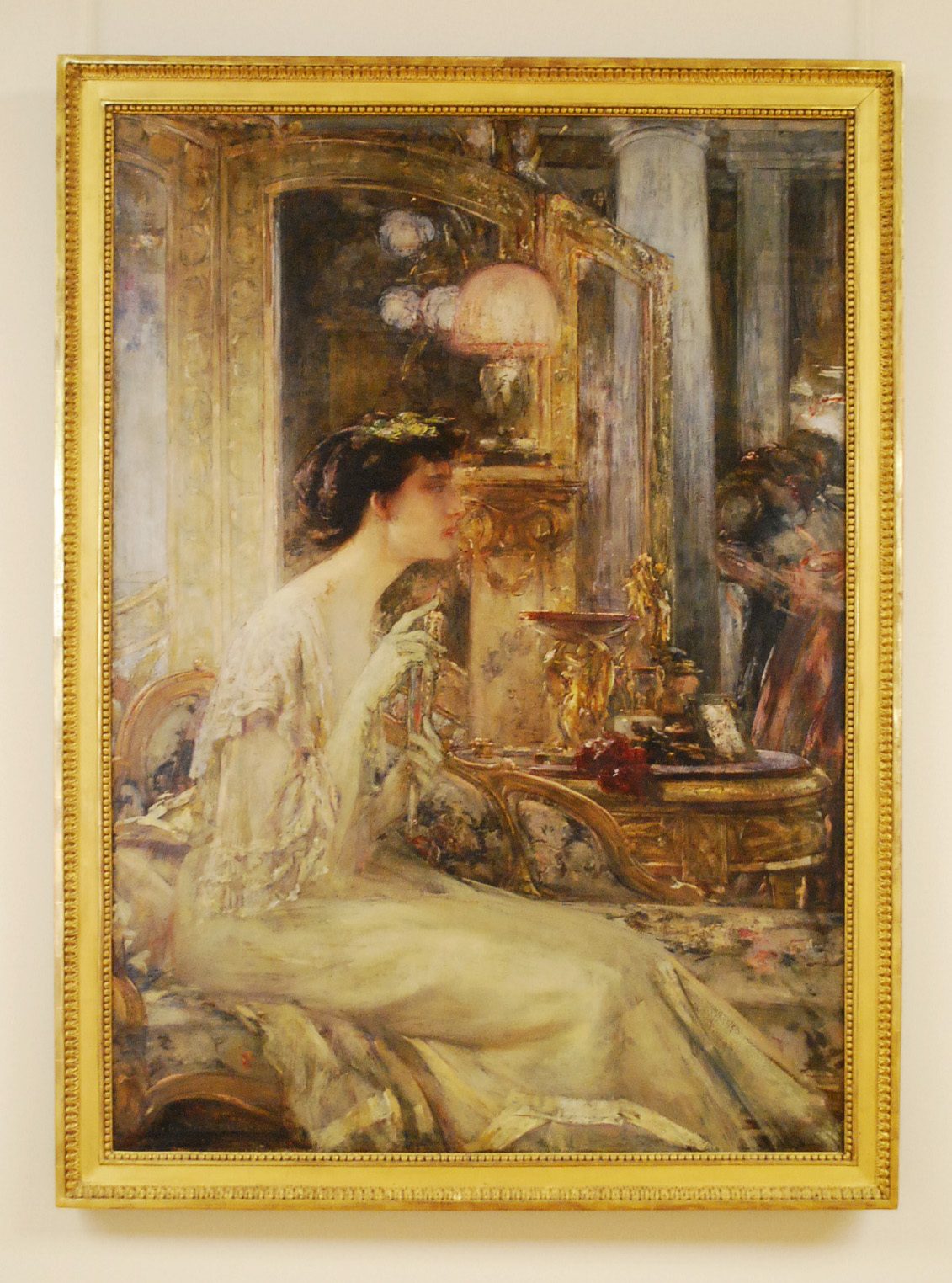
🎧 This work has audio narration — listen in the appMadame Pascal Blanchard sits gracefully in a lavish interior, her flowing gown shimmering with intricate lace details that catch the light. The ornate furniture surrounding her and the large mirror reflecting the room create a sense of depth, while a table beside her displays a vibrant red flower and a small framed picture, hinting at personal stories within this luxurious setting.
The elegance of her attire and the warm color palette of golds and soft pastels evoke a serene yet opulent atmosphere, inviting viewers to contemplate the world she inhabits. This painting, created by George Desvallières in 1903, captures not just a moment of leisure but also reflects the artist's fascination with beauty and domesticity, a theme prevalent in early 20th-century art. Desvallières, who initially focused on portraits, was influenced by his studies and relationships with prominent artists, leading him to explore more intricate and symbolic representations.
During this period, Desvallières was establishing his reputation, blending traditional techniques with a modern sensibility. His works often conveyed deeper narratives, influenced by his experiences and the cultural shifts of his time. This painting is part of a broader exploration of themes that would define his career, showcasing his ability to intertwine personal and artistic expression.
George Desvallières was a prominent French painter born in Paris in 1861. Coming from a lineage of academics, he was raised in a religious environment that deeply influenced his artistic vision. Initially focused on portraiture, his artistic trajectory shifted after studying under Gustave Moreau, leading him to explore themes of mythology and spirituality. A pivotal moment in his life was the loss of his son during World War I, which intensified his commitment to religious art.
Desvallières became known for his dramatic use of color and dark subjects, reflecting a deep engagement with symbolist themes. His notable works include depictions of Narcissus and Orpheus, and he played a significant role in founding the Salon d'Automne, a key exhibition in the evolution of modern art. His dedication to renewing religious art led him to establish the Ateliers d'Art Sacré in 1919 alongside Maurice Denis, echoing the collaborative spirit of medieval artists.
Throughout his career, Desvallières contributed to various public and private decorative projects, including stained glass windows for memorials and churches. His works are housed in prestigious institutions like the Musée d'Orsay and the Louvre. Desvallières passed away in 1950, leaving a legacy that bridges traditional religious themes with modern artistic expression.
The brushwork is delicate, particularly in the intricate lace details of Madame Blanchard's gown, which shimmer as if catching the light in real-time. The warm color palette, dominated by golds and soft pastels, creates a serene ambiance, inviting viewers to immerse themselves in the opulence of the setting. The composition is thoughtfully arranged, with the large mirror reflecting the room and adding depth, while the ornate furniture frames the subject beautifully. The scale of the painting, at 150 cm tall and 107 cm wide, allows for an intimate yet grand portrayal, drawing you into the world Desvallières has crafted. Each element, from the red flower on the table to the soft glow of the lamp, is carefully placed to evoke a sense of personal narrative and domestic tranquility.
An interesting tidbit about Desvallières is that he was deeply affected by personal tragedy during World War I, which led him to shift his focus towards religious themes in his later works. His son was killed in action, and this profound loss inspired him to create art that reflected his spiritual journey and the search for meaning amidst suffering. This experience not only changed the trajectory of his career but also enriched the emotional depth of his subsequent works.
Sabine Desvallières, his daughter, became a nun and is particularly remembered for her embroidery.
During his trip to Italy in 1890, Desvallières became familiar with ancient art, which significantly influenced the style he later adopted in his works.
George Desvallières was one of the founders of the Salon d'Automne, an important exhibition that showcased modern art.