Gust of Wind in Front of Frascati, Le Havre
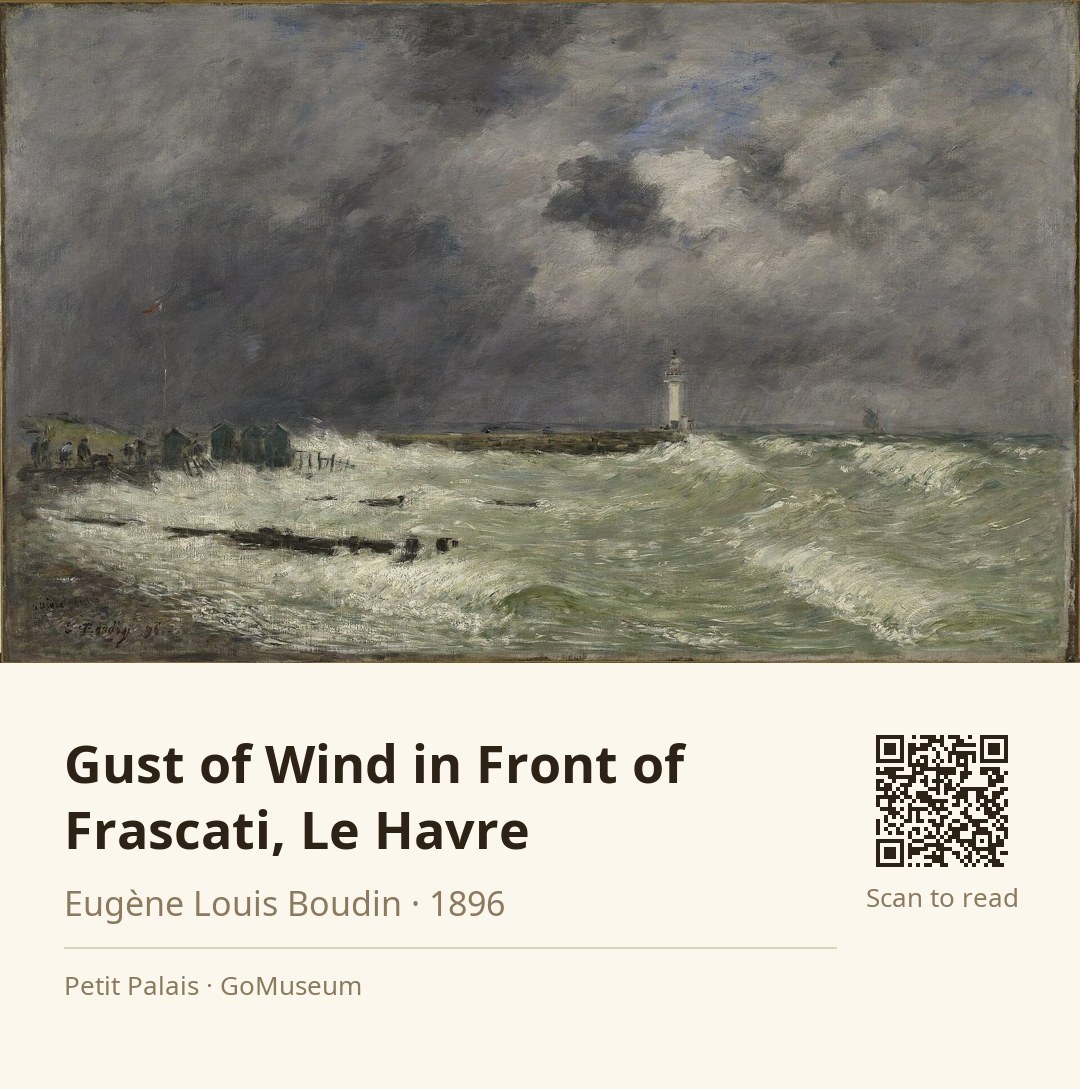
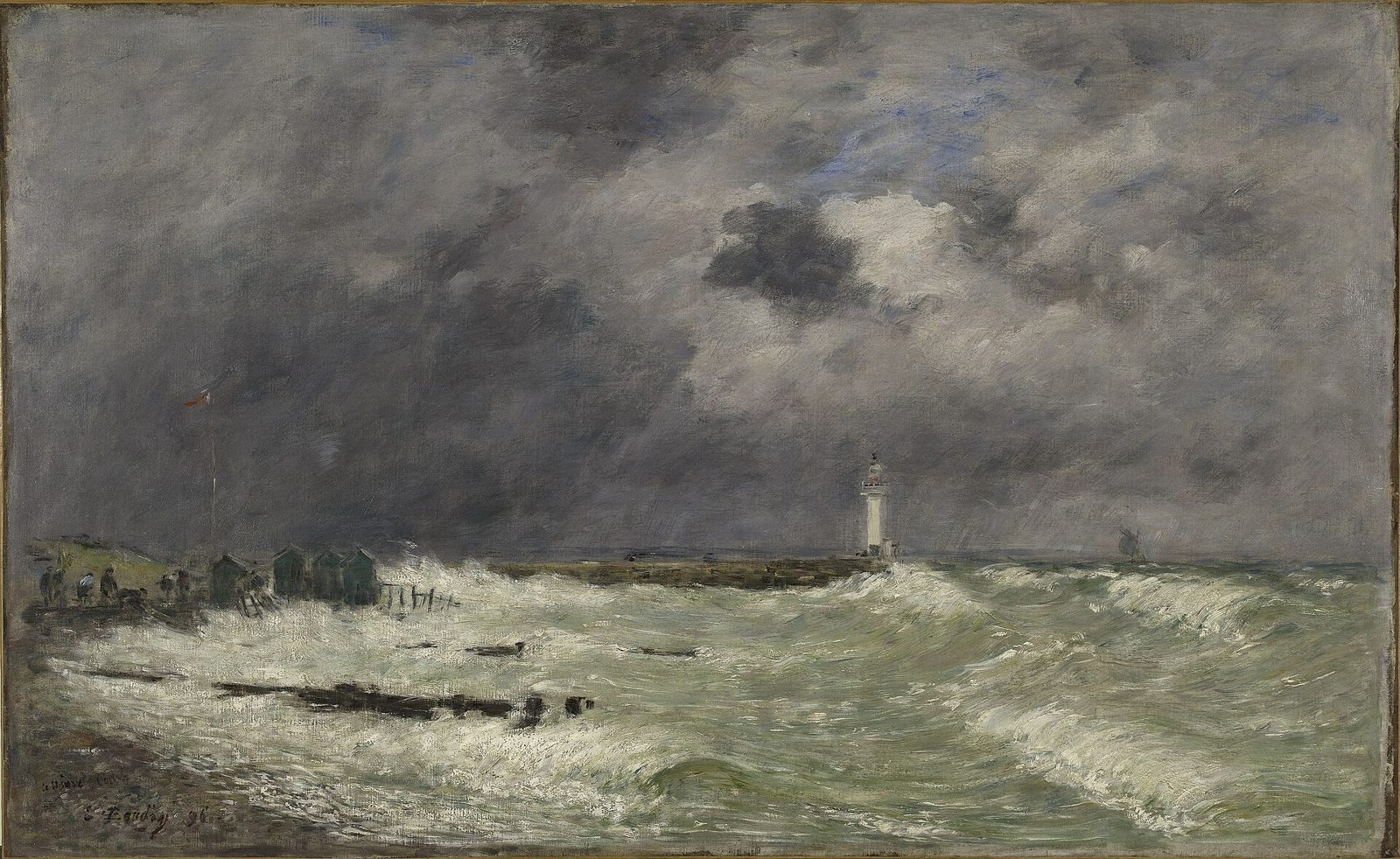
🎧 This work has audio narration — listen in the appChurning waves crash against the breakwater in Eugène Louis Boudin's "Gust of Wind in Front of Frascati, Le Havre," where a lighthouse stands resolutely amid the stormy chaos. The sky, a dramatic swirl of heavy gray clouds with hints of blue, looms over the scene, while a small group of figures and huts to the left suggests human presence in this wild maritime landscape.
The dynamic brushwork captures not just the movement of the sea but also the palpable tension of an approaching storm, evoking the raw power of nature. Boudin, known for his outdoor painting, was deeply influenced by the marine environment of his youth in Le Havre, where he first learned to appreciate the changing moods of the sea.
In 1896, Boudin created this work during a period of personal reflection, shortly before his death in 1898. His legacy as a pioneer of plein air painting and a mentor to artists like Claude Monet remains significant in the history of French art.
Eugène Louis Boudin, born on July 12, 1824, in Honfleur, was a pioneering French landscape painter known for his outdoor work, particularly marine scenes. The son of a harbor pilot, Boudin's early life revolved around the sea, shaping his artistic focus. He transitioned from a stationery shop owner to a full-time painter at 22, influenced by artists like Constant Troyon and Jean-François Millet. His exposure to the Dutch masters and encouragement from Johan Jongkind led him to embrace plein air painting, a practice that would define his style.
Boudin became a mentor to Claude Monet, instilling in him a passion for capturing light and color in nature. Although he participated in the first Impressionist exhibition in 1874, he never saw himself as a radical innovator. His works, characterized by their atmospheric quality and vibrant pastels, earned him acclaim, including a gold medal at the 1889 Exposition Universelle. Despite facing personal losses, including the death of his wife, Boudin continued to paint until his passing on August 8, 1898, in Deauville. His legacy endures through the Eugène Boudin Prize and his influence on the Impressionist movement, marking him as a significant figure in art history.
This painting was created during a period when Boudin was already recognized as a significant figure in the art world, having exhibited at the Paris Salon since 1859. His works often depicted the coastal landscapes of Normandy, where he grew up, and this particular piece showcases his deep connection to the sea. Boudin's reputation was further solidified when he was awarded a gold medal at the 1889 Exposition Universelle. After his passing in 1898, his influence continued to resonate, particularly with the Impressionists, who admired his ability to capture the fleeting effects of light and atmosphere. The painting has since been part of various collections, reflecting Boudin's lasting impact on maritime art.
In 'Gust of Wind in Front of Frascati, Le Havre,' Boudin employs dynamic brushwork that brings the turbulent sea to life. The thick, expressive strokes convey the churning waves and the raw energy of the storm, while the lighter, more fluid touches in the sky suggest the movement of clouds. His choice of a limited color palette, dominated by grays and blues, enhances the dramatic atmosphere, creating a sense of impending chaos. The lighthouse, standing firm against the backdrop of the storm, serves as a focal point, drawing the viewer's eye amidst the swirling chaos. Boudin's technique of painting en plein air allowed him to capture the immediacy of the scene, infusing it with a sense of authenticity that resonates with viewers. This approach was innovative for his time, as it emphasized the importance of direct observation of nature.
Boudin's legacy is profound, as he is often regarded as a precursor to Impressionism. His emphasis on painting outdoors and capturing the nuances of light and atmosphere influenced a generation of artists, including Claude Monet, who credited Boudin with guiding him toward landscape painting. The techniques he developed laid the groundwork for the Impressionist movement, which would revolutionize how artists approached color and light. Boudin's work not only changed the course of French art but also established a new appreciation for the beauty of coastal landscapes, inspiring countless artists to explore similar themes in their own work.
A fascinating tidbit about Boudin is that he was one of the first artists to paint en plein air, or outdoors, which was a radical shift from the traditional studio painting of his time. This practice was inspired by his encounters with Dutch masters and his friendship with Johan Jongkind, who encouraged him to embrace the natural world as his canvas. Interestingly, Boudin's early career was not solely focused on painting; he also ran a framing shop where he mingled with other artists, which helped shape his artistic vision.
Growing up in Le Havre, Boudin developed a strong connection to the sea, which significantly influenced his choice of subject matter and his appreciation for the dynamics of maritime landscapes.
Boudin's practice of painting en plein air allowed him to capture the immediate effects of light and atmosphere, marking a significant departure from the conventional studio methods of his time.