Cheval brun à l'écurie
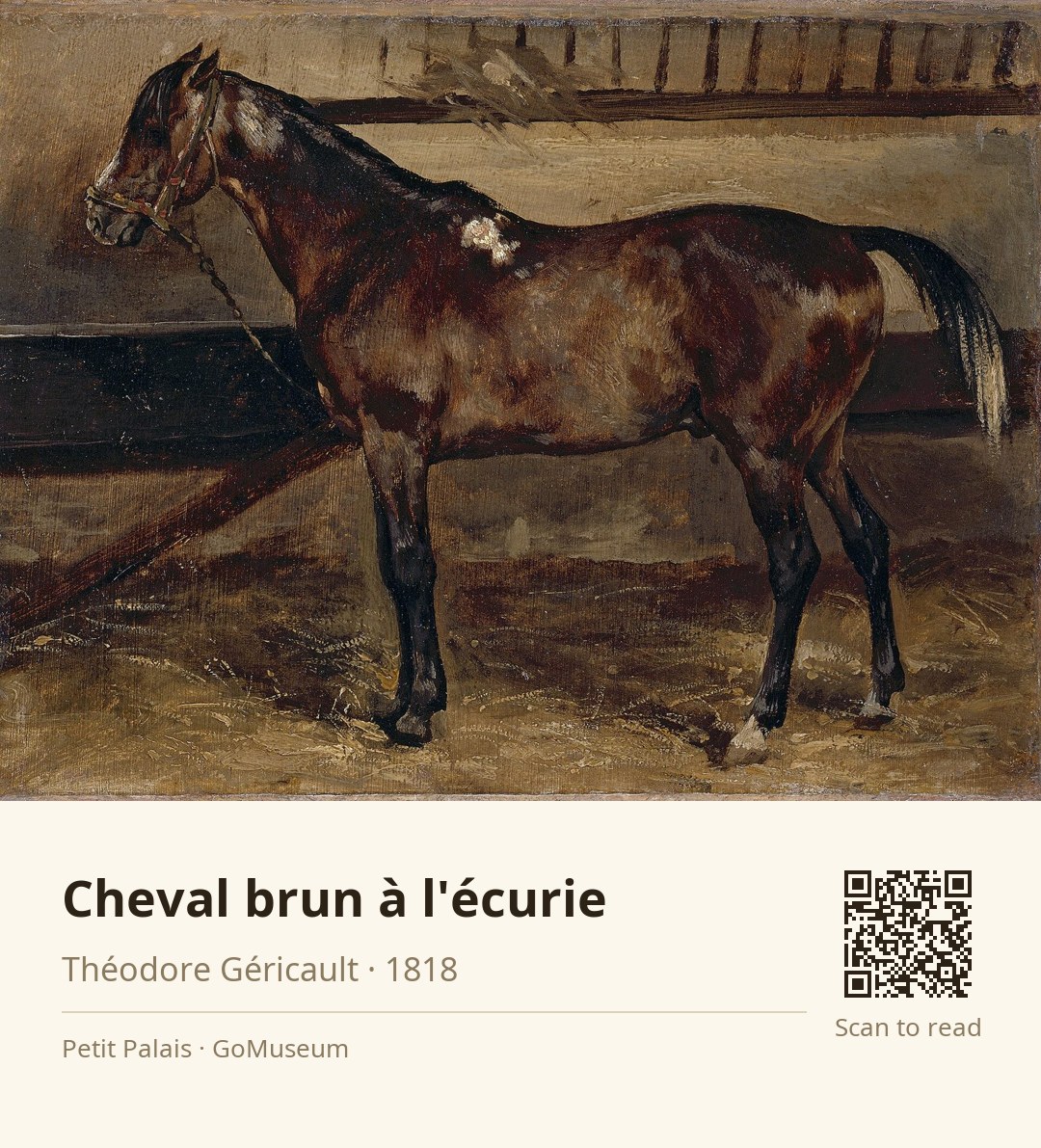
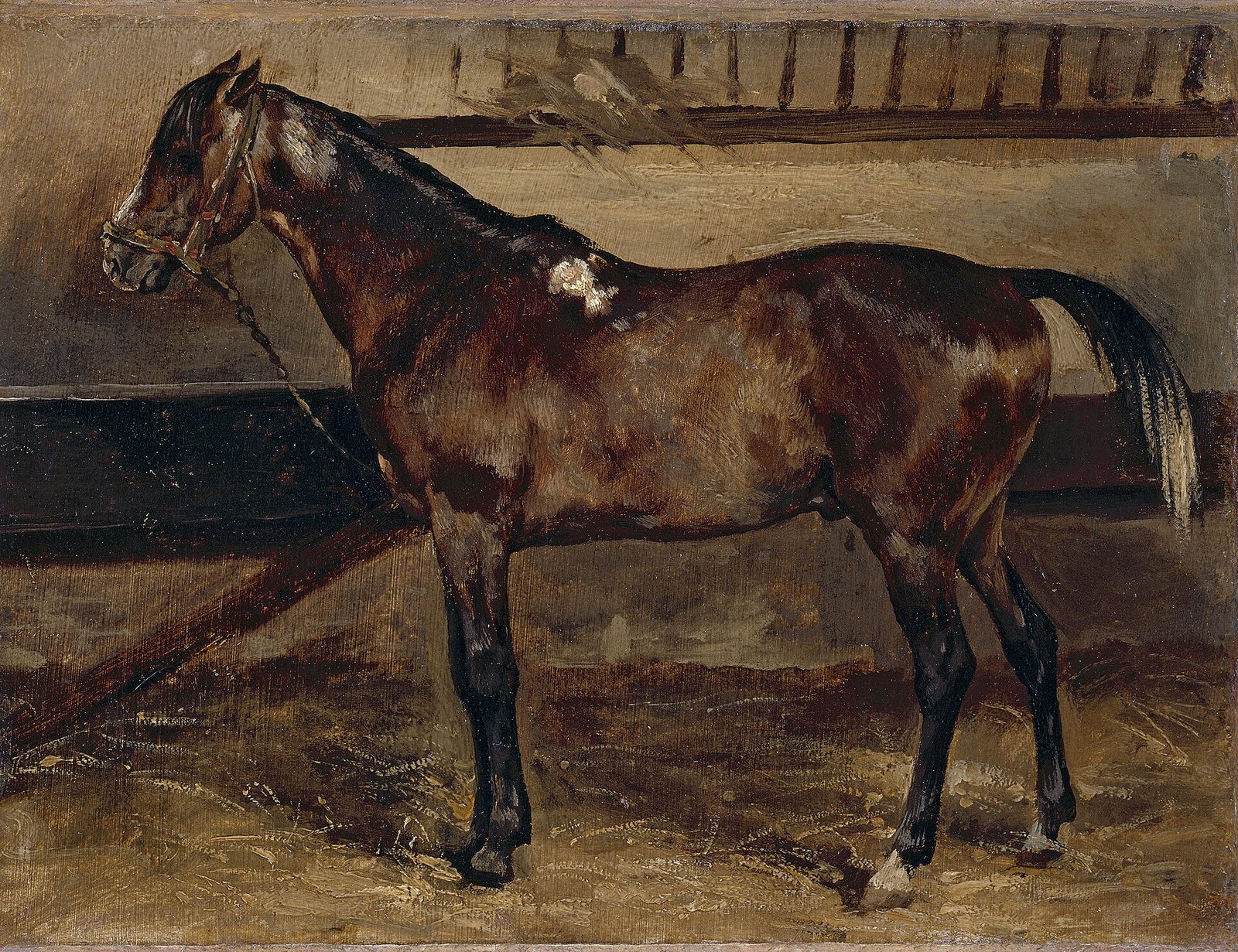
🎧 This work has audio narration — listen in the appThe dark brown horse stands in profile, its glossy coat reflecting subtle variations of light, while a small white patch on its back adds a striking contrast. Tethered with a simple bridle and chain, the horse is set against the rustic backdrop of a stable, where wooden beams and a straw-covered floor evoke a sense of warmth and familiarity.
Géricault's choice to depict the horse in such a straightforward manner emphasizes the beauty and strength of the animal, capturing its essence in a moment of stillness. The earthy palette of browns and muted grays not only enhances the horse's natural elegance but also immerses the viewer in the stable's intimate environment. This painting, created in 1818, is part of Géricault's exploration of equine subjects, reflecting his deep fascination with horses, which he often portrayed both in stables and in action on the battlefield.
By focusing on the horse, Géricault invites us to appreciate the bond between humans and these magnificent creatures, a theme that resonates throughout his body of work.
Jean-Louis André Théodore Géricault was a French painter and lithographer born on September 26, 1791, in Rouen. He moved to Paris as a child, where his artistic talent was nurtured by family connections in the art world. Géricault's life was marked by a passionate pursuit of art, characterized by a fascination with the human condition and dramatic themes. His early works, influenced by the classical tradition, evolved into a distinctive style that bridged Neoclassicism and Romanticism.
Géricault's most renowned painting, The Raft of the Medusa, created between 1818 and 1819, reflects his deep engagement with contemporary issues, depicting the aftermath of a tragic shipwreck that became a national scandal. This monumental work showcased his ability to convey intense emotion and the struggle against nature, establishing him as a pioneer of the Romantic movement. Despite his brief life—he died at just 32—Géricault's innovative approach and exploration of human suffering left a lasting impact on the art world, influencing future generations of artists. His legacy endures, celebrated for its emotional depth and dramatic intensity.
Created in 1818, 'Cheval brun à l'écurie' is a captivating piece by Théodore Géricault, a prominent figure in the Romantic movement. This painting was part of Géricault's exploration of equine subjects, reflecting his deep fascination with horses. Over the years, the painting changed hands, with notable provenance tracing back to Auguste and Eugène Dutuit. Today, it resides in the Petit Palais in Paris, where it continues to draw admiration for its raw beauty and connection to Géricault's broader body of work.
The brushwork is both deliberate and expressive, capturing the horse's glossy coat with remarkable fidelity. Each stroke contributes to the sense of texture, making the viewer almost feel the warmth of the animal's body. The earthy palette, dominated by rich browns and muted grays, creates a harmonious atmosphere that complements the rustic stable setting. Géricault's choice of a straightforward composition, with the horse in profile, emphasizes its strength and grace, inviting you to appreciate the creature's form without distraction. The scale of the painting, relatively small yet intimate, allows for a personal connection, drawing you into the world of the stable.
Géricault's family was connected to a business that produced high-quality engravings of artworks, which gave him a unique insight into art production and history during his formative years.